
ClickCease
Free consultations · Se habla espanol
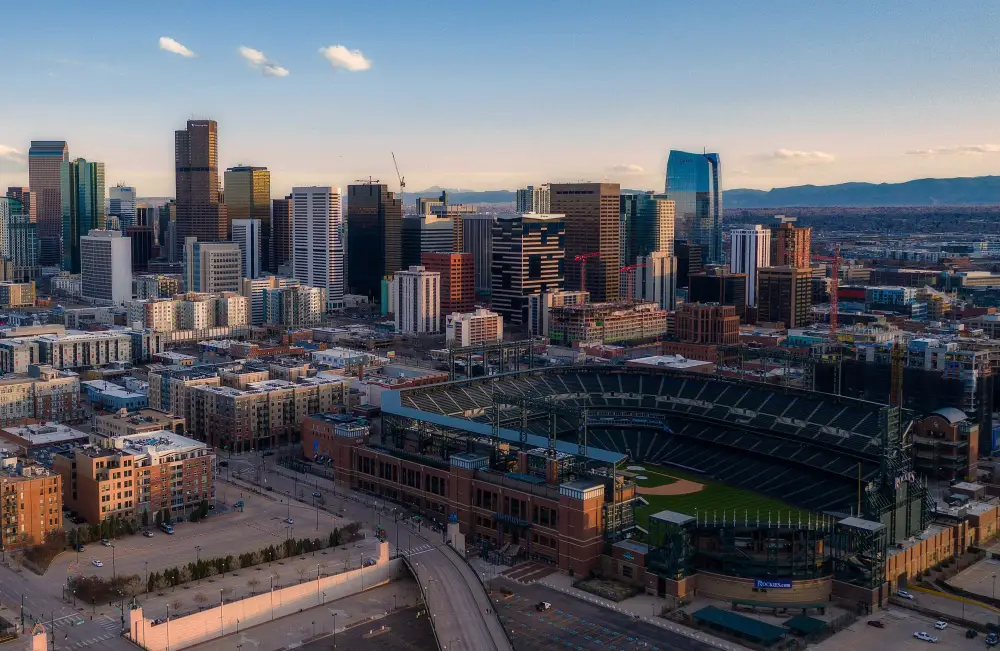
Interstate 70 through Wheat Ridge, Colorado. CGH Injury Lawyers represents DUI accident victims across Jefferson County.
Wheat Ridge, Jefferson County, Colorado

Wheat Ridge DUI Accident Lawyers Who Pursue Every Source of Recovery

If a drunk or drugged driver hurt you on I-70, Wadsworth Boulevard, or anywhere in Wheat Ridge, you have a civil claim completely separate from the criminal case. CGH Injury Lawyers serves Wheat Ridge from our Denver office. We pursue the driver, the bar that overserved them, and your own uninsured motorist coverage when needed. No fee unless we win.

No fee unless we win

It's More Than Money.

Get my free DUI crash case review

100% confidential. No fee unless we win.

Serving Wheat Ridge From Our Denver Office CGH Injury Lawyers 2701 Lawrence St., Suite 201 Denver, CO 80205 (303) 209-9395 Se habla espanol
5-star rated on Google ABOTA trial advocate on the team Trial lawyers, not a settlement mill No fee unless we win
  • When a drunk or drugged driver causes a crash on I-70, Wadsworth Boulevard, or any Wheat Ridge road, Colorado law lets you bring a civil claim completely separate from the criminal DUI case. The criminal case punishes the driver. Your civil claim is how you pursue money for medical bills, lost wages, pain, and suffering.
  • A bar or restaurant that willfully and knowingly served alcohol to a visibly intoxicated patron can be sued alongside the driver under Colorado's Dram Shop Act (C.R.S. 44-3-801). That dram shop claim has its own one-year deadline running from when the alcohol was served, so it must be evaluated the moment you hire an attorney, not after the criminal case concludes.
  • When the drunk driver who hit you is uninsured or carries too little coverage to pay your losses, your own uninsured and underinsured motorist policy often becomes the real source of recovery. Those UM and UIM claims run on their own deadline under C.R.S. 13-80-107.5, separate from the three-year motor vehicle statute of limitations (C.R.S. 13-80-101(1)(n)).

CGH Injury Lawyers serves Wheat Ridge DUI crash victims from our Denver office at 2701 Lawrence St. We do not have a Wheat Ridge office, and we will not pretend otherwise. What we do have is a eight-attorney trial firm with an ABOTA managing partner, a track record across Jefferson County District Court, and the willingness to pursue every defendant and every policy that caused or contributed to your harm. Your first consultation is free, and you owe nothing unless we win.

Why your case is stronger than a standard car crash

Negligence per se: why an impaired driver is already presumed at fault

In a typical Wheat Ridge car accident case you have to prove the other driver was careless. In a DUI crash, most of that work is done for you before you ever walk into Jefferson Combined Court.

Colorado follows the doctrine of negligence per se. When a person violates a safety statute designed to protect the public from the kind of harm that actually occurred, that violation itself can establish negligence. Drunk and drugged driving laws exist precisely to prevent impaired drivers from injuring other people on roads like I-70 and Wadsworth Boulevard. A driver who causes a crash while impaired fits that doctrine squarely.

In plain terms, you typically do not need to argue about whether the drunk driver did something wrong. The impairment, once documented through the crash report, toxicology results, and the driver's own arrest record, does most of that work. The real fight in a Wheat Ridge DUI injury case is almost always over the value of your losses and which insurance policies have to pay, not over who caused the collision. That shift in focus matters enormously for how we build and value your claim.

Two separate legal tracks

The criminal DUI case versus your civil claim: what each one can do for you

After a DUI crash on Wadsworth or I-70, two completely separate legal processes run at once. They have different goals, different parties, and different outcomes. Most Wheat Ridge victims do not realize the difference until they have already waited too long on the wrong one.

The criminal case

  • Brought by the Jefferson County District Attorney, not by you. You are a witness and a victim, not the party who controls the case.
  • The goal is to punish the driver: jail, fines, license consequences, and probation.
  • A conviction or guilty plea is powerful evidence in your civil claim and can lock in facts the driver cannot re-argue.
  • The court may order restitution, but restitution is generally limited to documented out-of-pocket losses paid by the driver personally, often slowly and partially.
  • The criminal case must prove guilt beyond a reasonable doubt. Yours does not.

Your civil claim

  • Brought by you against the driver and any other responsible party, including a bar or restaurant that overserved them.
  • The goal is money: medical bills, lost wages, future care, pain, and suffering.
  • You control the decisions, with your attorney's guidance. We do not wait for the criminal docket to move.
  • It is paid by insurance in the vast majority of cases, not by the driver personally.
  • Your civil claim only has to establish fault by a preponderance of the evidence, meaning more likely than not. A driver can avoid criminal conviction and still be fully liable to you in civil court.

The most expensive mistake Wheat Ridge DUI victims make is waiting for the criminal case to finish before thinking about their civil rights. Restitution ordered in the criminal case is not full compensation. Accepting it does not cancel your right to pursue a civil claim, though amounts you actually receive can be accounted for so you are not paid twice for the same loss. We monitor the criminal prosecution, support a well-documented restitution request, and build your civil claim on its own separate timeline from day one.

Every source of recovery

Who can be held responsible besides the drunk driver

The impaired driver is the obvious defendant. But in Wheat Ridge DUI cases, they are often not the only one and sometimes not the one with the deepest coverage. Colorado law gives us tools to reach the bar or restaurant that put the driver on Wadsworth, and your own policy when no one else can pay.

The bar, restaurant, or social host: dram shop liability

  • Colorado's Dram Shop Act (C.R.S. 44-3-801) lets injured people sue a licensed vendor that willfully and knowingly served alcohol to a visibly intoxicated patron who then caused the harm. Wheat Ridge has commercial corridors along Wadsworth Boulevard and West 38th Avenue where licensed establishments operate in close proximity to the roads where DUI crashes occur.
  • The same statute covers serving alcohol to anyone under 21. A vendor, and in that specific situation even a private social host, can be liable under C.R.S. 44-3-801(4) for providing alcohol or a place to drink to a minor who then causes a crash.
  • A dram shop recovery is on top of the driver's own liability, adding a second insurance source. The cap for dram shop claims under C.R.S. 44-3-801 is $465,730 for claims accruing on or after January 1, 2026.
  • The dram shop claim must be commenced within one year after the alcohol was sold or served (C.R.S. 44-3-801(3)(a)(II)). Bar video and point-of-sale records disappear within weeks. We move on this deadline immediately.

Your own coverage: UM and UIM

  • If the drunk driver who hit you on I-70 or Kipling Street had no insurance, your uninsured motorist (UM) coverage steps into the at-fault driver's shoes and pays your damages.
  • If the driver had insurance but not enough to cover a serious injury, your underinsured motorist (UIM) coverage fills the gap between the driver's limit and your actual losses.
  • UM and UIM claims run on their own deadline under C.R.S. 13-80-107.5, the statute the Colorado Supreme Court applied in Pham v. State Farm, 2013 CO 17. That deadline is tracked separately from the three-year motor vehicle statute against the driver.
  • We identify every policy that could respond, including your own coverage, and stack them so no available dollar is left on the table.

The dram shop one-year window is the most frequently missed deadline in Wheat Ridge DUI cases. Families who wait for the criminal prosecution to resolve before thinking about a bar claim find the window closed. We map every potential defendant and every deadline at the start of the case, before evidence disappears and before the insurer's version of events hardens.

Local knowledge

Wheat Ridge courts. Wheat Ridge trauma care. Wheat Ridge roads.

A DUI injury case in Wheat Ridge lives on Wheat Ridge ground: the road where the crash happened, the hospital that treated you, and the courthouse where your case may be filed. We work this ground directly.

Courthouse

Jefferson Combined Court (District Court), 1st Judicial District, Golden

A Wheat Ridge DUI injury lawsuit that exceeds the county-court jurisdictional limit is filed in Jefferson Combined Court (District Court) at 100 Jefferson County Parkway, Golden, CO 80401, in the 1st Judicial District. That courthouse sets the local procedural rules, the jury pool, and the defense firms you face. A dram shop claim against a Wheat Ridge bar is filed there as well. We file and try Jefferson County District Court cases directly. Knowing the local judges, local civil rules, and the defense attorneys who routinely appear in Golden is part of the work we do before a demand letter ever goes out.

Trauma Care

Intermountain Health Lutheran Hospital, Level II Trauma Center

Serious DUI crash injuries in and around Wheat Ridge are commonly treated at Intermountain Health Lutheran Hospital at 12911 W 40th Ave. The hospital holds a Level II Trauma Center designation confirmed by the Colorado Department of Public Health and Environment. Emergency responders serving the I-70 corridor through Wheat Ridge route trauma patients there. The trauma records from Lutheran document the full scope of your injuries, including the kinds of blunt-force and rollover trauma that impaired-driver crashes produce, and those records form the foundation of your damages claim.

Key Roads and DUI Risk Corridors

I-70, Wadsworth Boulevard, Ward Road, Kipling Street, and West 38th Avenue

I-70 runs east-west through the heart of Wheat Ridge, carrying high-volume commercial truck, recreational vehicle, and commuter traffic. The stretch between Ward Road (Exit 266) and Kipling Street (Exit 267) is a documented crash corridor, and impaired drivers heading toward or returning from the mountains use it year-round. Wadsworth Boulevard (CO 121) has a dense commercial strip that includes licensed bars and restaurants, and the active reconstruction zone at 38th and 44th Avenues reduces reaction time and escape routes when an impaired driver enters the corridor. West 38th Avenue (US Route 40) and Kipling Street (CO 391) are the city's primary east-west and north-south arterials and see regular late-night traffic from the commercial node at Kipling Ridge Marketplace near the 38th and Kipling intersection. CO 58 (Golden Freeway) connects Wheat Ridge westward toward Golden. Each of these corridors generates the pattern of impaired-driving crashes we see in our Jefferson County caseload.

After the crash

What to do after a DUI crash in Wheat Ridge

The hours immediately after a drunk-driving crash on I-70 or Wadsworth are when the most important evidence either gets preserved or disappears forever. The impaired driver's insurer starts building their version of events before you have an attorney. Here is the path we walk with you.

  1. Call 911 and get law enforcement to the scene

    A police report documenting the driver's impairment, field sobriety test results, and any on-scene arrest is the foundation of your civil case. Without it, the driver can later dispute what happened. Make sure officers know you suspect impairment. Note the report number before you leave the scene.

  2. Get medical care at Lutheran Hospital or the nearest facility

    Serious DUI crash injuries in Wheat Ridge are commonly treated at Intermountain Health Lutheran Hospital (12911 W 40th Ave), a Level II Trauma Center minutes from the I-70 corridor. Even injuries that feel minor at the scene can mask spinal, neurological, or internal damage. Get examined and keep every bill, discharge document, and treatment record from that day forward.

  3. Document the scene, the vehicles, and any nearby establishments

    Photograph your injuries, both vehicles, road conditions, and any open containers or signs of impairment visible at the scene. If the driver mentions having come from a bar or restaurant on Wadsworth or West 38th Avenue, note the name. That detail could open a dram shop claim with a one-year filing window. Identify witnesses and get their contact information before they leave.

  4. Do not give a recorded statement to the insurer

    The impaired driver's adjuster may call within hours asking for a recorded statement. You are not required to give one. Anything you say will be used to assign you a higher share of fault under Colorado's comparative negligence rule (C.R.S. 13-21-111). Call us before you speak to any insurer, including your own.

  5. Call CGH and let us preserve the evidence

    We issue preservation demands to CDOT for I-70 traffic-camera footage, to any bar or restaurant involved for video and point-of-sale records, and to the driver's carrier for electronic data. On the I-70 corridor between Ward Road and Kipling Street, that window can be days before footage is overwritten. Call (303) 209-9395.

  6. We build every claim and track every deadline

    We identify every available insurance source, map the deadlines for the driver claim, any dram shop claim, and your UM/UIM claim, coordinate with the Jefferson County District Attorney's office on the criminal case and restitution documentation, and build the full damages picture before sending a demand to Jefferson Combined Court or to the insurer.

Compensation

What you can recover after a Wheat Ridge DUI crash, and how the caps work

Colorado law recognizes two broad categories of compensatory damages. Drunk driving conduct also opens the door to punitive damages that ordinary crash cases do not reach. Understanding which categories are capped and which are not is how we structure the full claim.

Economic damages (never capped)

  • Emergency care and surgery at Lutheran Hospital or other treating facilities
  • Future medical costs, rehabilitation, and long-term care
  • Lost wages and lost future earning capacity
  • Vehicle repair or replacement
  • Out-of-pocket expenses tied to the crash
  • In a fatal crash, funeral costs and the family's financial losses

Non-economic and punitive damages

  • Pain and suffering
  • Emotional distress and PTSD, common after a violent impaired-driver crash
  • Loss of enjoyment of life
  • Loss of consortium
  • Punitive damages when the facts support a willful and wanton conduct finding (C.R.S. 13-21-102): generally capped at the amount of actual damages awarded, but a court may raise that ceiling to three times actual damages if the defendant continued the willful and wanton conduct after the lawsuit was filed.

The non-economic cap and what it does not reach

  • For claims accruing on or after January 1, 2025, Colorado caps non-economic damages such as pain and suffering at $1.5 million (C.R.S. 13-21-102.5). The cap is flat at that amount with no further increase mechanism until inflation adjustments begin in 2028. Economic damages such as medical bills and lost wages are never capped.
  • Compensation for physical impairment or disfigurement is not capped at all under Colorado law. For a DUI crash victim who suffers permanent scarring, limb injury, or neurological impairment, those uncapped categories can represent the bulk of the claim's value and often exceed the non-economic cap by a wide margin.
  • Colorado's modified comparative fault rule (C.R.S. 13-21-111) means your recovery is reduced by your share of fault. If you are found 50 percent or more at fault, you recover nothing. Against a driver documented as impaired at the time of the crash, placing significant fault on the victim is difficult, but insurers still try.
What the insurer will argue

Defenses Wheat Ridge DUI crash insurers raise, and how we answer them

Even when their driver was found impaired, insurers look for ways to shrink your claim. Knowing exactly how each defense plays out under Colorado law is how we keep a strong case strong through Jefferson Combined Court.

  1. "You were partly at fault too"

    Under Colorado's modified comparative fault rule (C.R.S. 13-21-111), if an insurer pushes your share of fault to 50 percent or more, you recover nothing. Against an impaired driver, that argument usually has little factual support, but adjusters still float it early in an attempt to reduce the payout. We use the crash reconstruction, the DUI arrest record, toxicology results, and I-70 or Wadsworth camera footage to place fault where the evidence puts it.

  2. "Your injuries are not that serious"

    DUI crashes produce violent, high-energy impacts that often cause injuries invisible on an initial X-ray: concussions, soft-tissue damage, spinal disc injuries, and PTSD. Insurers routinely minimize what they cannot see on a single visit to the emergency room. We answer with a complete medical record, treating-physician opinions from Lutheran Hospital and follow-up providers, and life-care planning for any future costs that are documented and real.

  3. "The criminal case will handle it"

    Criminal restitution and civil compensation are not the same. Restitution is limited, paid personally by the driver, often slowly, and typically does not cover pain, suffering, or future losses. Your civil claim is the separate process built to reach full compensation. We do not let the criminal docket crowd out the civil claim or let the dram shop window close while everyone watches the Jefferson County prosecutor's timeline.

  4. "There is no coverage to pay you"

    When the drunk driver on I-70 had no insurance or the minimum limits of $25,000 per person, that argument sounds final but rarely is. We identify the dram shop carrier for any overserving bar, and we turn to your own UM and UIM coverage, which stands in as the real source of payment. The claim that there is nothing to collect is almost always wrong once every policy is identified and stacked.

Deadlines that decide your case

The filing deadlines in a Wheat Ridge DUI injury case

A DUI crash in Wheat Ridge can involve three different filing deadlines running from three different triggering events. Missing the shortest one quietly ends the claim against one of the most valuable defendants.

  • The claim against the at-fault driver: Colorado gives you three years from the date of the crash to file a lawsuit for injuries arising out of the use or operation of a motor vehicle (C.R.S. 13-80-101(1)(n)). This is the baseline clock for the core claim.
  • A dram shop claim against the bar or restaurant: a much shorter window. The lawsuit must be commenced within one year after the alcohol was sold or served (C.R.S. 44-3-801(3)(a)(II)). Bar surveillance video and point-of-sale records from a Wadsworth or West 38th Avenue establishment often disappear within weeks of the crash. This deadline is why we open a dram shop investigation the day you call.
  • A UM or UIM claim under your own policy: governed by its own deadline under C.R.S. 13-80-107.5, the statute the Colorado Supreme Court applied in Pham v. State Farm, 2013 CO 17. Do not assume it matches the three-year driver claim. Your own insurer can still be adversarial on the deadline.
  • When the victim is a child, Colorado law generally tolls the filing deadline until the child turns 18. But evidence does not wait. Early involvement protects both the deadline and the proof.

Because these clocks start from different events and run at different speeds, the only safe approach is to have an attorney confirm every deadline that applies to your specific Wheat Ridge crash immediately after you call. We do that at the free consultation.

I wish I could leave more than 5 stars!
Grace M., 5-star CGH Injury Lawyers client review
Your team

The team handling your Wheat Ridge DUI case

CGH Injury Lawyers is a eight-attorney Colorado firm founded in 2016, formerly Cheney Galluzzi and Howard. Managing Partner Kevin Cheney is a member of the American Board of Trial Advocates (ABOTA) and has tried over 25 cases to verdict. Timothy G. Tarr has been recognized by Best Lawyers every year since 2023. CGH Injury Lawyers does not have a Wheat Ridge office. We serve Wheat Ridge from our Denver office at 2701 Lawrence St., Suite 201, and file Jefferson County cases directly in Jefferson Combined Court in Golden. Every DUI injury case is handled by a licensed Colorado attorney, not a paralegal.

ABOTA member on the team Tim Tarr: Best Lawyers in America since 2023 Over 25 cases to verdict Statewide Colorado coverage Bilingual EN / ES Free consultation No fee unless we win
Questions

Wheat Ridge DUI accident, frequently asked questions

Does CGH Injury Lawyers have a Wheat Ridge office for DUI injury cases?

No. CGH Injury Lawyers has one office, at 2701 Lawrence St., Suite 201, Denver, CO 80205. We serve Wheat Ridge and Jefferson County clients from that office, file cases in Jefferson Combined Court (District Court) at 100 Jefferson County Parkway in Golden, and meet you wherever is convenient. You can reach us at (303) 209-9395.

Should I wait for the criminal DUI case to finish before starting my civil claim?

No, and waiting can cost you significantly. The dram shop claim against any bar or restaurant that overserved the driver must be commenced within one year after the alcohol was sold or served (C.R.S. 44-3-801(3)(a)(II)). Bar surveillance video and point-of-sale records from a Wadsworth or West 38th Avenue establishment disappear within weeks. We protect your civil rights and pursue every defendant from day one while the Jefferson County criminal prosecution proceeds on its own schedule. Any conviction or guilty plea later strengthens the civil case.

Can I sue the bar or restaurant that served the drunk driver who hit me?

Often, yes. Colorado's Dram Shop Act (C.R.S. 44-3-801) lets you sue a licensed vendor that willfully and knowingly served alcohol to a visibly intoxicated patron who then caused the crash. A vendor, and in limited circumstances even a private social host, can also be liable for serving a minor under C.R.S. 44-3-801(4). Wheat Ridge has commercial corridors on Wadsworth Boulevard and West 38th Avenue where licensed bars and restaurants operate close to the roads where impaired-driver crashes occur. The dram shop cap for claims accruing on or after January 1, 2026 is $465,730 (C.R.S. 44-3-801), and the one-year filing window makes early action critical.

What if the drunk driver who hit me on I-70 had no insurance or too little coverage?

This is one of the most common problems in Wheat Ridge DUI cases. When the at-fault driver had no insurance, your uninsured motorist (UM) coverage steps into their shoes. When the driver's limits are too low, your underinsured motorist (UIM) coverage fills the gap. These claims run on their own deadline under C.R.S. 13-80-107.5, the statute the Colorado Supreme Court applied in Pham v. State Farm, 2013 CO 17. We track that deadline separately from the three-year motor vehicle statute and handle the UM/UIM claim against your own insurer, which can be just as adversarial as the original liability claim.

Can I recover punitive damages against a drunk driver in a Wheat Ridge civil case?

Sometimes. Drunk driving is the kind of willful and wanton conduct that can support punitive damages on top of compensatory recovery. Under C.R.S. 13-21-102, punitive damages in Colorado generally cannot exceed the amount of actual damages awarded. However, a court may raise that ceiling to three times actual damages if the defendant continued the willful and wanton conduct after the lawsuit was filed. We evaluate whether the facts of your Wheat Ridge case support a punitive claim and pursue it where the evidence allows.

How long do I have to file a DUI injury claim in Wheat Ridge?

It depends on who you are pursuing and how the crash happened. The claim against the at-fault driver must generally be filed within three years of the crash (C.R.S. 13-80-101(1)(n)). A dram shop claim against a bar or restaurant has a one-year deadline from when the alcohol was served (C.R.S. 44-3-801(3)(a)(II)). A UM or UIM claim under your own policy follows C.R.S. 13-80-107.5 under Pham v. State Farm, 2013 CO 17. These clocks run from different triggering events. The only safe step is to have an attorney confirm every applicable deadline immediately after the crash.

It's More Than Money.

A drunk driver hurt you. The dram shop window closes in a year. Call us now.

Free consultation. No fee unless we win. Serving Wheat Ridge from our Denver office. Available in English and Spanish.

Tell us what happened

100% confidential. No fee unless we win.

Prefer to read first? See how Colorado DUI injury law works statewide.

CGH Injury Lawyers · 2701 Lawrence St., Suite 201, Denver, CO 80205 · Serving Wheat Ridge, Jefferson County