
ClickCease
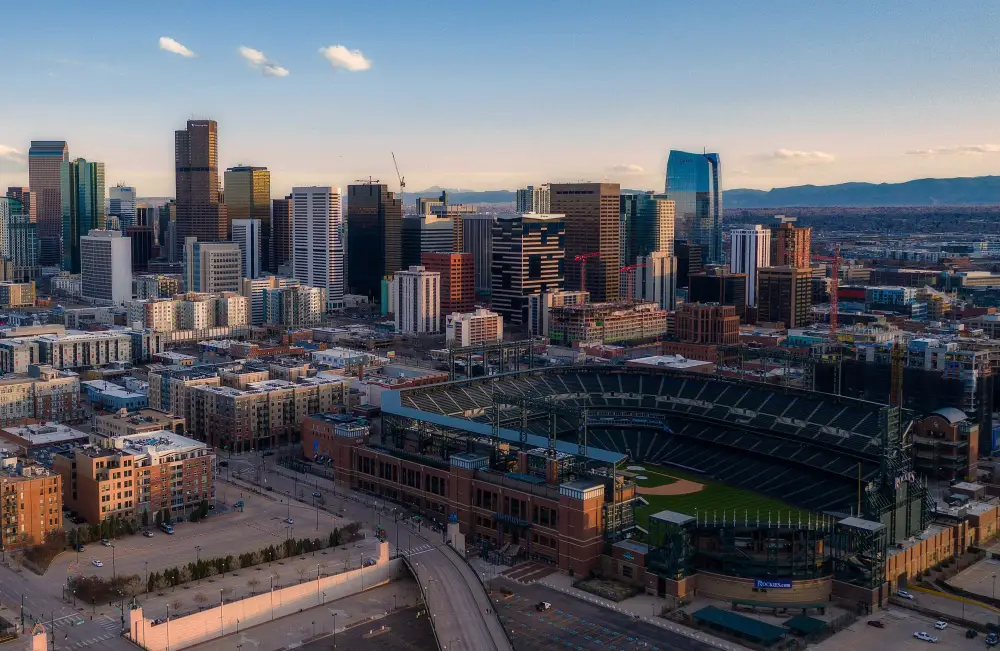
I-70 corridor through Wheat Ridge, Colorado. CGH Injury Lawyers represents truck accident victims in Wheat Ridge.
Wheat Ridge, Colorado

Wheat Ridge Truck Accident Lawyers Who Hold the Carrier Accountable

I-70 carries heavy commercial freight through Wheat Ridge every hour of every day. When a truck driver or carrier's negligence puts you in Intermountain Health Lutheran Hospital, federal and Colorado law give you serious leverage. We use it. Serving Wheat Ridge from our Denver office. No fee unless we win.

No fee unless we win

It's More Than Money.

Get my free truck accident case review

100% confidential. No fee unless we win.

Serving Wheat Ridge from Our Denver Office CGH Injury Lawyers 2701 Lawrence St., Suite 201 Denver, CO 80205 (303) 209-9395 Se habla espanol
5-star rated on Google ABOTA trial advocate on the team Built for trial, not settlement mills No fee unless we win
  • Interstate trucks on I-70 through Wheat Ridge must comply with Federal Motor Carrier Safety Administration rules under Title 49 of the Code of Federal Regulations, covering driver hours, brakes, and electronic logging devices. A violation of those rules can establish the carrier's liability for your injuries.
  • Colorado adds its own layer: C.R.S. 42-4-235 sets minimum commercial vehicle safety equipment standards, and CDOT Code 16 requires commercial trucks to chain up when activated on I-70. A carrier that ignored the chain law during a Wheat Ridge winter crash cannot fall back on a bad-weather defense.
  • Critical evidence disappears fast. Engine control module black-box data can be overwritten within 30 days and dashcam footage within 30 to 90 days. A spoliation letter demanding preservation must go out within the first 72 hours.

A commercial truck crash on I-70 near the Ward Road interchange or on Wadsworth Boulevard is not a bigger car accident. It involves a carrier with its own legal team, a federal regulatory file that can prove negligence, and evidence that carriers often overwrite before an attorney can secure it. CGH Injury Lawyers represents Wheat Ridge truck accident victims from our Denver office, a short drive down I-70. We investigate the company behind the truck, not just the driver, and we prepare every case for trial. No upfront cost, free first consultation.

Who we help

Who we represent after a Wheat Ridge truck crash

Commercial truck crashes in the Wheat Ridge corridor produce some of the most severe injuries on Colorado roads. We represent people at every stage of recovery and the families of those killed.

People we represent

  • Drivers and passengers struck by 18-wheelers on I-70, Wadsworth Boulevard (CO 121), Ward Road (CO 72), Kipling Street (CO 391), or the CO 58 Golden Freeway interchange
  • Pedestrians and cyclists on the Clear Creek Trail or at road crossings hit by commercial vehicles
  • Commuters using the Wheat Ridge/Ward RTD G Line station who cross near the I-70 and Ward Road interchange
  • People injured in construction work zones along I-70 and the Wadsworth corridor
  • Families who lost a loved one in a fatal Jefferson County truck crash

Crashes we investigate

  • Rear-end and override collisions on I-70 between Exit 266 (Ward Road) and Exit 267 (Kipling Street)
  • Runaway truck and brake-failure crashes on the downgrade approaching the Denver metro
  • Semi-truck rollovers, including the 2023 I-70 rollover that blocked both directions through Wheat Ridge
  • Black-ice and wind-driven snow crashes during Colorado's freeze-thaw cycles
  • Work zone collisions on I-70 bridge replacement projects and the Wadsworth reconstruction at 38th and 44th Avenues
The law that governs your case

Federal and Colorado trucking law, decoded for Wheat Ridge crash victims

I-70 through Wheat Ridge is one of the busiest freight corridors in the West. The trucks on it answer to a dual-jurisdiction framework: federal FMCSA standards govern interstate carriers, and Colorado statutes add mountain-grade and chain-law duties on top. Every rule violation is a potential proof of negligence.

Federal Hours of Service (49 CFR Part 395)

  • 11-hour driving limit after 10 consecutive hours off duty
  • 14-hour on-duty window that cannot be reset by breaks
  • 30-minute break required after 8 cumulative hours of driving
  • 60 hours on duty in 7 days, or 70 hours in 8 days
  • Electronic logging devices required since December 2017 (49 CFR Part 395, Subpart B) to prevent falsified paper logs

Colorado-specific standards that apply on I-70

  • C.R.S. 42-4-235 sets minimum commercial vehicle safety equipment standards; a breach can be negligence per se
  • CDOT Code 16 chain law requires commercial trucks to chain up when activated on I-70 and other passes
  • Chains must be carried on I-70 between September 1 and May 31
  • Weight limits of 80,000 pounds gross, 20,000 per single axle, and 34,000 per tandem axle on interstate highways
  • C.R.S. 42-4-1010 governs mandatory brake check stations before major downgrades

Why the chain law matters in a Wheat Ridge case

Code 16 is not optional. When a commercial truck causes a crash during a Code 16 activation without chains installed, the carrier cannot retreat to an "unavoidable accident" or bad-weather defense. Colorado law treats winter driving on I-70 as a manageable duty, not an excuse. Wheat Ridge sits at the base of the Front Range, where freeze-thaw cycles create black ice on I-70 and surface streets from fall through spring. A carrier whose driver entered the Wheat Ridge corridor without chains on a Code 16 day has handed you one of the clearest negligence per se theories in Colorado trucking law.

Local knowledge

Wheat Ridge roads, courts, and trauma care -- the ground your case lives on

A truck accident case in Wheat Ridge happens at specific intersections, is filed in a specific Jefferson County courthouse, and sends victims to a specific Level II trauma center. The more precisely a lawyer knows those details, the more precisely the claim is built.

Where crashes happen

I-70 and the Wheat Ridge Freight Corridor

Interstate 70 passes directly through Wheat Ridge with major interchanges at Ward Road (Exit 266, the gateway to the CO 72 mountain corridor) and Kipling Street (Exit 267, CO 391). The stretch between those two exits carries year-round heavy truck and recreational vehicle traffic. A 2023 semi-truck rollover at this segment closed both I-70 directions. The CO 58 Golden Freeway interchange at I-70 in Wheat Ridge also funnels trucks connecting to US 6 and the Golden industrial corridor. Wadsworth Boulevard (CO 121) runs north-south through the city; active construction at the 38th and 44th Avenue continuous-flow intersection projects creates ongoing conflict points between commercial vehicles and local traffic. When we investigate your crash, we obtain traffic incident reports, CDOT camera footage, and Colorado State Patrol records tied to these specific corridors.

Trauma care

Intermountain Health Lutheran Hospital -- Level II Trauma Center

Truck crash victims from Wheat Ridge are often transported to Intermountain Health Lutheran Hospital at 12911 W 40th Ave, a Level II Trauma Center designation confirmed by the Colorado Department of Public Health and Environment. Those emergency records, imaging studies, and operative notes are central to documenting the full extent of your injuries. We obtain complete medical records early in the case so no treatment, cost, or diagnosis is left out of your damages claim.

Courthouse

Jefferson Combined Court -- 1st Judicial District

Personal injury lawsuits arising from truck crashes in Wheat Ridge, a Jefferson County city, are filed in the Jefferson Combined Court (District Court) at 100 Jefferson County Parkway, Golden, CO 80401. This is the 1st Judicial District. Jefferson County civil procedure, local rules, and the judicial temperament of its District Court judges differ from Denver and Arapahoe County courts. CGH Injury Lawyers handles cases in Jefferson Combined Court and understands the landscape your case will face if it goes to litigation.

Wheat Ridge hazards that show up in truck crash cases

Wheat Ridge presents a concentrated set of risk factors we document when building your case. The city's piedmont location at the base of the Front Range creates rapid temperature swings that produce black ice from fall through spring. Active I-70 bridge replacement projects create lane shifts and reduced shoulders that increase crash risk in work zones. The Clear Creek Trail crosses road corridors through the city, generating pedestrian and cyclist exposure points near commercial traffic. Wind-driven snow and reduced visibility events in the open piedmont terrain compound highway risk on I-70. Each of these factors can affect both how a crash happened and which party bears the fault for it.

Why CGH

Why Wheat Ridge truck accident victims choose CGH Injury Lawyers

We serve Wheat Ridge from our Denver office, a short drive east on I-70. Trial-ready attorneys, a track record built on getting inside the regulatory file, and a bilingual team that removes language barriers at every step of a claim.

The Regulators

FMCSA and CDOT Code 16

We know which rule the carrier broke and how to turn it into proof of negligence in a Jefferson County courtroom.

Denver Office, Wheat Ridge Cases

Minutes from your front door.

Our office at 2701 Lawrence St., Suite 201 in Denver is minutes down I-70 from Wheat Ridge. We represent Jefferson County clients in cases filed at Jefferson Combined Court in Golden.

What We Won't Tell You

We don't take cases we can't stand behind.

If your situation puts you squarely at fault, or if the facts don't support a viable claim against the carrier, we will say so in the free review rather than sign you up and let the case stall. Honest evaluation costs you nothing.

The Evidence Window

72-hour spoliation letter.

Black-box ECM data lives for as little as 30 days. We send the preservation demand before a carrier's routine maintenance cycle wipes it.

Trial-Ready

ABOTA advocate on the team. Over 25 verdicts.

Managing Partner Kevin Cheney is a member of the American Board of Trial Advocates and has tried over 25 cases to verdict. Timothy G. Tarr has been recognized by Best Lawyers every year since 2023. Carriers and their insurers respond to trial-ready counsel differently than to firms that always settle.

Bilingual

Hablamos espanol.

Spanish-speaking attorneys and staff serve Wheat Ridge's Spanish-speaking community from intake through resolution.

No Win, No Fee

Contingency only.

You pay nothing out of pocket. We advance all costs and collect only if we recover for you.

After the crash

What to do after a truck accident in Wheat Ridge

The 72 hours after a commercial truck crash in Wheat Ridge are the most evidence-sensitive period of your case. Your health comes first, but what happens in the first three days often determines how strong your claim is.

  1. Get emergency medical care

    If the crash happened on I-70 or near the Intermountain Health Lutheran Hospital campus at 12911 W 40th Ave, emergency responders may transport you there directly. Lutheran is a Level II Trauma Center. Seek care even if you feel only minor pain -- spinal and traumatic brain injuries often worsen in the hours after a crash. Every record from that initial treatment becomes part of your damages documentation.

  2. Call law enforcement and get the report number

    I-70 crashes typically bring out Colorado State Patrol. Other Wheat Ridge crashes may be handled by Wheat Ridge Police. Get the incident report number before you leave the scene or the hospital. The report documents the carrier's DOT number, the driver's license details, and the initial fault assessment.

  3. Document and preserve

    Photograph your injuries, the crash scene, road conditions, any posted construction signs, and every vehicle involved. Identify the carrier's name, DOT number, and truck license plate. If other drivers witnessed the crash, get their contact information. Do not move or repair your vehicle until an attorney has reviewed the damage.

  4. Do not give a recorded statement to the carrier's insurer

    The carrier's insurance adjuster may contact you within hours. You are not required to give a recorded statement, and anything you say before understanding your rights can be used to limit your claim. Speak with us first.

  5. Call CGH -- we send the spoliation letter immediately

    Within the first 72 hours we demand preservation of ELD data, driver logs, ECM black-box data, dashcam footage, maintenance records, and the carrier's CSA safety file. This is the single most important step after your crash. Call (303) 209-9395.

  6. We investigate every party and build the case

    We look past the driver to the carrier, brokers, cargo loaders, and maintenance contractors. We work with accident reconstruction specialists to map the crash scene, analyze ECM data, and identify every violation of federal or Colorado law that contributed to the collision.

Compensation

What compensation can you recover after a Wheat Ridge truck accident?

Truck crashes produce severe, long-term injuries. Colorado law allows injured people to recover all documented economic losses and the human cost of those injuries. Here is how the categories work.

Economic damages (uncapped)

  • Emergency treatment at Intermountain Health Lutheran Hospital and all follow-up care
  • Future care, surgeries, and long-term rehabilitation
  • Lost wages and missed workdays during recovery
  • Diminished earning capacity if the injury affects your ability to work long-term
  • Property damage to your vehicle and other personal property

Non-economic and punitive damages

  • Physical pain and suffering
  • Emotional distress and trauma
  • Loss of enjoyment of life
  • Relationship and family impact
  • Punitive damages when a carrier's conduct was willful and wanton

How the Colorado damages cap applies to your case

Colorado caps non-economic damages such as pain and suffering at $1.5 million for claims accruing on or after January 1, 2025 under C.R.S. 13-21-102.5, with inflation adjustments beginning in 2028. Two categories are completely uncapped: economic damages such as medical bills and lost wages, and compensatory damages for physical impairment or disfigurement. In severe truck crash cases, the uncapped categories often represent the largest part of the recovery. Punitive damages are governed separately: under C.R.S. 13-21-102(1)(a), they generally cannot exceed the amount of actual damages awarded, though a court may increase that amount for continued willful and wanton conduct during the case.

Carrier defenses

Defenses carriers use in Wheat Ridge truck cases, and how we answer them

Carriers and their insurers move quickly after a crash. They often deploy defenses designed to limit or eliminate your recovery before you have retained a lawyer. Knowing what each defense actually requires is how we keep a strong claim alive.

  1. "The weather caused the accident, not our driver"

    This is the most common defense on the I-70 Wheat Ridge corridor. It fails when CDOT Code 16 was activated and the carrier failed to install chains, failed to train the driver on chain requirements, or sent the truck into the corridor during a known storm without checking conditions. Colorado law treats winter driving on I-70 as a foreseeable, manageable duty. A carrier that ignores that duty does not get to call the resulting crash an act of God.

  2. "The driver was an independent contractor, not our employee"

    Courts look past the label to the actual relationship. When the carrier controls the route, the equipment, and the delivery schedule, it can be vicariously liable under respondeat superior even if the driver holds a contractor agreement. Beyond that, the carrier faces direct claims for negligent hiring, training, supervision, and maintenance regardless of how the driver's employment is classified.

  3. "You were partially at fault under Colorado's comparative negligence rule"

    Colorado uses modified comparative negligence. A plaintiff recovers only when their share of fault is less than 50 percent. When a plaintiff is 50 percent or more at fault, they recover nothing (C.R.S. 13-21-111). Carriers and their insurers routinely inflate the victim's fault percentage to reduce or eliminate the payout. We build the evidence record to counter that tactic before a demand is ever made.

  4. "The Graves Amendment shields us from liability"

    The Graves Amendment (49 U.S.C. 30106) protects pure truck rental and leasing companies from vicarious liability. It does not shield a carrier that was negligent in maintenance or knew the driver was unqualified. Federal leasing regulations under 49 CFR Part 376 impose recordkeeping duties that frequently reveal the carrier's true operational control over the truck and pierce the Graves Amendment defense.

I wish I could leave more than 5 stars!
Grace M., 5-star CGH Injury Lawyers client review
The insurance picture

How truck accident insurance works in Wheat Ridge

Commercial truck crashes involve insurance structures that are far more complex than a standard car accident claim. Understanding who is liable and which policy pays is the foundational work of a Wheat Ridge truck accident case.

  • Interstate trucks operating in Colorado are federally required to carry a minimum of $750,000 in liability coverage under FMCSA regulations (49 CFR Part 387), with higher minimums for certain cargo types including hazardous materials. Carriers often carry far more than the minimum.
  • Multiple insurance policies may apply in a single crash: the carrier's primary liability policy, the shipper's or broker's insurance, a cargo insurer's policy if an improperly secured load contributed, and umbrella or excess liability policies the carrier maintains.
  • If the at-fault truck driver was underinsured and your own auto policy carries uninsured or underinsured motorist coverage, that policy can provide an additional recovery layer for Wheat Ridge victims.
  • The carrier's insurer begins investigating the crash the moment it receives notice. Their adjuster is not working on your behalf. Having counsel before that adjuster reaches you is how you preserve your rights from the first conversation.

We identify every applicable policy in play before we make a demand. We do not settle against a single carrier policy if a broker, shipper, or maintenance contractor carries their own coverage for the same crash.

Questions

Wheat Ridge truck accident, frequently asked questions

How long do I have to file a truck accident lawsuit after a Wheat Ridge crash?

Colorado gives you three years from the date of the crash to file a lawsuit for injuries arising out of the use or operation of a motor vehicle, including commercial trucks (C.R.S. 13-80-101(1)(n)). That deadline feels long, but black-box ECM data can be overwritten in 30 days and dashcam footage in 30 to 90 days, so the clock for preserving evidence starts the moment the crash happens. Waiting months to retain a lawyer often means the most powerful evidence in your case is already gone. If the at-fault vehicle was operated by a government entity, a written notice of claim must be filed within 182 days of discovering the injury (C.R.S. 24-10-109(1)).

Can a truck carrier blame the I-70 weather in Wheat Ridge for the crash?

Rarely successfully. CDOT Code 16 requires commercial trucks to install chains when activated on I-70, and carriers must carry chains on I-70 between September 1 and May 31. A carrier that sent a truck through the Wheat Ridge corridor during a Code 16 activation without chains cannot claim the crash was caused by unavoidable weather. Colorado law treats winter driving on the I-70 mountain and piedmont corridor as a foreseeable, manageable duty. Wheat Ridge's location at the base of the Front Range, with its freeze-thaw black-ice cycles and wind-driven snow, makes this defense arise frequently, and we know exactly how to defeat it.

The carrier says the driver was an independent contractor. Does that end my claim against the company?

No. Colorado courts look past the contractor label to the real relationship between the carrier and the driver. When the carrier controls the work, the equipment, and the schedule, it can be vicariously liable under respondeat superior. Even when the driver is genuinely independent, the carrier still faces direct liability for negligent hiring, training, supervision, and maintenance. Federal leasing regulations under 49 CFR Part 376 also impose recordkeeping duties that often reveal the carrier's true operational control over the truck.

Where is a Wheat Ridge truck accident lawsuit filed?

Personal injury lawsuits arising from crashes in Wheat Ridge, a Jefferson County city, are filed in Jefferson Combined Court (District Court) at 100 Jefferson County Parkway, Golden, CO 80401. This is the 1st Judicial District. Most truck accident claims settle before a lawsuit is filed, but the local court environment, applicable judges, and Jefferson County jury pool all affect how a case is valued and negotiated. CGH Injury Lawyers handles cases in Jefferson Combined Court.

What evidence matters most in a Wheat Ridge I-70 truck accident case?

The highest-value evidence is the electronic logging device data (which shows real hours driven versus what the carrier reported), the engine control module black-box data on speed and hard braking, dashcam footage, and the carrier's maintenance records and CSA safety scores. ELD data must be kept by federal law for six months, but ECM and dashcam data can be overwritten in as little as 30 days. We demand preservation of all of it within 72 hours. Scene photographs, Colorado State Patrol incident reports, CDOT traffic camera footage, witness contact information, and your complete medical records from Intermountain Health Lutheran Hospital round out the evidence base.

Is there a cap on what I can recover from a truck accident claim in Colorado?

Colorado caps non-economic damages such as pain and suffering at $1.5 million for claims accruing on or after January 1, 2025 under C.R.S. 13-21-102.5, with inflation adjustments starting in 2028. Two categories are not capped at all: economic damages including medical bills, lost wages, future care costs, and diminished earning capacity, and compensatory damages for physical impairment or disfigurement. In severe truck accident cases, the uncapped economic categories often make up the bulk of the recovery. The specific cap that applies to your case depends on when the crash occurred.

What if I was partly at fault for the Wheat Ridge truck crash?

Colorado uses modified comparative negligence under C.R.S. 13-21-111. If your share of fault is less than 50 percent, you can still recover damages, but the award is reduced by your percentage of fault. If you are found to be 50 percent or more at fault, you recover nothing. Carriers and their insurers routinely argue that the crash victim shares more blame than the evidence supports. We build the evidence record -- scene reconstruction, ELD data, carrier safety history -- to establish the carrier's share of fault before a demand is ever made.

Should I accept the truck carrier's insurance company's first offer?

No. The carrier's adjuster is tasked with minimizing the payout, and an early offer is almost always made before the full extent of your injuries is known. Accepting a settlement releases your right to pursue more compensation later, even if your condition worsens. We evaluate the full scope of your economic and non-economic damages, identify every applicable insurance policy, and negotiate from a position built on evidence and trial readiness, not urgency. Call us before you respond to any offer.

It's More Than Money.

Hit by a truck on I-70 or Wadsworth. We go after the carrier.

Free consultation. No fee unless we win. Serving Wheat Ridge from our Denver office at 2701 Lawrence St., Suite 201.

Tell us what happened

100% confidential. No fee unless we win.

Prefer to read first? See how Colorado truck accident law works.

CGH Injury Lawyers · 2701 Lawrence St., Suite 201, Denver, CO 80205 · Serving Wheat Ridge, Jefferson County, and the Colorado Front Range