
ClickCease
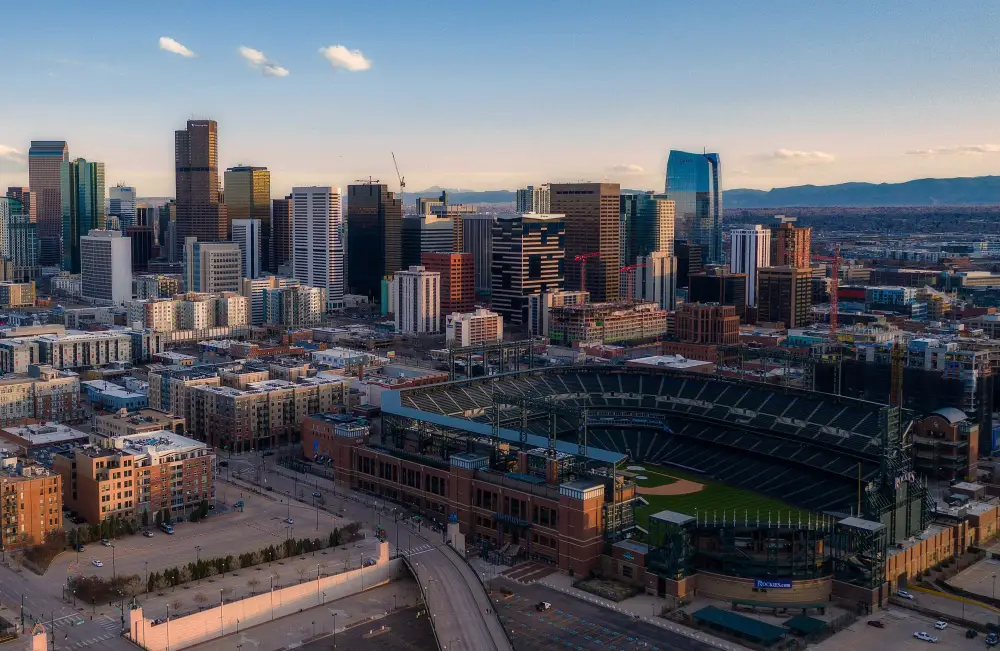
Aurora, Colorado crash corridor on I-225. CGH Injury Lawyers represents distracted driving victims across Arapahoe County.

IT'S MORE THAN MONEY.

Aurora Distracted Driving Accident Lawyers Who Make Inattentive Drivers Pay

When a driver looking at a phone hits you on I-225, East Colfax, or anywhere in Aurora, you are dealing with serious injuries, lost work, and an insurer that started building its defense before you left the hospital. CGH Injury Lawyers serves Aurora and Arapahoe County from our Denver office, proves what the driver was doing, files in the 18th Judicial District, and tries the case in Arapahoe County District Court when an insurer refuses to be fair. No fee unless we win.

No fee unless we win
Or speak with our team now (303) 209-9395

Tell us what happened in Aurora

100% confidential. No fee unless we win.

5-star rated on Google ABOTA trial advocate on the team Trial lawyers, not a settlement mill 8 attorneys, bilingual EN / ES

A driver who causes a crash in Aurora while distracted is liable for your injuries under ordinary motor-vehicle negligence law. To win, you must prove four elements: duty, breach, causation, and damages. A phone record, a traffic-camera clip, or a police-report notation is often the single piece of evidence that locks down the breach, and that evidence has a short shelf life.

  • Colorado uses modified comparative fault. You can recover after an Aurora crash even if you share some blame, as long as your share of fault is less than 50 percent (C.R.S. 13-21-111). If you are found 50 percent or more at fault, you recover nothing, and your award is reduced by your percentage of fault.
  • The deadline to file a lawsuit for injuries from an Aurora motor vehicle crash is three years from the date of the crash (C.R.S. 13-80-101(1)(n)). If the at-fault vehicle was operated by a city of Aurora employee or a government agency, written notice is required within 182 days of discovering the injury (C.R.S. 24-10-109(1)).
  • Cell-carrier data and traffic-camera footage have short retention windows. The evidence that proves a driver was distracted can disappear in weeks, so the time to preserve it is now, not near the filing deadline.

CGH Injury Lawyers does not have an Aurora office. We serve Aurora and Arapahoe County clients from our Denver office at 2701 Lawrence St., file in the 18th Judicial District, and meet you where it works for you. Trial Partner Kevin Cheney is a member of the American Board of Trial Advocates and has tried over 25 cases to verdict. You pay nothing unless we recover for you.

Who we help

Who we represent after a distracted driving crash in Aurora

Distracted driving crashes in Aurora happen in a wide range of situations. This page is for people dealing with any of them, and it is honest about the cases we cannot take.

We represent you if you were

  • A driver or passenger hit by someone who was on their phone
  • A rear-end collision victim on I-225, I-70, or East Colfax where the other driver had no time to brake
  • A pedestrian struck along East Colfax or near the Anschutz Medical Campus by an inattentive driver
  • A cyclist hit on an Aurora street or bike lane by a driver who was not watching the road
  • Hit at an Aurora intersection where the other driver ran a light while distracted
  • A rideshare passenger injured because an Uber or Lyft driver was looking at the app

Situations we do not accept

  • Cases where you were 50 percent or more at fault for the crash under C.R.S. 13-21-111, Colorado's modified comparative fault rule. We tell you plainly in the free review if the facts put you on the wrong side of that line.
  • Cases with no documentable injury. Minor fender-benders with no medical treatment and no wage loss are not cases we can honestly take on contingency.
  • Claims already resolved by a signed release with the at-fault driver's insurer. A signed release is generally final.

The law that governs your case

Colorado negligence law decoded for Aurora distracted driving victims

A distracted driving case in Aurora is a motor-vehicle negligence case. The legal theory is straightforward, but proving it requires the right evidence gathered at the right time. Here is what the law actually requires.

The four elements you must prove

Every motor-vehicle negligence claim in Colorado rests on four elements. Miss one and the claim fails, which is why evidence quality matters so much from the first hours after an Aurora crash.

  1. Duty

    Every driver operating a vehicle on an Aurora road owes a duty of reasonable care to other motorists, passengers, cyclists, and pedestrians. This element is almost always present in a distracted driving case.

  2. Breach

    The driver failed to meet that standard of care by being distracted. Phone records showing activity at the time of impact, a traffic camera showing the driver's head down, a witness statement, or a police report noting distraction are the common ways breach gets proven. This is often the hardest element to lock down, and it is where early evidence preservation is everything.

  3. Causation

    The distracted driver's breach caused your crash and your injuries. Insurance companies frequently argue that the crash had another cause or that your injuries existed before the crash. Medical records, imaging, and sometimes accident reconstruction are the tools that establish causation.

  4. Damages

    You suffered measurable harm as a result, from medical bills and lost income to pain and the long-term impact of a serious injury. Documenting every category of harm is how a claim reaches full value rather than the insurer's first number.

Colorado comparative fault: what it means for your Aurora case

Colorado follows a modified comparative fault rule under C.R.S. 13-21-111. You can recover damages as long as your share of fault is less than 50 percent. If you are found 50 percent or more at fault, you recover nothing. If you are, say, 20 percent at fault, your award is reduced by 20 percent. This matters because insurance adjusters routinely claim the victim contributed to the crash. An attorney reviews the evidence to challenge inflated fault assessments before any number gets locked in.

The filing deadline for your Aurora crash

Colorado gives you three years from the date of the crash to file a lawsuit for injuries arising out of the use or operation of a motor vehicle (C.R.S. 13-80-101(1)(n)). That sounds like a long time, but phone-carrier records and traffic-camera footage have retention periods that are far shorter, and the evidence that proves a driver was distracted can disappear in weeks. If a city of Aurora vehicle or a government agency was involved, a separate written notice is required within 182 days of discovering the injury (C.R.S. 24-10-109(1)). Call before the records are gone, not before the deadline.

Local knowledge

Aurora roads, Aurora courts, Aurora trauma care

A distracted driving crash in Aurora happens on specific roads, gets treated at specific hospitals, and gets filed in a specific courthouse. Here is the ground we work on.

High-Crash Corridors

I-225, I-70, East Colfax, and E-470

Aurora's road network is defined by four major corridors, and distraction turns each of them dangerous. I-225 runs 12 miles from I-25 to I-70 through Adams, Arapahoe, and Denver counties, with high-speed rear-end collisions and merge conflicts at the I-70 interchange. I-70 crosses Aurora east-west with the Tower Road interchange at Exit 286, a high-volume merge point where commercial trucks and passenger cars interact at highway speed. East Colfax (US Highway 40 and US Highway 287) is Aurora's primary east-west arterial, with CDOT safety improvements targeting Chambers Road and the I-225 intersection. E-470 is a 46.4-mile eastern toll beltway serving Aurora with high-speed merge conditions throughout. A driver who can manage inattention on a quiet road cannot at these speeds.

Trauma Care

UCHealth University of Colorado Hospital and Children's Hospital Colorado, Anschutz Medical Campus

Aurora crash victims with serious injuries are typically transported to UCHealth University of Colorado Hospital, a Level I Trauma Center verified by the American College of Surgeons and designated by the Colorado Department of Public Health and Environment, on the Anschutz Medical Campus at E. 16th Avenue and Fitzsimons Parkway. The campus also houses Children's Hospital Colorado, the only Level I Regional Pediatric Trauma Center in the region. Trauma records from these facilities document the full scope of your injuries and anchor the damages portion of your Aurora claim. The Anschutz campus also generates its own dense vehicle and pedestrian traffic, making it both a treatment destination and a crash location.

Courthouse

Arapahoe County District Court, 18th Judicial District

An Aurora distracted driving lawsuit that exceeds the county-court jurisdictional limit is filed in Arapahoe County District Court, part of the 18th Judicial District, located at the Arapahoe County Justice Center, 7325 S. Potomac Street, Centennial, CO 80112. Aurora spans Arapahoe, Adams, and Douglas counties, and the county where the crash occurred determines which court handles the case; most Aurora crash sites fall within Arapahoe County. Local procedure, the Arapahoe County jury pool, and the defense firms that practice there all differ from other Colorado counties. We handle Arapahoe County District Court cases directly from our Denver office.

Serving Aurora From Denver

CGH Injury Lawyers does not have an Aurora office

Our office is at 2701 Lawrence St., Suite 201, Denver, CO 80205, (303) 209-9395. We serve Aurora and Arapahoe County distracted driving clients from that office, file in Arapahoe County District Court, and come to you for meetings, depositions, and site inspections. There is no Aurora storefront. What you get is the work of a trial-ready team, not a local address.

Why CGH

Why Aurora distracted driving victims choose CGH Injury Lawyers

A trial-ready team, attorneys who have tried over 25 cases to verdict, bilingual service, and no fee unless we win. We do not publish settlement figures for distracted driving cases, because what a driver's phone records show and what your injuries actually cost are facts that belong to your case, not a headline on a web page. Here is what we bring instead.

The Rule

C.R.S. 13-21-111

Colorado's modified comparative fault law means you can recover even if you share some blame, as long as your share is less than 50 percent. We push back when adjusters inflate your fault number.

Footage disappears fast

We preserve it the same day.

Traffic-camera footage along I-225, I-70, East Colfax, and the E-470 corridor is overwritten on short cycles. We send preservation letters to CDOT, the City of Aurora, and private operators the same day you retain us. Cell-carrier records follow a similar clock.

The Phone

The records tell the truth.

Call logs, text timestamps, and app activity from a driver's carrier records can prove exactly when distraction began. We know how to get them before they are gone.

Real Trial Lawyers

8 attorneys. Over 25 verdicts.

Managing Partner Kevin Cheney is an ABOTA member who has tried over 25 cases to verdict. Insurers respond differently when a firm is genuinely ready to try the case in Arapahoe County.

Serving Aurora From Denver

No Aurora storefront. The work, not an address.

Our office at 2701 Lawrence St., Suite 201 in Denver is where your attorney works. We serve Aurora and Arapahoe County clients from there, file in the 18th Judicial District, and come to you for meetings, depositions, and site inspections.

Bilingual

Hablamos espanol.

Spanish-speaking staff and attorneys serve Aurora's Spanish-speaking community.

No Win, No Fee

Contingency only.

You pay nothing out of pocket for legal fees. We advance costs and collect only from a settlement or verdict.

After the crash

What to do after a distracted driving crash in Aurora

Take care of your health first, protect the evidence, then call before you talk to the insurer. With distracted driving, the evidence clock runs faster than the legal one.

  1. Get to safety and call 911

    Colorado law requires reporting crashes that involve injury, death, or significant property damage. A police report creates an official record of the scene, and Aurora Police Department and Colorado State Patrol respond to crashes on I-225, I-70, and East Colfax. If an officer notes that the other driver was on a phone, that notation can become key evidence.

  2. Seek medical care immediately

    UCHealth University of Colorado Hospital on the Anschutz Medical Campus is the highest-level trauma facility serving Aurora crash victims. Even a crash that feels minor at the scene can produce whiplash and traumatic brain injury symptoms hours or days later, and a treatment gap is one of the first things an insurer uses to argue your injuries were not serious.

  3. Document the scene and the driver

    Photograph the vehicles, the road, and any injuries. If you saw the other driver holding or looking at a phone, write it down while it is fresh. Collect witness names and phone numbers, and note the police report number before you leave. On I-225 or I-70, note the mile marker and photograph the freeway signs visible from the scene.

  4. Do not give a recorded statement

    The at-fault driver's insurer is not on your side. Do not agree to a recorded statement or sign any release before an attorney reviews it. Anything you say becomes part of the claims record and can be used to limit your recovery.

  5. Call us before the evidence is gone

    Traffic-camera footage and cell-carrier records have short retention windows. We send preservation letters to CDOT, the City of Aurora, and private camera operators the same day you retain us. Call (303) 209-9395.

  6. We build, negotiate, and litigate your claim

    We prove what the driver was doing, document your full damages, and negotiate from trial readiness. When an insurer refuses a fair offer, we file in Arapahoe County District Court and try your case.

Compensation

What compensation can you recover after a distracted driving crash in Aurora?

Colorado law recognizes two broad categories of damages after a motor vehicle crash. Knowing what is capped and what is not is critical to building a claim that does not leave money on the table.

Economic damages (never capped)

  • Emergency care, surgery, and hospitalization
  • Ongoing medical treatment and rehabilitation
  • Future medical care and life-care costs
  • Lost wages and lost income during recovery
  • Lost earning capacity when an injury is permanent
  • Property damage to your vehicle
  • Out-of-pocket expenses tied to the crash

Non-economic damages

  • Pain and suffering
  • Emotional distress
  • Loss of enjoyment of life
  • Loss of consortium for a spouse or family member

The damages cap explained

For claims accruing on or after January 1, 2025, Colorado caps non-economic damages such as pain and suffering at $1.5 million under C.R.S. 13-21-102.5, with inflation adjustments beginning in 2028. Lower, inflation-adjusted caps apply to older claims depending on when the claim accrued. Two categories are never subject to the cap: economic damages such as medical bills and lost wages, and compensatory damages for physical impairment or disfigurement, which together often represent the bulk of a serious crash recovery. Punitive damages are available under C.R.S. 13-21-102 when a defendant acted with fraud, malice, or willful and wanton disregard for others, and they are separate from and in addition to compensatory damages.

I wish I could leave more than 5 stars!
Grace M., 5-star CGH Injury Lawyers client review

Insurer defenses

Defenses insurers use in Aurora distracted driving cases, and how we counter them

Distracted driving claims do not die in court, they die during the claims process when the victim does not know what to say to the adjuster. Here are the three most common defenses and the evidence that defeats them.

  1. "You were partly at fault too"

    Colorado's modified comparative fault rule under C.R.S. 13-21-111 means every point of fault the adjuster pins on you reduces your award. Claiming you were tailgating, not watching ahead, or speeding is a standard tactic. We respond with the full evidence picture: traffic-camera timing, vehicle data recorders, police reports, and witness accounts that show where the fault actually sat and by how much.

  2. "There is no proof the driver was distracted"

    Without a recorded admission or a police citation, insurers often argue the driver was simply inattentive rather than distracted by a device. The difference matters because device use is harder to dispute when records exist. We issue preservation letters immediately and subpoena carrier records if the case goes to litigation. The driver's phone tells a story the adjuster cannot rewrite.

  3. "Your injuries were pre-existing or not serious"

    Insurers comb your medical history for any prior complaint they can blame the injury on, and they treat a gap in treatment as proof you were fine. We connect the crash to your injuries with imaging, treating-physician records, and, when needed, expert testimony, and we document why the care you received was reasonable and necessary.

We will also tell you honestly if your case has a problem we cannot overcome. If the evidence does not support the claim or the facts put your fault at 50 percent or more under C.R.S. 13-21-111, we say so in the free consultation rather than take a case we cannot win. Honesty upfront is worth more than false hope later.

Fault and coverage

Insurance coverage in Aurora distracted driving claims

Colorado is not a no-fault state. You pursue your claim against the at-fault driver's liability insurer, not your own, but your own policy can still matter when the at-fault driver is uninsured or underinsured.

  • If you carry uninsured or underinsured motorist (UM/UIM) coverage, you may file a claim with your own insurer when the at-fault driver's coverage is absent or inadequate. Colorado UM/UIM claims are governed by C.R.S. 13-80-107.5 under Pham v. State Farm, 2013 CO 17.
  • We identify every available coverage source, including your own policy, the driver's commercial or rideshare insurer if the crash involved a working driver, and any umbrella policies, before we calculate your full potential recovery.
  • When an Aurora crash involves a city vehicle or a government employee driving in the course of their duties, a separate claims process applies under the Colorado Governmental Immunity Act, with a 182-day written notice requirement (C.R.S. 24-10-109(1)) and statutory caps of $505,000 per person and $1,421,000 per occurrence for claims accruing on or after January 1, 2026 (C.R.S. 24-10-114).

Frequently asked questions

Aurora distracted driving accident: frequently asked questions

How do you prove a driver was distracted in Aurora?

Distraction is the breach element of a negligence claim, and it is proven with evidence: phone-carrier call logs and text timestamps, app activity, traffic-camera footage showing the driver's head down, vehicle data recorders, witness statements, and any notation of distraction in the police report. Much of this evidence has a short retention window, so we send preservation letters and, in litigation, subpoena carrier records. The earlier we are involved, the more of that record survives.

How long do I have to file a distracted driving lawsuit in Aurora?

Colorado gives you three years from the date of the crash to file a lawsuit for injuries arising out of the use or operation of a motor vehicle (C.R.S. 13-80-101(1)(n)). If a city of Aurora vehicle or a government agency was involved, you must also provide written notice within 182 days of discovering the injury (C.R.S. 24-10-109(1)). That filing deadline is for filing in court, not for gathering evidence. Phone records and camera footage can disappear in weeks, so start the process early, not near the deadline.

What if I was partly at fault for the Aurora crash?

You can still recover as long as your share of fault is less than 50 percent under Colorado's modified comparative fault rule (C.R.S. 13-21-111). Your award is reduced by your percentage. So if you were 20 percent at fault and your damages are $100,000, you recover $80,000. If you are found 50 percent or more at fault, you recover nothing. Aurora insurers often push the victim's fault number up early in the process, especially on high-speed corridors like I-225 where following distance and lane changes are easily contested. We review the evidence to challenge inflated assessments before any number gets accepted.

Where is an Aurora distracted driving lawsuit filed?

An Aurora distracted driving lawsuit that exceeds the county-court jurisdictional limit is filed in Arapahoe County District Court, 18th Judicial District, at the Arapahoe County Justice Center, 7325 S. Potomac Street, Centennial, CO 80112. Aurora spans Arapahoe, Adams, and Douglas counties; the county where the crash occurred determines which court handles the case, and most Aurora crash sites fall within Arapahoe County. Most claims settle before a lawsuit is filed, but venue affects the local rules and jury pool. CGH handles Arapahoe County District Court cases directly.

Is there a cap on damages in an Aurora distracted driving case?

Economic damages, which include medical bills, lost wages, and future care costs, are never capped in Colorado. Non-economic damages such as pain and suffering are capped at $1.5 million for claims accruing on or after January 1, 2025 under C.R.S. 13-21-102.5, with inflation adjustments starting in 2028. Compensation for physical impairment or disfigurement is also not subject to the cap. Lower caps apply to claims that accrued before January 1, 2025, with the specific amount depending on when the crash occurred. When a government entity is the defendant, the Colorado Governmental Immunity Act caps apply: $505,000 per person and $1,421,000 per occurrence for claims accruing on or after January 1, 2026 (C.R.S. 24-10-114).

What if the distracted driver had no insurance or low limits?

If you carry uninsured or underinsured motorist (UM/UIM) coverage, you may file a claim with your own insurer when the at-fault driver's coverage is absent or inadequate. Colorado UM/UIM claims are governed by C.R.S. 13-80-107.5 under Pham v. State Farm, 2013 CO 17. We identify every available coverage source, including the driver's commercial or rideshare insurer if applicable and any umbrella policies, before we calculate your full potential recovery.

Which Aurora hospitals treat serious distracted driving crash injuries?

Serious injuries are typically treated at UCHealth University of Colorado Hospital, a Level I Trauma Center verified by the American College of Surgeons and designated by the Colorado Department of Public Health and Environment, on the Anschutz Medical Campus in Aurora. Children's Hospital Colorado, on the same campus, is the only Level I Regional Pediatric Trauma Center in the region. The trauma records from these facilities document the full scope of your injuries and form the foundation of your damages claim.

Can I still file a claim if I did not call the police at the Aurora crash scene?

Often, yes, though a police report makes the claim stronger. If no report was made, we rebuild the record other ways: medical records that tie your injuries to the crash, witness statements, traffic-camera footage where it exists, and the at-fault driver's own phone records. The sooner you call, the more of that evidence we can preserve. Reach our Denver office at (303) 209-9395.

IT'S MORE THAN MONEY.

A distracted driver changed your life in two seconds. We hold them accountable for every cost that follows.

Free consultation. No fee unless we win. Serving Aurora and Arapahoe County from our Denver office.

Start your free Aurora case review

100% confidential. No fee unless we win.

Read next: Colorado car accident lawyers statewide

CGH Injury Lawyers · Serving Aurora from our Denver office at 2701 Lawrence St., Suite 201, Denver, CO 80205