ClickCease
Free consultations · Se habla espanol
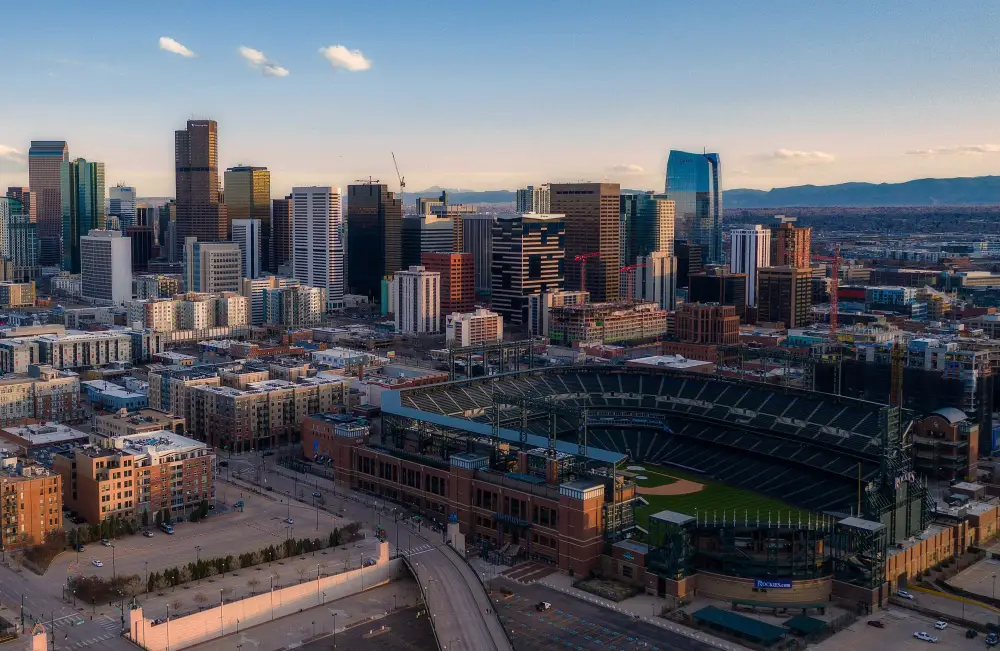
Aurora, Colorado traffic on I-225. CGH Injury Lawyers represents rear-end crash victims across Arapahoe County.

IT'S MORE THAN MONEY.

Aurora Rear-End Accident Lawyers Who Pin the Fault Where It Belongs

A rear-end crash on I-225, East Colfax, or anywhere in Aurora can leave you with a neck and back injury the insurer wants to call minor. The following driver is almost always at fault, but the adjuster still works to undervalue your claim from day one. CGH Injury Lawyers serves Aurora and Arapahoe County from our Denver office, files in the 18th Judicial District, and tries the case in Arapahoe County District Court when an insurer refuses to pay full value. No fee unless we win.

No fee unless we win
Or speak with our team now (303) 209-9395

Tell us what happened in Aurora

100% confidential. No fee unless we win.

5-star rated on Google $3,000,000 car crash settlement, Montrose County ABOTA trial advocate on the team No fee unless we win

A rear-end crash in Aurora often produces a real neck or back injury and a quick lowball offer from the insurer who knows their driver was following too closely. Whether it happened in stopped traffic on I-225, at a light on East Colfax at Chambers Road, or merging onto E-470 toward Denver International Airport, the law and the insurer's tactics are the same. CGH Injury Lawyers represents Aurora rear-end crash victims in Arapahoe County District Court, serving you from our Denver office with no upfront cost.

  • The driver who hits you from behind is presumed at fault in most cases, because Colorado law requires every driver to keep a safe following distance and to drive at a speed reasonable for traffic and road conditions. That presumption is strong, but it is not automatic, and the insurer will look for any fact that shifts blame to you.
  • You have three years from the date of your Aurora crash to file a car accident lawsuit in Colorado (C.R.S. 13-80-101(1)(n)). If a city of Aurora vehicle or a government agency was involved, written notice is required within 182 days of discovering the injury (C.R.S. 24-10-109(1)).
  • Colorado uses modified comparative fault. You can still recover after an Aurora rear-end crash even if you were partly at fault, as long as your share of fault is less than 50 percent (C.R.S. 13-21-111). If you are found 50 percent or more at fault, you recover nothing.

CGH Injury Lawyers does not have an Aurora office. We serve Aurora and Arapahoe County clients from our Denver office, file in the 18th Judicial District, and meet you where it works for you. Trial Partner Kevin Cheney is a member of the American Board of Trial Advocates and has tried over 25 cases to verdict. You pay nothing unless we recover for you.

Who is at fault

Why the following driver is usually at fault in an Aurora rear-end crash

In a rear-end collision the driver behind is presumed responsible, because Colorado law requires drivers to keep a safe distance and control their speed for conditions. That presumption is the starting point of your claim, not the end of it.

Colorado traffic law expects every driver to follow at a distance that is reasonable and prudent for the speed of traffic and the condition of the road. A driver who cannot stop in time for the car ahead has, in most cases, failed that duty. That is why insurers rarely contest fault outright in a clean rear-end case. What they contest instead is the injury: they argue the impact was too minor to hurt you, that your pain comes from something else, or that you share blame for the way you stopped.

We build the fault side and the injury side together. We document the following driver's speed and distance, preserve the police report and any dash or traffic-camera footage, and connect your neck, back, or head injury to the mechanics of the impact. When the insurer tries to recast a sudden, lawful stop as your fault, we answer it with the evidence rather than letting the adjuster's version stand.

Where Aurora rear-end crashes happen

The Aurora roads where rear-end collisions cluster

Rear-end crashes concentrate where traffic slows suddenly: stop-and-go freeway congestion, signalized arterials, and winter road surfaces. Aurora has all three in volume.

  1. I-225 stop-and-go congestion

    I-225 runs 12 miles from I-25 in Denver to I-70 in Aurora, spanning Adams, Arapahoe, and Denver counties. Rush-hour congestion creates repeated sudden slowdowns where a distracted following driver plows into stopped traffic. Merge points near the I-70 interchange compress traffic and produce the high-speed rear-end chain reactions that send Aurora crash victims to the hospital.

  2. East Colfax signals at Chambers Road and I-225

    East Colfax Avenue (US Highway 40 and US Highway 287) is one of Aurora's primary arterials and carries heavy daily traffic. CDOT targeted the intersections at Chambers Road and at I-225 for safety improvements because collision frequency was high enough to draw agency attention. Signalized arterials like Colfax are classic rear-end territory: a driver looking at a phone instead of the light ahead rolls into the car stopped at the red.

  3. I-70 and the Tower Road interchange merge

    I-70 crosses Aurora east-west, and the Tower Road interchange at Exit 286 is a key access point where passenger vehicles merge into heavy commercial truck traffic moving to and from Denver International Airport. When a following vehicle fails to match the speed differential at an on-ramp or a backup, the result is a rear-end impact at highway speed, which produces some of the most severe injuries we see.

  4. E-470 high-speed merges

    E-470 is a 46.4-mile eastern beltway serving Aurora from the south through the east side. High-speed merge conflicts and commercial vehicles exiting toward distribution centers in southeast Aurora create conditions where a tailgating driver cannot stop in time. The speed on this corridor turns what would be a fender bender on a city street into a serious injury claim.

  5. Black ice and hail: Aurora's seasonal rear-end driver

    Aurora sits in Colorado's hail alley, and November through March brings black ice across I-225, I-70, and East Colfax on a recurring basis. A driver who fails to slow for icy pavement loses the stopping distance the law requires and rear-ends the car ahead. When an untreated road surface is the contributing cause, CGH investigates whether a government entity's failure to treat the roadway opens a separate avenue of recovery subject to the CGIA notice requirements under C.R.S. 24-10-109(1).

After the crash

What to do after a rear-end crash in Aurora

Rear-end injuries like whiplash often feel mild at the scene and worsen over the next days. The steps you take in the first hours protect both your health and the value of your claim.

  1. Get to safety and call 911

    Colorado law requires reporting crashes that involve injury, death, or significant property damage. A police report creates an official record of the crash, and Aurora Police Department and Colorado State Patrol respond to crashes on I-225, I-70, and East Colfax. The report documents the sequence of impact before either driver can alter the story.

  2. Seek medical care immediately

    UCHealth University of Colorado Hospital, a Level I Trauma Center on the Anschutz Medical Campus, is the highest-level trauma facility serving Aurora crash victims. Even if you feel fine, see a doctor: whiplash, disc injuries, and concussion symptoms commonly appear hours or days after a rear-end impact, and a gap in treatment is the first thing the insurer uses to argue you were not really hurt.

  3. Document the Aurora crash scene

    Photograph both vehicles, the damage to the rear of your car and the front of theirs, the road conditions, and any injuries. On I-225 or I-70 where traffic moves fast, note the mile marker and photograph nearby freeway signs. Collect witness names and phone numbers and write down the police report number before you leave.

  4. Do not give a recorded statement

    The at-fault driver's insurer is not on your side. Do not agree to a recorded statement and do not sign any release before an attorney reviews it. In a rear-end case, a recorded statement is where adjusters try to get you to downplay your injuries or accept partial blame for stopping suddenly.

  5. Contact a car accident attorney before the deadline

    Colorado's filing deadline for crash claims is three years from the date of the collision (C.R.S. 13-80-101(1)(n)). If a government vehicle or a road defect was involved, the notice deadline is 182 days from discovering the injury (C.R.S. 24-10-109(1)). A free consultation costs nothing and preserves your options.

Compensation

What compensation can you recover after an Aurora rear-end crash?

Colorado law allows Aurora crash victims to pursue two broad categories of damages: economic losses you can document with bills and records, and non-economic losses for the human cost of an injury.

Economic damages (no cap)

  • Medical expenses, past and future
  • Physical therapy and chiropractic care for neck and back injuries
  • Lost wages and lost income
  • Loss of earning capacity
  • Property damage to your vehicle
  • Out-of-pocket expenses directly tied to the crash

Non-economic damages

  • Pain and suffering
  • Emotional distress
  • Loss of enjoyment of life
  • Loss of consortium for a spouse or family member

For Aurora crash claims accruing on or after January 1, 2025, Colorado caps non-economic damages such as pain and suffering at $1.5 million under C.R.S. 13-21-102.5, with inflation adjustments beginning in 2028. Compensation for physical impairment or disfigurement is not capped at all. Economic damages such as medical bills and lost wages are never capped. Punitive damages are available when a defendant acted with fraud, malice, or willful and wanton disregard for others (C.R.S. 13-21-102), which can apply when a rear-end crash involves a drunk or reckless following driver.

Fault and coverage

What if the insurer says you stopped too fast?

Even though the following driver is usually at fault in a rear-end crash, you can still recover after an Aurora collision even if you were assigned part of the blame. Colorado follows a modified comparative fault rule under C.R.S. 13-21-111. You can recover damages as long as your share of fault is less than 50 percent, and your award is reduced by your percentage of fault. If you are found 50 percent or more at fault, you recover nothing. In rear-end cases, insurers commonly argue the lead driver braked suddenly or had a broken brake light to push a share of fault onto the injured person. An attorney who prepares for trial can challenge that assignment with the police report, witness accounts, and vehicle data.

How Colorado car insurance works after an Aurora crash

  • Colorado is not a no-fault state. You pursue your claim against the at-fault driver's liability insurer, not your own.
  • Uninsured and underinsured motorist (UM/UIM) coverage is critical protection when the at-fault Aurora driver has no insurance or carries inadequate limits, which is common in low-limit rear-end cases. Colorado UM/UIM claims are governed by C.R.S. 13-80-107.5 under Pham v. State Farm, 2013 CO 17.
  • When an Aurora crash involves a city vehicle or a government employee driving in the course of their duties, a separate CGIA claims process applies with different caps and a 182-day written notice requirement (C.R.S. 24-10-109(1)). The CGIA per-person cap is $505,000 and the occurrence cap is $1,421,000 for claims accruing on or after January 1, 2026 (C.R.S. 24-10-114).
5-star rated on Google

I wish I could leave more than 5 stars!

Grace Macaluso, 5-star Google review

How it works

How an Aurora rear-end accident claim works from first call to resolution

An Aurora rear-end claim moves through six stages, from a free case evaluation through negotiation and, when an insurer refuses to be fair, trial in Arapahoe County District Court. Most cases resolve before a courtroom, but we prepare every Aurora case as if it will be tried.

  1. Free case evaluation

    We review the facts of your Aurora rear-end crash, explain your rights under Colorado law, and answer your questions at no cost and with no obligation.

  2. Investigation

    We gather Aurora Police Department and Colorado State Patrol reports, witness statements, your medical records from UCHealth or wherever you were treated, and any available dash or traffic-camera footage that shows the following distance before impact.

  3. Demand letter

    We calculate your full damages across every category the law allows and send a documented demand to the at-fault driver's insurer, tying your neck, back, or head injury directly to the rear-end impact.

  4. Negotiation

    Most Aurora rear-end cases settle here. We negotiate from a position of trial readiness, not from a willingness to accept the first offer. The insurer knows we try cases in Arapahoe County District Court, and that changes the calculus.

  5. Filing suit in Arapahoe County

    If the insurer refuses a fair offer, we file in Arapahoe County District Court, 18th Judicial District, at 7325 S. Potomac Street, Centennial, CO 80112. Local rules, the Arapahoe County jury pool, and the defense firms that practice here differ from other Colorado counties. We know this courthouse.

  6. Trial

    Managing Partner Kevin Cheney is a member of the American Board of Trial Advocates and has tried over 25 cases to verdict. When an Aurora insurer refuses to be fair, we take your case to an Arapahoe County jury.

Real Colorado results

Verdicts and settlements CGH has recovered in Colorado car accident cases

  • $3,000,000 Car crash settlement, Montrose County
  • $2,527,546 Car crash verdict, Jefferson County
  • $1,654,629 Car crash verdict, Boulder County
  • $1,500,000 Car crash settlement, Summit County

Verdicts and settlements published on our case results page. Prior results do not guarantee a similar outcome. Every case depends on its own facts.

Local knowledge

Aurora courts. Aurora trauma care. Aurora crash roads.

An Aurora rear-end accident case lives in Aurora: the road where it happened, the hospital that treated you, and the courthouse where your claim may be filed. Here is the ground we work on.

Courthouse

Arapahoe County District Court, 18th Judicial District

Aurora spans three counties: most rear-end accident cases fall in Arapahoe County, where lawsuits are filed in Arapahoe County District Court, 18th Judicial District, at the Arapahoe County Justice Center, 7325 S. Potomac Street, Centennial, CO 80112 (open Monday through Friday, 7:30 a.m. to 4:30 p.m., (303) 645-6600). Incidents in the Adams County portion of Aurora are filed in Adams County District Court, 17th Judicial District, Brighton. We handle cases in both courts.

Trauma Care

UCHealth University of Colorado Hospital and Children's Hospital Colorado, Anschutz Medical Campus

Aurora crash victims with serious injuries are typically transported to UCHealth University of Colorado Hospital, a Level I Trauma Center verified by the American College of Surgeons and designated by the Colorado Department of Public Health and Environment, on the Anschutz Medical Campus at E. 16th Avenue and Fitzsimons Parkway. The campus also houses Children's Hospital Colorado, the only Level I Regional Pediatric Trauma Center in the region. Trauma records from these facilities document the full scope of your injuries and anchor the damages portion of your Aurora claim.

High-Crash Corridors

I-225, I-70, East Colfax, and E-470

Aurora's road network is defined by four major corridors. I-225 runs 12 miles from I-25 to I-70 through Adams, Arapahoe, and Denver counties, with stop-and-go congestion that produces recurring rear-end pileups. I-70 crosses Aurora east-west with the Tower Road interchange at Exit 286 serving as a high-volume merge point where commercial trucks and passenger cars interact at highway speed. East Colfax (US Highway 40 and US Highway 287) is Aurora's primary east-west arterial, with crash-frequency-driven CDOT safety improvements targeting Chambers Road and the I-225 intersection specifically. E-470 is a 46.4-mile eastern toll beltway that serves Aurora and provides access to Denver International Airport, with high-speed merge conditions throughout. CGH serves Aurora rear-end crash victims from all of these corridors.

Serving Aurora From Denver

CGH Injury Lawyers does not have an Aurora office

Our office is at 2701 Lawrence St., Suite 201, Denver, CO 80205, (303) 209-9395. We serve Aurora and Arapahoe County car accident clients from that office, file in Arapahoe County District Court, and come to you for meetings, depositions, and site inspections. There is no Aurora storefront. What you get is the work of a trial-ready team, not a local address.

Your team

The attorneys handling your Aurora rear-end accident case

CGH Injury Lawyers is a eight-attorney Colorado firm founded in 2016, formerly Cheney Galluzzi and Howard. Managing Partner Kevin Cheney is a member of the American Board of Trial Advocates and has tried over 25 cases to verdict. Timothy G. Tarr has been recognized by Best Lawyers every year since 2023. Every Aurora rear-end accident case is handled by a licensed Colorado attorney, not a paralegal. Aurora clients receive the same trial-ready preparation as any other case we carry.

ABOTA member on the team Tim Tarr: Best Lawyers in America since 2023 Over 25 cases to verdict Arapahoe County District Court Bilingual EN / ES Free consultation No fee unless we win

Frequently asked questions

Aurora rear-end accident: frequently asked questions

Is the rear driver always at fault in an Aurora rear-end crash?

Usually, but not automatically. Colorado law requires every driver to keep a safe following distance and to control their speed for traffic and road conditions, so the driver who hits you from behind is presumed at fault in most cases. That presumption is strong, but insurers still try to shift part of the blame by arguing the lead driver stopped suddenly, cut in, or had a broken brake light. The way to protect the presumption is with the police report, witness statements, and any footage of the moments before impact. Under Colorado's comparative fault rule (C.R.S. 13-21-111), you can still recover as long as your share of fault is less than 50 percent.

My car barely had a scratch. Do I still have a rear-end injury claim?

Possibly, yes. Low visible vehicle damage does not mean low injury. Whiplash, disc injuries, and concussions commonly result from rear-end impacts that leave little body damage, because the force transfers to your neck and spine rather than crushing metal. Insurers lean hard on the "minor impact, minor injury" argument, but it is a sales pitch, not medical fact. What matters is prompt medical care that documents your symptoms and ties them to the crash. Do not let an adjuster talk you out of a claim because your bumper looks fine.

Where would my Aurora rear-end accident lawsuit be filed?

An Aurora rear-end accident lawsuit that exceeds the county-court jurisdictional limit is filed in Arapahoe County District Court, 18th Judicial District, at the Arapahoe County Justice Center, 7325 S. Potomac Street, Centennial, CO 80112. Aurora spans Arapahoe, Adams, and Douglas counties; the county where the crash occurred determines which court handles the case, and most Aurora crash sites fall within Arapahoe County. Most rear-end claims settle before a lawsuit is filed, but venue affects the local rules and jury pool. CGH handles Arapahoe County District Court cases directly.

How long do I have to file a rear-end crash claim in Aurora?

Colorado gives you three years from the date of the crash to file a lawsuit for injuries arising out of the use or operation of a motor vehicle (C.R.S. 13-80-101(1)(n)). If the at-fault vehicle was a city of Aurora vehicle or a government agency vehicle, you must also provide written notice within 182 days of discovering the injury (C.R.S. 24-10-109(1)). Missing the 182-day CGIA notice deadline bars the claim against the government entity. Because evidence from crash sites on I-225 and East Colfax degrades quickly, do not wait to consult an attorney.

The insurer says I stopped too suddenly. Can I still recover?

Often, yes. Colorado follows a modified comparative fault rule under C.R.S. 13-21-111. If your share of fault is less than 50 percent, you can recover, though your award is reduced by your percentage of fault. If you are found 50 percent or more at fault, you recover nothing. "You stopped too fast" is one of the most common arguments insurers raise in rear-end cases, especially in stop-and-go traffic on I-225, because the following driver always has the duty to leave enough room to stop. We push back with reconstruction evidence, the police report, and witness accounts.

What if the driver who rear-ended me in Aurora had no insurance?

If you carry uninsured or underinsured motorist (UM/UIM) coverage, you may file a claim with your own insurer. This matters in rear-end cases because the at-fault driver often carries only minimum limits that do not cover a serious neck or back injury. Colorado UM/UIM claims are governed by C.R.S. 13-80-107.5 under Pham v. State Farm, 2013 CO 17. An attorney can also evaluate whether any additional policies, such as an umbrella policy or an employer's commercial policy, apply to the crash.

Does CGH Injury Lawyers have an office in Aurora?

No. CGH Injury Lawyers has one office, at 2701 Lawrence St., Suite 201, Denver, CO 80205. We serve Aurora and Arapahoe County rear-end accident clients from that office, file in Arapahoe County District Court at the 18th Judicial District, and meet you wherever is convenient. Call (303) 209-9395 or submit the form on this page. Consultations are free and confidential.

IT'S MORE THAN MONEY.

You were rear-ended in Aurora. We handle everything else.

Free consultation. No fee unless we win. Serving Aurora and Arapahoe County from our Denver office.

Start your free Aurora case review

100% confidential. No fee unless we win.

Read next: Colorado car accident lawyers statewide

CGH Injury Lawyers · Serving Aurora from our Denver office at 2701 Lawrence St., Suite 201, Denver, CO 80205