Last Updated: November 3, 2026
- Colorado has no law written for sex in self-driving cars. The public indecency statute still applies where people outside the car could reasonably be expected to see, and Colorado’s criminal code counts a highway as a public place.
- In a Tesla on Autopilot, the person in the driver’s seat is still the legal driver. The Colorado State Patrol says drivers will still be cited for traffic violations even when automation features are engaged, and careless driving is one of those violations.
- In a true driverless robotaxi like Waymo, there is no human driver to ticket. Waymo’s privacy policy says it collects video recorded inside the vehicle during trips, and its rider rules let it suspend or end a rider’s access.
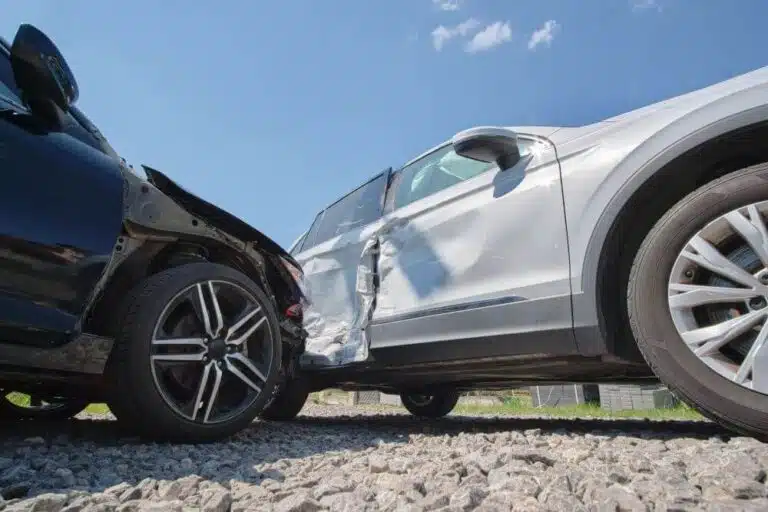
- If the car crashes, what the people inside were doing can become evidence. Colorado’s comparative fault rule can shrink or wipe out an injury claim.
It can be, yes. Colorado’s public indecency law does not care who, or what, is driving. It looks at the place, and at whether people outside the car could reasonably be expected to see.
A car rolling down I-25 at 65 mph, or stopped at a red light downtown, is on a highway, which Colorado’s criminal code counts as a public place. The act can be charged the same way it could be in a parked car in public view.
The self-driving part adds a second problem. In a car with driver-assist features, the person behind the wheel is still the driver and still has to pay attention, and nobody can do both.
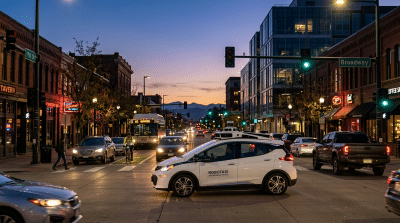
This is no longer a thought experiment in Colorado. Waymo began welcoming its first public riders in Denver on September 1, 2026.
On February 25, 2026, the Colorado State Patrol published a press release titled “Colorado Requires Drivers to Be Responsible.” It says “the driver remains legally responsible for the vehicle’s safe operation” and that automation levels 0 to 3 are legal in Colorado as long as a human driver is present. That covers the driver-assist features many people call “self-driving.”
If you were hurt in a crash where a driver-assist feature or a robotaxi was involved, Denver-based CGH Injury Lawyers offers a free case review.
This page provides general information only and does not constitute legal advice. Reading this page does not create an attorney-client relationship. Laws vary by jurisdiction and change frequently. Always consult a licensed attorney for advice specific to your situation.
Which Kind of Self-Driving Car Do You Mean?
The answer changes with the car. Colorado treats a system as an automated driving system only if it can drive without any intervention or supervision by a human operator, and it ties that definition to SAE levels 4 and 5. A feature that still needs a person watching the road leaves that person as the driver.
- A car with driver-assist features (Tesla Autopilot or Full Self-Driving, GM Super Cruise, Ford BlueCruise, or any lane-centering and adaptive cruise package). Tesla’s recall filings with NHTSA call Autosteer and FSD Beta SAE Level 2 features. In this case, the human is the driver.
- A true driverless robotaxi (Waymo and the fleets that follow it). Waymo describes its vehicles as fully autonomous, with no human driver in the front seat. You ride as a passenger, much like a rideshare trip with nobody in the front seat.
If you’re hurt as a passenger in an Uber or Lyft crash, CGH’s rideshare accident lawyers in Denver can help with the claim.
The indecency question is the same for both. The driving question is not.
Is It Illegal to Have Sex in Your Car?
In general, yes, if it happens in a public place or where the public could reasonably be expected to see. Colorado’s public indecency statute (C.R.S. 18-7-301) covers an act of sexual intercourse “in a public place or where the conduct may reasonably be expected to be viewed by members of the public.”
Public indecency is a petty offense in Colorado. For offenses on or after March 1, 2022, the penalty can be:
- a fine of up to $300
- up to 10 days in county jail
- both
The statute does not mention cars, and it does not mention who was driving.
A parked car inside a private garage with the door shut is a different situation. A parked car in a store parking lot or at a scenic pull-off is in a place the public can reach.
The question is whether you were in a public place or where the public could reasonably be expected to see you, and feeling private does not settle either one.
In a Tesla on Autopilot, You Are Still the Driver
This is where the self-driving part stops being a loophole. Colorado’s autonomous vehicle law (SB 17-213, now C.R.S. 42-4-242) allows automated driving systems on Colorado roads as long as they can follow every state and federal law that applies. Autopilot is not that kind of system, so the person in the driver’s seat is still the driver.
Tesla’s recall filing with NHTSA says the same thing about Autosteer:
- Autosteer is “an SAE Level 2 advanced driver-assistance feature”
- The driver is “the operator of the vehicle”
- The driver is responsible “for the vehicle’s movement with their hands on the steering wheel at all times, remaining attentive to surrounding road conditions”
Tesla’s owner’s manual gives the same instruction: keep your hands on the steering wheel and stay ready to take immediate action when Autosteer is on.
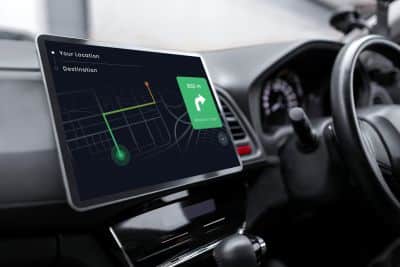 So a person in the driver’s seat of a Tesla with FSD engaged who climbs into the back or who stops watching the road for any other reason is a driver who is not paying attention. Colorado’s careless driving statute (C.R.S. 42-4-1402) covers driving “in a careless and imprudent manner” without due regard for traffic and “all other attendant circumstances.” The Colorado State Patrol says drivers will still be cited for traffic violations even when automation features are engaged.
If the careless driving causes bodily injury to, or the death of, another person, it becomes a class 1 misdemeanor traffic offense instead of a class 2 one. Our post on examples of reckless driving in Colorado explains how reckless and careless driving differ.
In a Waymo, There Is No Driver to Ticket, But There Is a Camera
A rider in a Waymo is not driving. Colorado’s traffic-code rules that by their nature regulate a human driver don’t apply to an automated driving system, though laws on the physical driving of a vehicle still do. That lifts the careless driving problem off the passenger; in-cabin video is a different problem.
- Public indecency still applies. The windows are glass, and a Waymo stopped at a downtown Denver intersection with the interior lit could be visible to everyone on the sidewalk.
- Waymo records the cabin. Its privacy policy says it collects “video recorded inside the vehicle during trips.” Waymo’s first responder guide says it may provide data to law enforcement in response to proper legal process.
- You agreed to a contract. Waymo’s rider rules say it may “suspend or terminate your right to use the Services at any time, temporarily or permanently, including if we believe you have violated these Terms.” A ban is a private decision the company can make without any criminal charge at all.
- In 2023, Jalopnik reported that riders in San Francisco described having sex in Cruise robotaxis despite the risk of being banned if caught.
If you’re hurt as a rider, our post on the rights of passengers hurt in Denver crashes walks through who may be responsible.
The video Waymo records can still reach the company and, with legal process, the police.
What Happens if the Car Crashes?
Colorado uses modified comparative negligence. If your share of fault is equal to or greater than the other side’s, you recover nothing, and if it is less, your recovery is reduced by your share under C.R.S. 13-21-111. In a crash involving a self-driving feature, what you were doing in the car can shape that share.
Take a hypothetical. Say your losses from a Level 2 crash add up to $100,000, and a jury finds you partly at fault because you were not supervising the car. Here is how the split changes what you recover:
| Your share of fault | Other driver’s share | What you recover |
|---|---|---|
| 30 percent | 70 percent | $70,000 |
| 50 percent | 50 percent | Nothing |
Now picture how an insurer builds that fault argument. It may ask for the car’s event data recorder, the cabin camera, and your phone. If the record shows the driver doing anything other than driving, the insurer will point to it.
The same kind of evidence can help when you are the one who got hit. If a driver supposedly “on Autopilot” rear-ends you on I-70, that car’s data may show whether the system warned the driver. Tesla’s recall filing says Autosteer may warn the driver with visual and audible alerts and tell the driver to intervene immediately.
A lawyer can send a preservation letter early, asking the manufacturer or fleet operator to keep that data. Managing partner Kevin Cheney has tried 25+ cases to verdict.
If you are not sure whether any of this applies to a crash you were in, a free case review with CGH can help you sort it out.
What Colorado Law Says About Self-Driving Cars
In 2017 the Colorado legislature passed SB 17-213, now codified at C.R.S. 42-4-242, which permits automated driving systems on Colorado roads if they can comply with every state and federal law that applies. A system that cannot comply may not be tested without approval from the Colorado State Patrol and the Colorado Department of Transportation.
The Colorado State Patrol’s February 25, 2026 release spelled out the enforcement view:
| Automation level | Legal in Colorado, per the State Patrol |
|---|---|
| Levels 0 to 3 | “as long as a human driver is present in the vehicle” |
| Levels 4 and 5 | “with or without a human driver, if they can meet all applicable state and federal laws” |
The release adds that if the driver “failed to take over control when required, ignored alerts, or was distracted, they would be held responsible.”
 For a Denver driver, that means Autopilot, FSD, Super Cruise, BlueCruise and other driver-assist features leave you as the legal driver. A crash on I-25 or I-70 can turn everything above into evidence under Colorado’s comparative fault rule.
The three-year deadline for most motor vehicle injury lawsuits in Colorado (C.R.S. 13-80-101(1)(n)) runs from when the injury and its cause are known or should have been known (C.R.S. 13-80-108(1)), which is often the day of the crash. Our guide to the Colorado car accident statute of limitations covers how that deadline works.
What to Do if You Were Hurt in a Crash Involving Automated Driving
If you were hurt in a crash involving any kind of automated driving, two things help today. Get medical care so your injuries are on record, and write down what the other driver, or the empty driver’s seat, was doing.
A Denver car accident lawyer can look at the vehicle data, the camera footage and Colorado’s fault rules together.
Talk to a Colorado Injury Lawyer for Free
CGH Injury Lawyers offers a free case review in English and Spanish, and you pay no fee unless we win. That covers the attorney’s fee, and your written agreement handles case expenses. Tell us what happened: call (303) 209-9395 or reach us through our online contact form.
Frequently Asked Questions
Are you allowed to sleep in a self-driving car?
Not in a Level 2 car, which includes Tesla Autopilot and FSD. In Colorado the person in the driver’s seat remains the driver and must stay attentive, so sleeping with Autopilot on could fall under the careless driving law and, after a crash, be used to assign fault. In a driverless robotaxi you are a passenger, and Waymo’s published rider rules don’t mention sleeping.
Can cops pull over a driverless car?
Yes. Waymo’s first responder guide says that when a police or emergency vehicle is behind it with lights flashing, the Waymo vehicle is designed to pull over and stop when it finds a safe place, and Waymo keeps a toll-free hotline for first responders. There is no human driver, and Colorado traffic-code rules that by their nature regulate a human driver don’t apply to an automated driving system, except laws regulating the physical driving of a vehicle.
Are self-driving cars legal in the US?
Rules vary by state, and the National Conference of State Legislatures tracks autonomous vehicle legislation across the 50 states. In Colorado, C.R.S. 42-4-242 permits automated driving systems that can comply with every state and federal law that applies. A federal bill, the SELF DRIVE Act, has been introduced in Congress more than once, in 2017 and again in 2026, and has not become law.
Written by CGH Injury Lawyers.
Attorney Advertising. CGH Injury Lawyers.
This article is general information for Colorado injury readers. It is not legal advice, does not create an attorney-client relationship, and does not promise that any deadline, rule, or outcome applies to your case. Statute-of-limitations, comparative negligence, insurance, and compensation questions require case-specific legal review.
Related articles
-
What Injury Pays the Most for a Car Accident in Denver? What Really Drives the Number
Last Updated: October 23, 2026 Table of Contents Which Car Accident Injuries Usually Lead to the Largest Claims? The Three Kinds of Losses Colorado Counts Why Medical Bills…
-
What Not to Tell Your Attorney in Denver, and What You Should Never Leave Out
Last Updated: October 15, 2026 Table of Contents Attorney-Client Privilege in Colorado: What It Protects Is a Free Consultation Confidential? What Not to Tell Your Attorney, and What…
-
How Much of a $25,000 Settlement Will I Get? What Comes Out First in Denver
Last updated: October 28, 2026 A $25,000 settlement is the starting number. Before you receive your settlement, your attorney’s fee, the expenses of the case, and any repayment…