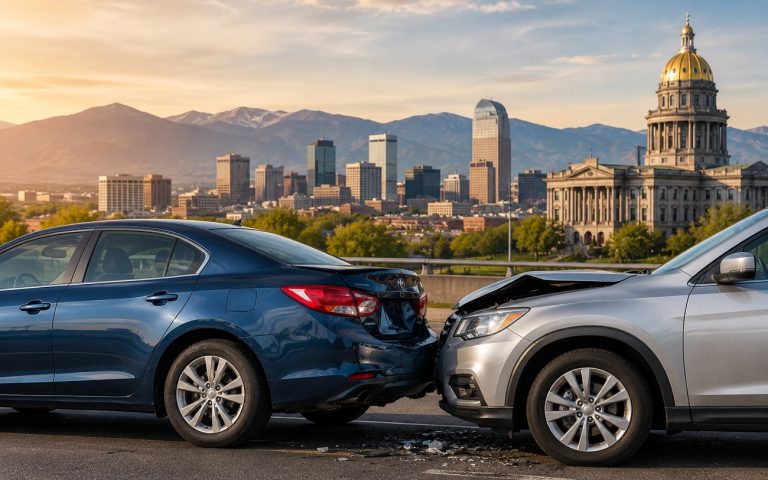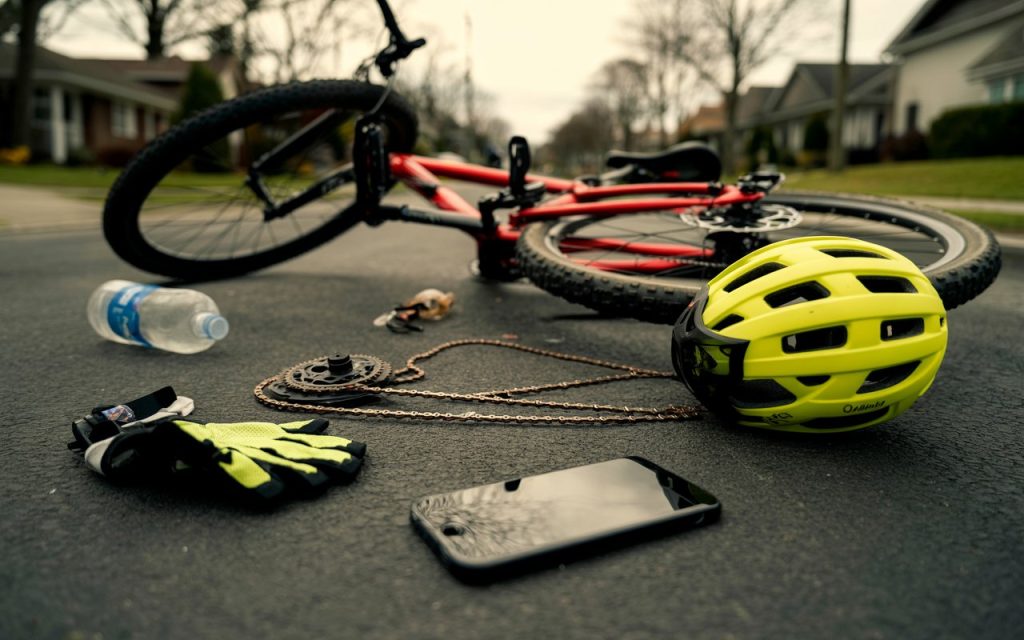
- The insurance adjuster may call within 24 to 48 hours of your accident, before you understand your injuries or your rights. You are already in a race you didn’t know you entered.
- What you say in the first hours, at the scene, on the phone, or on social media, can permanently damage your claim. Protecting your silence matters as much as documenting the scene.
- Colorado law gives cyclists the same legal rights as motor vehicle drivers. But comparative negligence rules mean your own actions at the crash can reduce your payout dollar for dollar.
- You have, in general, three years to file a bicycle accident claim in Colorado, but the evidence, witnesses, and leverage you need disappear far faster than that.
This article is for general information only and isn’t legal advice. If you want guidance for your specific situation, talk with a Colorado personal injury lawyer.
You’ve been through something traumatic. Your bike may be destroyed. Your body hurts in ways you don’t fully understand yet. And somewhere in the blur of the last few hours, or last few days, a friendly voice from an insurance company may have already called to “help you get this taken care of quickly.”
Here’s what that voice didn’t tell you: from the moment your bicycle hit the pavement, a clock started. And the insurance company is already moving against it.
According to preliminary data from the Colorado Department of Transportation, Colorado recorded more than 650 bicycle-involved crashes in 2024, with over 40% resulting in serious injuries. Insurance adjusters are trained to make contact within the first 24 to 48 hours, while you’re still in shock, while your injuries haven’t fully declared themselves, and before you’ve had a chance to talk to anyone on your side.
What you do in the first 72 hours either builds or breaks your claim. This guide covers exactly what that looks like, not just what to do, but why each step protects your ability to recover what you’re actually owed.
Step 1: Get to Safety and Call 911, Even If You Think You’re Fine
The scene of a crash feels chaotic. Your instinct might be to get up, check your bike, wave off bystanders, and apologize for the inconvenience. Resist every one of those instincts.
Why a Police Report Is Non-Negotiable for Your Claim
Call 911. Even if the driver seems cooperative. Even if your injuries don’t feel serious. Even if it happened on a quiet side street with no other witnesses.
A police report creates an official, contemporaneous record of what happened, who was involved, and what the scene looked like. Without it, you’re left with your word against the other driver’s, and insurance companies exploit that ambiguity without hesitation. The responding officer’s observations about road conditions, vehicle positioning, and any traffic violations can become critical evidence later.
If officers decline to respond due to the nature of the accident, go to the nearest police station and file a report yourself that same day.
What to Say, and What Not to Say, at the Scene
Tell the officer what happened, factually. Do not speculate about fault. Do not estimate speeds. And do not tell anyone, the driver, a bystander, or the officer, that you’re fine.
Those two words, “I’m fine,” have appeared in more insurance claim defenses than almost any other phrase.
To the other driver: exchange information. Name, driver’s license number, insurance company, policy number, and license plate. That’s it. Do not discuss the details of the accident. Do not apologize, even reflexively. Apologies get recorded and reframed.
Step 2: Seek Medical Attention Immediately, Before the Adjuster Calls
Go to an urgent care clinic, emergency room, or your primary care physician the same day. If your injuries feel serious at the scene, call an ambulance. This is not optional, and here’s exactly why.
Why Adrenaline Is Your Worst Enemy as a Claimant
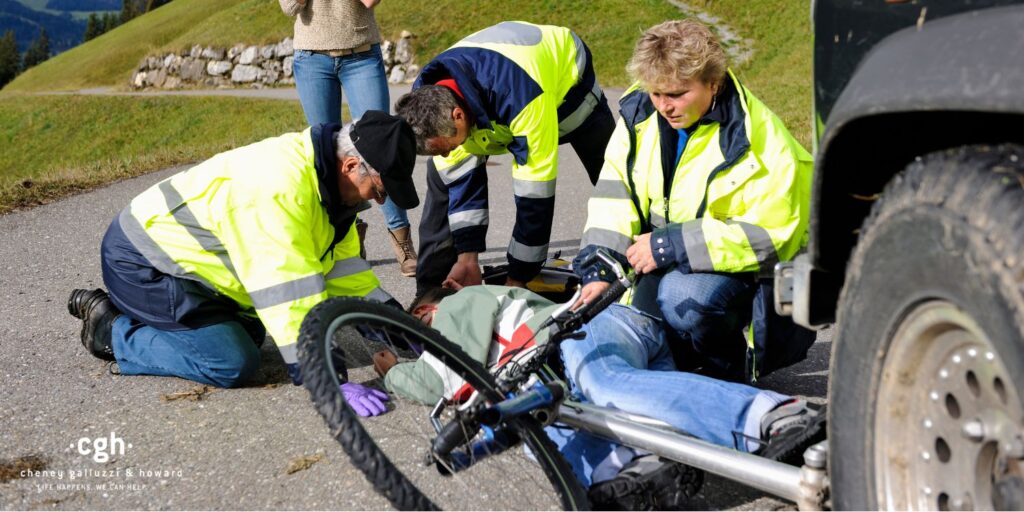
Your body’s stress response is remarkable, and deeply misleading. Adrenaline suppresses pain signals. Cyclists who feel “shaken but okay” at the scene have later discovered herniated discs, internal bleeding, torn ligaments, and traumatic brain injuries. The problem isn’t that your body lied to you. The problem is that the insurance company won’t care about the distinction later.
Injuries That Commonly Appear 24 to 72 Hours After a Bike Crash
- Soft tissue damage, whiplash, muscle tears, and ligament injuries often don’t peak in pain until the day after the crash.
- Concussion symptoms, headache, confusion, and light sensitivity frequently don’t appear immediately.
- Spinal injuries, back and neck pain worsen as inflammation builds over the first two to three days.
- Psychological symptoms, disrupted sleep, hypervigilance, and anxiety are early markers of post-traumatic stress.
Getting documented medical care on the day of, or the day after, your accident creates an unbroken chain between the crash and your injuries. That chain is the foundation your claim is built on.
How Treatment Gaps Get Used Against You
If you wait three days to see a doctor, the adjuster’s notes will read: “Claimant did not seek immediate medical care.” That gap becomes their argument that your injuries were pre-existing, unrelated, or exaggerated. It’s not fair. It happens constantly.
Go now. The question of who pays for it gets resolved as part of your claim. The question of whether you can prove your injuries are connected to this crash gets much harder to answer if you wait.
Step 3: Document the Scene, Your Bike, and Your Body
If you’re physically able to do so, and only if it’s safe, start documenting everything at the scene with your phone.
Exactly What to Photograph
- The vehicles involved, all angles, license plates, and damage points.
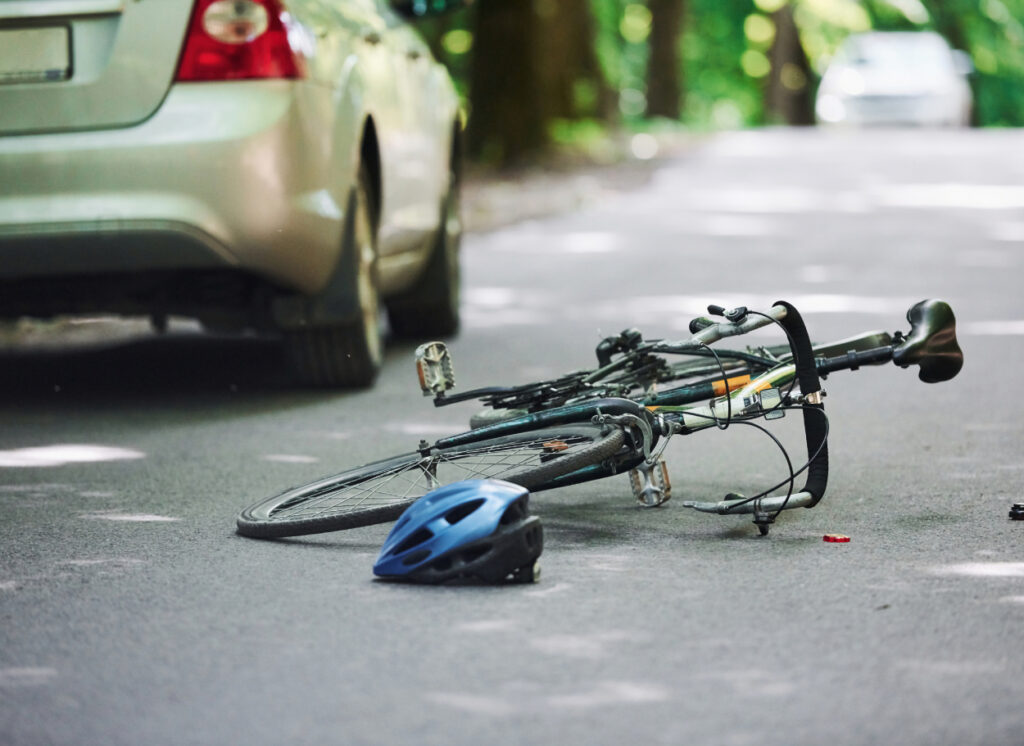
- Your bicycle, every angle, every point of damage, and any equipment that was destroyed or displaced.
- The road, skid marks, debris, potholes, lane markings, signage, and traffic signals.
- Your injuries, visible road rash, lacerations, bruising (continue documenting in the days that follow as bruising develops and spreads).
- Weather and lighting conditions, time-stamped photos establish the environmental context that matters in fault assessments.
- The broader scene, intersection layout, sight lines, and any obstructions that affected visibility.
The “Dooring” Scenario: What to Document When a Car Door Opens Into You
Dooring accidents, where a driver or passenger opens a car door directly into a cyclist’s path, are among the most common and most fiercely contested urban bike crashes in Colorado. If this is what happened to you, photograph:
- The vehicle’s position in relation to the bike lane.
- The open door and its reach into the lane.
- Any witnesses in the immediate area (get their contact information immediately; they often leave quickly).
- The presence or absence of bike lane markings or door zone warnings.
Witness Information and Colorado’s Comparative Fault System
Colorado follows a modified comparative negligence rule. Your own percentage of fault directly reduces your recovery. If a witness saw the driver open their door without looking or run a red light, that testimony can mean the difference between recovering your full damages and recovering a fraction of them.
Get names and phone numbers from anyone who stopped to help or observe. If they won’t provide contact information, photograph their license plates.
For a broader overview of how Colorado bicycle accident law applies to your claim, including how fault is allocated and what damages are recoverable, visit our dedicated practice area page.
Step 4: Understand What You Can, and Cannot, Say to Insurance Companies
This is the section that determines more claims than any other. Everything in Step 3 tells you what to document. This step covers the mistake that costs injured cyclists the most: what they say before they understand the stakes.
What the Adjuster Is Actually Trying to Do in That First Call
The adjuster who calls you will be friendly. They’ll use your first name. They’ll express sympathy and tell you the process is simple. They just need a quick statement to get things moving.
This is a trained approach, not a personal one. The adjuster’s job, regardless of how warm they sound, is to gather information that minimizes your claim or shifts a percentage of fault to you. The insurance company’s internal process started the moment the accident was reported. The clock has been running on their side since then.
You are not required to give a recorded statement to the other driver’s insurance company. You can say, simply: “I’m not prepared to give a recorded statement at this time. I’ll follow up once I’ve spoken with an attorney.” That is a complete, lawful, and reasonable response.
The Recorded Statement Trap
A recorded statement is a permanent record, including everything you don’t yet know matters. You don’t know the full extent of your injuries. You don’t know what traffic laws may have been violated. You don’t know how Colorado’s comparative fault rules apply to your specific situation yet.
Whatever you say in that recording becomes part of the claim file. There is no benefit to you in giving one before you’ve spoken with a lawyer.
Social Media After Your Accident: A Real Risk
If you post anything on social media about your accident, your injuries, or your physical activities in the days and weeks following the crash, assume the insurance company will find it. A photo from a family gathering five days after your crash, even if you’re sitting in a chair and miserable, can be used to argue your injuries are less serious than you’ve claimed.
Say nothing online about the accident, your condition, or your activities. This isn’t paranoia. It’s the way claims get undermined, and it happens more often than most people expect.
If an adjuster has already contacted you, or if you’ve already given a recorded statement, don’t panic. Mistakes made in the first days aren’t always fatal to a claim, but the window to correct course closes fast. A free consultation with a CGH bicycle accident attorney costs you nothing and could change everything about what you’re able to recover.
Schedule Your Free Consultation
Step 5: Know Your Rights Under Colorado Law
C.R.S. 42-4-1412: You Have the Same Legal Rights as a Motor Vehicle Driver
Under Colorado’s Bicycle Safety Act, cyclists are granted the same legal rights and responsibilities as drivers of motor vehicles on the road. That means the driver who hit you owes you the same duty of care they would owe another car. It also means you’re held to the same traffic laws, and that cuts both ways.
Colorado’s Modified Comparative Negligence Rule, and What It Costs You
Under Colorado law, you can recover damages as long as you are not found to be 50 percent or more responsible for the accident. But every percentage point of fault assigned to you reduces your recovery by the same percentage.
Here’s what that means in real numbers: if your total damages are $60,000 and you’re found 20% at fault, perhaps because you were riding without lights at dusk, you recover $48,000, not $60,000. That $12,000 difference is why what you say at the scene, how your actions are characterized, and what witnesses saw all matter so much.
This is an illustrative example only. Fault determinations are specific to the facts and circumstances of each individual case.
Helmet Laws and How Not Wearing One Affects Your Claim
Colorado does not have a statewide mandatory helmet law for adult cyclists. Not wearing a helmet does not automatically bar you from recovering damages. However, helmet use, or the absence of it, may be raised as a factor in a comparative fault assessment, particularly in cases involving head injuries. An attorney can advise on how this applies specifically to your situation and injuries.
What If the Driver Has No Insurance? (UM/UIM Coverage)
If the driver who hit you is uninsured or underinsured, your own auto insurance policy may cover your damages through Uninsured/Underinsured Motorist (UM/UIM) coverage, even though you were on a bicycle at the time of the crash, not in a car. Coverage varies by policy. Check your policy documents or ask a Colorado personal injury attorney whether your UM/UIM coverage applies to your situation.
Step 6: Document Property Damage to Your Bike and Gear
Your bicycle is a vehicle under Colorado law, and the damage to it is recoverable property damage, not a footnote to your physical injuries.
High-Value Equipment Requires Written Estimates
If your bike is a quality road bike, commuter build, or mountain bike, its replacement value may be significant. Get written repair or replacement estimates from a licensed bicycle shop, not just a verbal quote. If the bike is totaled, document its pre-crash market value. This also applies to cycling gear: your helmet must be replaced after any impact regardless of visible damage, and cycling computers, lights, and other equipment destroyed in the crash are all recoverable.
How Insurers Undervalue Bicycle Damage, and How to Push Back
Insurance adjusters often apply depreciation to bicycle values aggressively, sometimes offering far less than actual replacement cost. If you believe the valuation is too low, gather original purchase receipts if you have them and get an independent appraisal from a bicycle shop. A documented replacement value from a third party is far harder to ignore than your word alone.
Step 7: Understand the Statute of Limitations, Don’t Let Time Work Against You
In general, Colorado law provides three years from the date of a bicycle accident to file a claim against another driver or their insurance company, under C.R.S. 13-80-101(1)(n). This deadline can vary depending on the circumstances of your accident. If a government vehicle, government entity, or public road condition is involved, shorter notice requirements may apply. Under the Colorado Governmental Immunity Act, written notice of a claim against a public entity must generally be filed within 182 days after discovery of the injury (C.R.S. 24-10-109(1)). Missing that deadline can bar your claim entirely.
Three years sounds like a long time. It isn’t. Witness memories fade. Security camera footage gets overwritten after days or weeks. Physical evidence at the scene disappears. The evidence you preserve in the first 48 hours is often the strongest evidence you will ever have.
Do not assume you have time to figure this out later. Consult with a Colorado bicycle accident attorney early, well before any deadline is in sight. Because statute timelines depend on the specific facts of your case, this is one area where speaking with an attorney sooner rather than later is especially important.
Step 8: Address the Psychological Aftermath, It’s Part of Your Claim Too
The crash didn’t just damage your body and your bike. For many cyclists, the psychological impact is lasting, and it’s compensable.
Anxiety about returning to the road, hypervigilance near traffic, disrupted sleep, recurring flashbacks, and avoiding cycling altogether are documented symptoms of post-traumatic stress following bicycle accidents. These are non-economic damages, pain and suffering, loss of enjoyment of life, and emotional distress, and they are recoverable under Colorado law.
Document your emotional experience alongside your physical recovery. Tell your doctor how the crash is affecting your sleep, your daily activities, your confidence, and your relationships. Keep a brief journal in the weeks following the accident, a few sentences a day noting how you feel physically and emotionally. This documentation matters, and it often affects case value in ways people don’t anticipate.
We’ve seen clients come to us months after accepting a first offer, with no record of the psychological toll the crash took. We’ve seen others come to us before that conversation, with a full picture of both their physical and emotional injuries, and recover more. The difference is often documentation that started early.
What Happens Next
A bicycle accident can disrupt your entire life, your income, your recovery, your confidence on the road, and your sense of safety in a city you ride every day. The steps you take in the first hours and days aren’t just paperwork. They’re the foundation of everything that comes after.
The insurance company is organized, resourced, and already moving. You don’t have to face that alone.
You Don’t Have to Figure This Out Alone
At CGH Injury Lawyers, we’ve helped injured Colorado cyclists go from a lowball offer to a fair recovery because we know what the insurance company is trying to do in those first 48 hours, and we know how to stop it. Our Colorado bicycle accident attorneys work on contingency: you pay nothing unless we win.
If you’ve been injured in a Colorado bike crash, the most important call you can make is your first one. Let’s talk.
Schedule Your Free Consultation
Frequently Asked Questions
What should I do immediately after a bicycle accident in Colorado?
Call 911 and stay at the scene, even if the accident seems minor and the other driver appears cooperative. Get a police report. Seek medical attention the same day, even if you feel okay: adrenaline masks symptoms that may not appear for 24 to 72 hours. If you’re safely able to, photograph the scene, vehicle positions, road conditions, and any visible injuries. Get contact information from witnesses. Do not give a recorded statement to any insurance company before speaking with a Colorado personal injury attorney.
Can I still file a claim if I wasn’t wearing a helmet?
Yes. Colorado does not have a mandatory helmet law for adult cyclists, and not wearing a helmet does not automatically bar you from recovering damages. However, helmet use may be raised as a factor in a comparative fault assessment, particularly in cases involving head injuries. How much this affects your claim depends on the specific facts of your accident. Consulting with an attorney is the most reliable way to understand how it applies to your situation.
What if the driver who hit me doesn’t have insurance?
You may still have recovery options. Your own auto insurance policy may include Uninsured/Underinsured Motorist (UM/UIM) coverage that applies to bicycle accidents, even though you were not driving a car at the time. Coverage varies by policy. A Colorado personal injury attorney can review your insurance policies and advise on what coverage may be available to you, and whether other avenues for recovery exist.
This article is general information for Colorado injury readers. It is not legal advice, does not create an attorney-client relationship, and does not promise that any deadline, rule, or outcome applies to your case. Statute-of-limitations, comparative negligence, insurance, and compensation questions require case-specific legal review.
Related articles
-
How Long Does a TBI Lawsuit Take in Denver? What Sets the Pace of a Brain Injury Case
There’s no fixed timeline. A TBI case moves through stages, and each one depends on your recovery, the evidence, the insurers involved, and whether the case settles. Brain…
-
How Long After an Accident Can You Sue in Denver?
Colorado sets different deadlines for different kinds of injury claims. There is no single number. A crash involving a motor vehicle gets three years. A fall in a…
-
Average Wrongful Death Settlement in Colorado: What Families Need to Know in 2026
If someone handed you a number and told you it's what your family's loss is worth, you deserve to know whether that number is anywhere close to fair.