
ClickCease
Free consultations · Se habla espanol
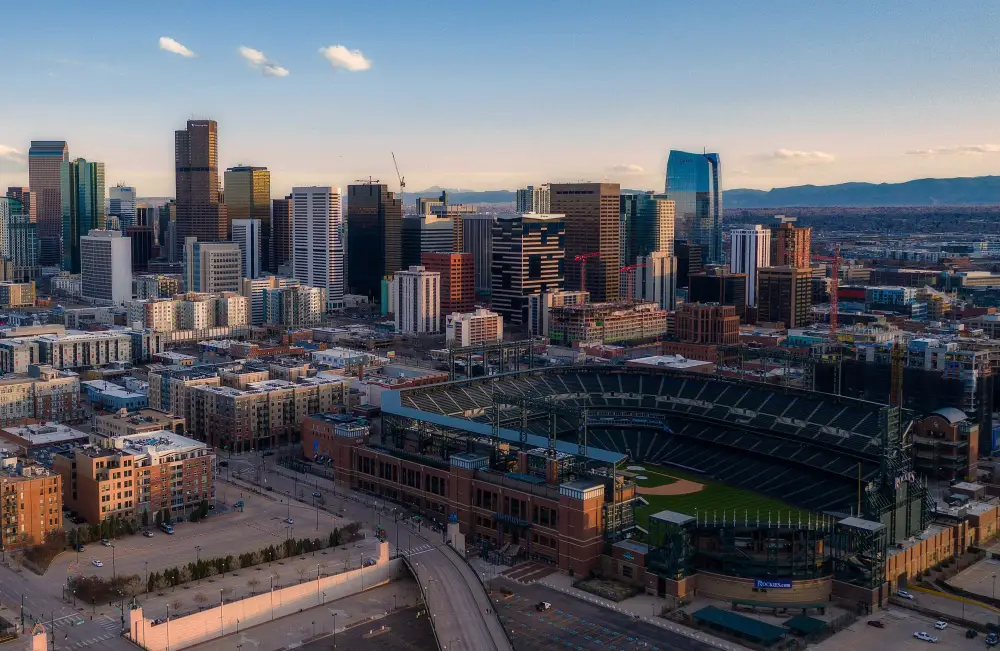
Denver skyline. CGH Injury Lawyers represents injured electric scooter riders across Denver, Colorado.
Denver, Colorado

Denver Scooter Accident Lawyers Who Cut Through the Rules

For riders seriously hurt on an electric scooter in Denver, the rules are split between state law and city ordinances, and insurers use that confusion to deny claims. We sort it out, hold the at-fault party accountable, and find every source of coverage. No fee unless we win.

No fee unless we win

It's More Than Money.

Get my free scooter-accident case review

100% confidential. No fee unless we win.

Serving Denver Riders CGH Injury Lawyers Representing injured scooter riders across Denver, Colorado (303) 209-9395 Se habla espanol
5-star rated on Google Vulnerable road user advocates ABOTA trial advocate on the team 8 attorneys, bilingual EN / ES
  • Colorado classifies electric scooters as low-power scooters (C.R.S. 42-1-102): two or three wheels, a motor under 2,000 watts, and a top speed of 20 mph. They are treated as vehicles, so riders need a valid driver's license or instruction permit.
  • State law allows sidewalk riding at 6 mph or less, but Denver's ordinance bans sidewalk riding in most situations. An adjuster will reach for a local ordinance to try to pin the fault on you.
  • Colorado uses modified comparative fault (C.R.S. 13-21-111). You can still recover even if you were partly at fault, as long as your share is less than 50 percent, with your award reduced by your percentage of fault.

If an electric scooter crash seriously hurt you in Denver, the conflict between state statute and city rules is exactly what insurers use to deny the claim. CGH Injury Lawyers represents injured Denver scooter riders, sorts out which rules actually applied where you rode, holds at-fault drivers and rental companies accountable, and finds every source of coverage. You pay nothing unless we recover for you.

The law that governs your case

How Colorado classifies electric scooters, decoded for Denver

Under House Bill 19-1221, Colorado created a formal category for what it calls low-power scooters (C.R.S. 42-1-102). That classification controls which traffic laws apply to you on a Denver street and which insurance arguments an adjuster will make against you.

What makes a low-power scooter

  • Two or three wheels.
  • An electric motor under 2,000 watts.
  • A maximum speed of 20 mph on a paved, level surface.
  • Treated as a vehicle, so most rules that apply to bicyclists and motorists also apply to you.

What the classification requires of riders

  • A valid driver's license or instruction permit, unlike a bicycle.
  • Riders under 18 must wear protective headgear at all times.
  • DUI, reckless operation, and comparative fault rules all apply.
  • Obey every traffic control device, the same as any vehicle.

Why the classification matters in a Denver claim

Insurers frequently use the vehicle classification to argue that a standard auto policy does not cover a scooter accident, creating a coverage gap that can leave an injured Denver rider chasing an at-fault driver's limited insurance, or none at all. We push back on that argument and look for every policy that may respond, including the rider's own auto and umbrella coverage.

State vs. city

State law versus Denver's ordinances: the conflict that decides fault

Colorado's constitution lets home rule cities pass local ordinances that supersede state law inside their boundaries. For Denver scooter riders, that means the rules can change the moment you cross a city line, and an insurer will use that to its advantage.

What state law allows

State law (C.R.S. 42-4-1412) permits low-power scooter operation on sidewalks at a speed not exceeding 6 mph. In Aurora and unincorporated areas nearby, that low-speed sidewalk riding is legal.

What Denver bans

Denver has enacted ordinances that contradict the state sidewalk provision. In Denver, that same low-speed sidewalk riding becomes a citable offense, heavily enforced on the 16th Street Mall, in LoDo, and in RiNo.

Why it matters after a crash

Adjusters argue a rider was breaking the law by riding on a sidewalk in Denver, then try to assign all of the fault. Under comparative negligence, you can still recover substantial compensation if another party's negligence caused the crash.

Enforcement is real. Denver has increased scooter enforcement since 2024, with citations that typically range from $50 to $150 for sidewalk riding. More seriously, riding in a posted dismount zone can establish contributory negligence, which an insurer will use to cut your recovery even when another party caused the crash. Do not rely on the app to tell you where it is legal to ride: Lime, Bird, and Spin geofencing does not always match the legal boundaries, so a scooter may run at full speed on a Denver sidewalk where the ordinance bans riding entirely.

Local knowledge

Denver corridors. Denver courts. Denver trauma care.

A Denver scooter accident case plays out in Denver: the corridor where it happened, the hospital that treated you, and the courthouse where your case may be filed. Here is the ground we work on every day.

High-Crash Corridor

Colfax Ave, Speer Blvd, and Federal Blvd

East Colfax Ave through Capitol Hill and Five Points, Speer Blvd through LoDo, and Federal Blvd through West Denver carry heavy scooter traffic and are also among the most dangerous streets for riders. Drivers failing to yield at uncontrolled intersections on Federal, right-hook turns at Speer Boulevard crossings near the Cherry Creek Trail, and dooring from parked cars on Colfax are the crash patterns we see most often in Denver scooter cases. Our attorneys know the sight lines, signal timing, and CDOT corridor data on each of these streets.

Trauma Care

Denver Health Medical Center

Scooter riders with severe injuries from crashes on Denver streets near I-25 or I-70 are typically transported to Denver Health Medical Center, the region's Level I trauma center, at 777 Bannock St. The medical records generated there document your fractures, traumatic brain injuries, spinal cord injuries, and soft-tissue damage with the clinical specificity that becomes the backbone of your damages claim. Saint Joseph Hospital, Presbyterian/St. Luke's Medical Center, and Rose Medical Center also treat riders with serious but non-life-threatening injuries across the metro.

Courthouse

Denver District Court, 2nd Judicial District

Personal injury cases arising in Denver County are filed in Denver District Court, the 2nd Judicial District, with civil matters heard at the City and County Building at 1437 Bannock St. Denver civil procedure has its own local rules, and the defense firms and adjusters who handle Denver scooter cases either know your counsel or they do not. We handle Denver District Court cases directly.

Why CGH

Why Denver scooter riders choose CGH Injury Lawyers

Trial-ready attorneys, bilingual help, and no fee unless we win. We do not publish scooter settlement figures, because every crash injury is different and a number on a page tells you nothing about your case.

The Classification

C.R.S. 42-1-102

Scooters are vehicles in Colorado. That single fact drives the insurance fight, and we know how to turn it back against the adjuster who uses it to deny coverage.

Vulnerable Road Users

We advocate for riders.

Scooter riders, like cyclists and pedestrians, are easy for an insurer to blame. We build the case that keeps the focus on the driver or company that actually caused the crash.

Trial-Ready

8 attorneys, prepared for trial.

Managing Partner Kevin Cheney is a member of the American Board of Trial Advocates and has tried over 25 cases to verdict. When attorneys are genuinely ready to try a case in Denver District Court, insurers respond differently to a demand.

Bilingual

Hablamos espanol.

Spanish-speaking staff and attorneys serve Denver's Spanish-speaking community.

No Win, No Fee

Contingency only.

You pay nothing out of pocket for legal fees. We advance costs and collect only from a settlement or verdict.

After the Crash

What to do after a scooter accident in Denver

Evidence disappears fast in scooter cases. Take care of your health first, protect the record, then call before you talk to the insurer. Here is the path we walk with you.

  1. Call 911 and get medical care

    Request police response even for a crash that seems minor. Denver Health and other metro hospitals treat serious scooter injuries. A police report creates an official record and a preliminary fault determination, and your medical records document the full injury.

  2. Document the scene and screenshot the app

    Photograph your injuries, the scooter, the scene, and any road hazards or visible defects such as worn brakes or a cracked deck. On a rental, immediately screenshot your ride history and the scooter ID. Companies often lock riders out after a crash, making that data impossible to retrieve later.

  3. Do not admit fault or give a recorded statement

    Even saying you are sorry can be read as an admission. Give police only the facts. Politely decline a recorded statement to an adjuster, and do not accept a quick lowball offer before you know the full extent of your injuries.

  4. Call before insurance does

    Security footage near a Denver crash is often deleted within 7 to 30 days, and scooter companies perform maintenance that can destroy evidence of a defect. We send preservation letters and begin investigating right away. Call (303) 209-9395.

  5. We build your claim

    We confirm who is liable, locate every policy that may respond, gather the police report and any company ride data, and document the full injury so no category of harm is left out.

Liability and compensation

Who pays after a Denver scooter crash, and what you can recover

Electric scooter accidents raise complex liability questions. More than one party can be responsible, and Colorado's comparative negligence rule decides how the recovery is divided.

Comparative negligence in Colorado

Colorado follows a modified comparative negligence rule (C.R.S. 13-21-111). You can recover damages even if you were partly at fault, as long as your fault is less than 50 percent, and your compensation is reduced by your percentage of fault. If a jury finds a driver 80 percent at fault and you 20 percent, a $100,000 loss recovers $80,000.

The at-fault driver

The most common scenario is a motor vehicle striking a scooter rider, often a right-hook turn, a failure to yield, or a driver who never saw the scooter. The driver's liability insurer is usually the first source of recovery.

The scooter company

A rental company may be liable for a defective scooter: brake failure, faulty acceleration, or poor maintenance. These cases often involve dense liability waivers, and we know how to hold rental companies accountable despite them.

The city

A city can be liable for dangerous road conditions such as potholes or hazards in a designated scooter zone. Government claims follow strict, much shorter notice rules, so these cases need fast action.

Coverage gaps and your own UM/UIM

Most auto policies exclude scooter accidents, arguing a scooter is not a motor vehicle under the policy, and rental company limits may be too low for a serious injury. Your own uninsured and underinsured motorist (UM/UIM) coverage may apply in a hit-and-run or low-limits crash, and we identify every available source to reach a full recovery. Because scooters are classified as vehicles, you can also be charged with DUI for riding while impaired (C.R.S. 42-4-1301), under the same 0.08 percent limit as a car.

Insurer defenses

Defenses Denver insurers use against scooter riders, and how we answer them

Adjusters reach for the same handful of arguments in nearly every scooter case. Knowing what each one actually requires is how we keep a valid claim alive.

  1. "You broke the sidewalk rule"

    Insurers argue that riding on a Denver sidewalk made you the cause of the crash. A local ordinance violation is one factor in fault, not an automatic bar. Under modified comparative negligence, you can still recover if another party's negligence was the larger cause and your share of fault is less than 50 percent. We document how the crash actually happened, not just where you were riding.

  2. "You should have worn a helmet"

    Adults are not legally required to wear a helmet in Colorado; helmets are mandatory only for riders under 18. Insurers still argue that going without one added to the injuries, which can reduce recovery under comparative negligence. We answer it with medical evidence showing what a helmet would, and would not, have prevented.

  3. "The scooter, not our driver, caused it"

    When a driver's insurer points at the scooter and the scooter company points at the driver, the rider gets caught in the middle. We investigate both. If a mechanical defect contributed, that opens a separate claim rather than ending yours.

One honest thing up front: we do not take scooter cases we cannot stand behind. If the facts genuinely put most of the fault on you, we will say so in the free review rather than sign you up and let the case stall. When another party caused your crash, we fight hard, and you hear the truth either way, for free.

5-star rated on Google

I wish I could leave more than 5 stars!

Grace Macaluso, 5-star Google review
Questions

Denver scooter accident, frequently asked questions

Is it legal to ride an electric scooter on the sidewalk in Denver?

No. While Colorado state law permits sidewalk riding at 6 mph or less, Denver ordinance prohibits it in most situations, directing riders to bike lanes or roadways, with citations that typically range from $50 to $150. Riding on a Denver sidewalk does not automatically bar a claim, but an insurer will use it to argue you share fault, which is why how the crash happened matters more than where you were riding.

Can I recover compensation if I was partly at fault for my Denver scooter crash?

Yes. Colorado follows a modified comparative negligence rule (C.R.S. 13-21-111). You can recover as long as your share of fault is less than 50 percent, and your award is reduced by your percentage of fault. Never admit fault at the scene. We work to minimize your assigned percentage and maximize your recovery, even in complex liability situations.

Can I still recover if I was not wearing a helmet?

Yes. Not wearing a helmet does not automatically bar your claim. Colorado requires helmets only for riders under 18. An insurer may argue that going without one added to your injuries, which can reduce recovery under the comparative negligence rule, but the primary question is who was negligent in causing the crash. We work to keep the focus on the at-fault party's responsibility.

Can I sue the scooter rental company for a defect?

Potentially, yes. If a mechanical problem such as brake failure or faulty acceleration caused your crash, the scooter company may be liable. These cases often involve complex liability waivers, so it helps to have an attorney who understands how to hold rental companies accountable. We have experience investigating defective scooter claims and pursuing companies that failed to maintain safe equipment.

Where is a Denver scooter accident lawsuit filed?

Personal injury cases that arise in Denver County are filed in Denver District Court, the 2nd Judicial District, with civil matters heard at the City and County Building at 1437 Bannock St. Most scooter claims settle before a lawsuit is filed, but where a case would be filed affects the local rules, the jury pool, and which defense firms you face. We handle Denver District Court cases directly.

How long do I have to file a scooter accident claim in Colorado?

For a scooter crash caused by a motor vehicle, Colorado gives you three years from the date of the accident to file a lawsuit (C.R.S. 13-80-101(1)(n)). Other claims, such as against a product manufacturer or a city for a road hazard, carry shorter deadlines: two years for most general injury claims (C.R.S. 13-80-102) and two years for product liability (C.R.S. 13-80-106). Claims against a government entity also require a separate written notice within 182 days of discovering the injury (C.R.S. 24-10-109). Contact an attorney early to confirm your exact deadline. Missing these deadlines can permanently bar your claim, no matter how severe your injuries.

It's More Than Money.

You were hurt on a scooter. We handle everything else.

Free consultation. No fee unless we win. Available in English and Spanish.

Tell us what happened

100% confidential. No fee unless we win.

Prefer to read first? See how Colorado's scooter law works.