Last Updated: November 5, 2026
- Colorado’s statewide noise table sets no decibel number for a car stereo. In Denver, police enforce car audio by whether the music is plainly audible, and the city says no specific noise limits are given.
- Police can act on loud music in two ways. Denver police may cite a violation of the city’s car audio rule on the spot, and a state careless driving charge can follow if the volume affects how you drive.
- Listening to music through your car speakers is legal as long as it stays within local noise rules, such as Denver’s plainly audible test. The volume also matters for safety if it keeps you from hearing a siren, a horn or the motorcycle in the next lane.
- After a crash, an insurer may use a loud stereo to argue you share fault. Under Colorado’s comparative negligence rule, that argument can shrink or erase your recovery.
Colorado’s statewide noise table measures noise radiating from a property line and sets no decibel number for a car stereo. Denver uses a different test for music from a car: whether it is plainly audible. That test applies the same way to a stock head unit and to two 15-inch subs in the trunk.
Drivers who want a decibel number for a car stereo won’t find one in Colorado’s statewide noise table or in Denver’s car audio rule. It matters for a second reason, too. Picture a red light downtown, windows up, bass rolling, and an ambulance you don’t hear until it fills your mirror.
Missing a siren is one way a stereo turns into a ticket or a fault argument. If your stereo has already come up after a crash, Denver-based CGH Injury Lawyers offers a free case review at (303) 209-9395.
This page provides general information only and does not constitute legal advice. Reading this page does not create an attorney-client relationship. Laws vary by jurisdiction and change frequently. Always consult a licensed attorney for advice specific to your situation.
How Loud Can Your Car Stereo Be Legally?
In Denver, the safe answer is quiet enough that people outside the car cannot plainly hear it, because the city enforces car audio by a plainly audible standard rather than a decibel number. Colorado’s main statewide noise table, in C.R.S. 25-12-103, measures noise radiating from a property line and sets no number for a car stereo.
Car stereo rules tend to use one of two tests.
- A decibel limit, read on a sound meter.
- A plainly audible rule. Florida’s statute, for example, bars sound from a car that is “Plainly audible at a distance of 25 feet or more from the motor vehicle.”
Denver sits in the second camp. According to the city’s noise guidance, Section 38-89 of the Denver Revised Municipal Code covers “sound amplifying equipment in or on motor vehicles,” and Denver police may issue a citation immediately upon observing a violation.
For that section, the city says “no specific noise limits are given, and enforcement is based on the noise being plainly audible.” Plainly audible means “the information content of the sound is unambiguously transferred to the auditor, such as but not limited to understanding of spoken speech, comprehension of raised or normal voices or comprehension of musical rhythms.” In other words, the ordinance doesn’t care how many watts you’re running, only whether someone outside can follow your bass line.
Colorado adds a second layer through its careless driving law.
- The state’s careless driving statute, C.R.S. 42-4-1402, covers driving “in a careless and imprudent manner” without due regard for traffic and “all other attendant circumstances.”
- After the 2025 changes in Senate Bill 25-281, basic careless driving is still a class 2 misdemeanor traffic offense.
- Colorado’s point schedule in C.R.S. 42-2-127 assigns careless driving 4 points.
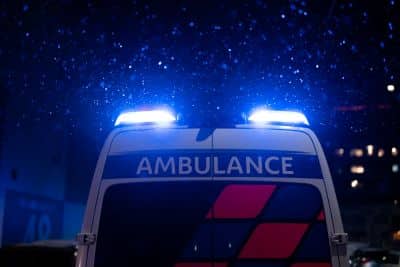
An officer who sees a driver sit through a siren because of the stereo could cite careless driving in addition to the city ordinance.
What a Loud Music Stop Looks Like in Denver
A Denver stereo stop usually turns on what the officer could hear from outside your car. The city says its police enforce the car audio section of the code and may issue a citation immediately upon observing a violation, so you may not get a warning first. These facts can shape how the stop ends.
- Whether the officer could plainly hear the music, meaning its content came through clearly, such as a musical rhythm.
- Where you were. A quiet residential block is a different setting from a busy street at rush hour.
- The time of night. Denver’s separate Chapter 36 property-line limits, for example, drop from 55 dB(A) to 50 dB(A) at 10:00 p.m., though the city says its car audio section sets no specific noise limit.
- Whether the officer saw a driving mistake tied to the volume, such as failing to pull over for an emergency vehicle.
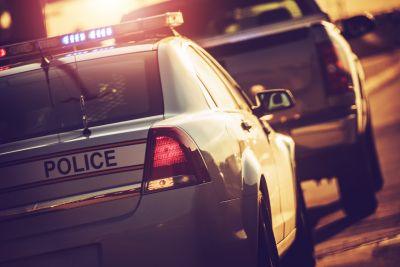 A noise citation in Denver is a municipal violation that carries a fine under the Denver Revised Municipal Code, while careless driving is a state traffic offense, and a conviction adds 4 points to your license. Volume is one distraction among many, and our post on Colorado distracted driving dangers and statistics covers others, including playing with the radio.
Is a 1000W Speaker Loud? What 140 dB Means on the Street
A 1,000-watt rating alone doesn’t tell you whether you’re breaking Denver’s rule, because the city’s test does not look at watts. Denver says no specific noise limits are given for car audio and enforcement turns on whether the sound is plainly audible. Loudness itself is measured in decibels, and that’s where hearing risk shows up.
Decibels climb on a log scale. NIOSH explains that “a sound that is 10 dB louder than another is ten times more intense.” The National Institute on Deafness and Other Communication Disorders (NIDCD) lists these average levels for familiar sounds.
- Normal conversation: 60 to 70 dBA.
- Music through headphones at maximum volume, sporting events and concerts: 94 to 110 dBA.
- Sirens: 110 to 129 dBA.
- A fireworks show: 140 to 160 dBA.
A system pushing 140 dB inside the cabin is louder than the whole siren range on that list.
For parents wondering about 94 dB in the back seat, NIOSH’s recommended exposure limit for workers is “85 dBA averaged over an eight-hour workday.” NIDCD says long or repeated exposure to sounds at or above 85 dBA can cause hearing loss, and 94 dB is above that line.
NIOSH also recommends cutting exposure time in half for each 3 dBA increase in noise level above that limit. That’s one more reason to keep street volume at a level people outside the car cannot plainly hear.
Why a Loud Stereo Matters After a Crash
A loud stereo can become a fault argument after a crash. If the other driver’s insurer learns your music was loud, expect it to argue that a careful driver would have heard the horn or the siren and that you share the blame. Colorado’s comparative negligence rule decides what that argument is worth in dollars.
Insurance adjusters often inflate the injured person’s fault to cut the payout. Under C.R.S. 13-21-111, your negligence does not bar recovery if it “was not as great as the negligence of the person against whom recovery is sought,” but your damages are reduced by your share. Our guide to whether Colorado is a comparative negligence state explains the rule in more detail.
In a crash between two drivers, that means a share of 50 percent or more bars recovery. Here is the math on a hypothetical $80,000 claim:
| Your share of fault | Other driver’s share | What you collect |
|---|---|---|
| 0 percent | 100 percent | $80,000 |
| 25 percent | 75 percent | $60,000 |
| 50 percent | 50 percent | Nothing |
A loud stereo doesn’t end a claim by itself. If the other driver ran the light or rear-ended you at a stop, your volume didn’t cause that mistake, and fault is measured in proportion. What you could hear still needs documenting early, through witness statements, dashcam audio and the other driver’s account.
If you’re not sure whether any of this applies to your crash, a Denver car accident lawyer at CGH can review it with you for free. Managing partner Kevin Cheney has tried 25+ cases to verdict.
The Colorado Rules in One Place
Here is what applies to car stereo volume in Denver and the rest of Colorado, with the code section or statute behind each rule. Denver’s ordinance covers the music coming from your car, and state law covers how you drive, how fault is split and how long you have to act after a crash.
- Denver car audio: Section 38-89 of the Denver Revised Municipal Code, enforced by Denver police on a plainly audible standard. Other Colorado cities may set different rules, since C.R.S. 25-12-108 lets local governments adopt noise standards “no less restrictive” than the state’s.
- Careless driving: C.R.S. 42-4-1402, a class 2 misdemeanor traffic offense worth 4 points, which applies on streets and highways throughout the state.
- Emergency vehicles: under C.R.S. 42-4-705, when an emergency vehicle approaches “making use of audible or visual signals,” you must yield, move as close as possible to the right-hand edge or curb and stop until it passes. Because flashing lights alone trigger that duty, it can apply even when you never hear the siren.
- Comparative negligence: in a two-driver crash, a person 50 percent or more at fault recovers nothing. Under 50 percent, recovery is reduced by that share.
- Lawsuit deadline: three years for most motor vehicle injury lawsuits under C.R.S. 13-80-101(1)(n). A claim against a public entity or its employee, such as a city driver on the job, needs written notice within 182 days after you discover the injury under C.R.S. 24-10-109.
Colorado’s car insurance system runs on fault. The Colorado Division of Insurance explains that required liability coverage pays for injuries and property damage from “an accident in which you are found to be at fault,” which makes every fault argument, including the one about your stereo, worth money to the other side. Our post on whether Colorado is a no-fault state covers the details.
What to Do if Your Stereo Comes Up After a Crash
If the other side starts asking about your stereo after a crash, write down the facts while they are fresh. Note how loud the music was, whether the windows were up and what you heard before impact. Then take the steps below before you talk with the other driver’s insurance company about the crash.
- Write down today what you remember about the volume, the windows and what you heard.
- Save any dashcam footage and phone video now.
- Hold off on giving the other driver’s insurer a recorded statement until you have talked with someone on your side. Our post on the recorded statement trap insurance adjusters set explains what those calls are designed to do.
The clock matters, too. Most Colorado motor vehicle injury lawsuits must be filed within three years, and our guide to the Colorado car accident statute of limitations covers how that deadline runs.
Talk to a Colorado Injury Lawyer for Free
If an adjuster seems more interested in your music than your injuries, call CGH Injury Lawyers at (303) 209-9395 or request a free case review online. Tell us what happened. We work in English and Spanish, the review costs nothing, and there is no fee unless we win.
That covers the attorney’s fee, and your written agreement handles case expenses.
Frequently Asked Questions
Can the police stop you for loud music?
Yes. In Denver, the city says police enforce the car audio section of the code and may issue a citation immediately upon observing a violation, with enforcement based on the sound being plainly audible. Statewide, an officer can also cite careless driving if the volume kept you from reacting to traffic or an emergency vehicle.
Is it legal to listen to music while driving?
Yes, through the car’s speakers, as long as the volume stays within local noise rules and you can still drive safely. Colorado does bar driving while wearing earphones under C.R.S. 42-4-1411, with an exception for a device covering one ear that is connected to a wireless handheld phone. Keep the volume low enough to hear a siren.
How loud can my car legally be?
Colorado’s statewide noise table measures noise at property lines, and stereo noise falls under local ordinances like Denver’s, which use a plainly audible test rather than a meter reading. Exhaust noise falls under the state muffler statute, C.R.S. 42-4-225, which requires an adequate muffler and bars a cut-off, bypass or similar device.
Written by CGH Injury Lawyers.
Attorney Advertising. CGH Injury Lawyers.
This article is general information for Colorado injury readers. It is not legal advice, does not create an attorney-client relationship, and does not promise that any deadline, rule, or outcome applies to your case. Statute-of-limitations, comparative negligence, insurance, and compensation questions require case-specific legal review.
Related articles
-
Is It Illegal to Have Sex in a Self-Driving Car in Colorado?
Last Updated: November 3, 2026 Table of Contents Which Kind of Self-Driving Car Do You Mean? Is It Illegal to Have Sex in Your Car? In a Tesla…
-
What Injury Pays the Most for a Car Accident in Denver? What Really Drives the Number
Last Updated: October 23, 2026 Table of Contents Which Car Accident Injuries Usually Lead to the Largest Claims? The Three Kinds of Losses Colorado Counts Why Medical Bills…
-
What Not to Tell Your Attorney in Denver, and What You Should Never Leave Out
Last Updated: October 15, 2026 Table of Contents Attorney-Client Privilege in Colorado: What It Protects Is a Free Consultation Confidential? What Not to Tell Your Attorney, and What…