ClickCease
Free consultations · Se habla espanol
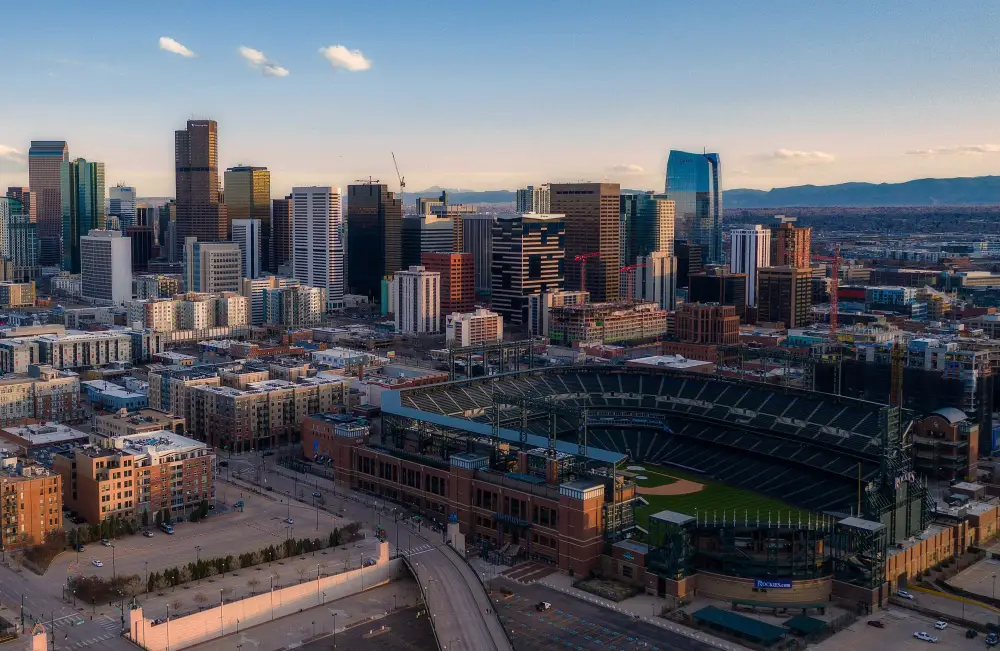
Loveland, Colorado roadway. CGH Injury Lawyers handles uninsured motorist claims for Loveland crash victims.
Loveland, Colorado

Loveland Uninsured Motorist Lawyers Who Put Your Own Policy to Work

When the driver who hit you on Eisenhower Boulevard, State Highway 402, or United States Highway 287 through downtown had no insurance, fled before anyone got a plate, or carried limits that ran out before your bills did, the claim has to come out of your own auto policy. We represent Loveland crash victims in UM and UIM claims against their own carriers. Serving Larimer County from our Denver office. No fee unless we win.

No fee unless we win

It's More Than Money.

Get my free UM/UIM case review

100% confidential. No fee unless we win.

Serving Loveland from our Denver Office CGH Injury Lawyers 2701 Lawrence St., Suite 201 Denver, CO 80205 (303) 209-9395 Se habla espanol
5-star rated on Google ABOTA trial advocate on the team Built for trial No fee unless we win
  • Colorado requires every auto insurer in the state to offer UM/UIM coverage equal to your bodily injury liability limits, and a rejection counts only when it was made in writing by the named insured (C.R.S. 10-4-609). Drivers who are certain they declined the coverage are often looking at a declarations page that still carries it.
  • UM coverage answers when the at-fault driver carried nothing, fled, or never made contact at all. UIM answers when that driver had a policy whose limit ran out before your losses did. Under C.R.S. 10-4-609(4), buying UM brings UIM with it by operation of law.
  • Filing under your own policy does not soften the handling. The delayed response, the thin first offer, and the recorded statement requested too early all arrive the same way they would from a stranger's carrier.
  • At CGH Injury Lawyers, we represent Loveland crash victims in UM and UIM claims against their own insurers, serving Larimer County from our Denver office at 2701 Lawrence St., Suite 201. We pull every declarations page, confirm your coverage and any stacking, build the medical record, and prepare every case for trial or arbitration in the 8th Judicial District.

Free first consultation. No fee unless we win. Call (303) 209-9395.

Colorado UM/UIM law decoded for Loveland crash victims

The legal framework for uninsured and underinsured motorist claims in Colorado comes from a single statute and a line of cases interpreting it. Here is what it actually means for a driver hurt in Loveland.

C.R.S. 10-4-609: what the statute requires

  • Every Colorado auto insurer must offer UM/UIM coverage equal to the bodily injury liability limits you buy. You can reject it, but only in writing by the named insured (C.R.S. 10-4-609).
  • Under C.R.S. 10-4-609(4), purchasing UM coverage automatically includes UIM coverage. They come bundled together by operation of law.
  • A 2007 amendment to C.R.S. 10-4-609, effective January 1, 2008, removed the provision that had let insurers reduce UIM by whatever the at-fault driver's carrier paid. Under C.R.S. 10-4-609(1)(c), the coverage sits in addition to the liability recovery and cannot be reduced by a setoff from other coverage. Whether limits from more than one vehicle or policy can be combined is a separate, fact-specific question that depends on the declarations pages, how premiums were charged, and the policy language.
  • A rejection that does not meet the statute's requirements is potentially invalid, which means coverage you thought you did not have may still exist. We review the rejection language before assuming there is no policy to draw from.

The four triggers: when UM/UIM applies

  • The at-fault driver had no liability insurance. Your UM coverage becomes the only practical recovery path when the other driver cannot pay.
  • Hit-and-run. The driver fled before you got a plate, or before you could identify them. Colorado treats an unidentified fleeing driver as uninsured for UM purposes.
  • Phantom vehicle. A driver cut you off or ran you off the road without contact. Colorado allows UM recovery in some phantom-vehicle cases, but corroborating evidence such as a witness or video is typically needed.
  • Underinsured driver. The other driver had coverage, but their policy limit was lower than your documented losses. Their insurer pays its available limit, and your UIM claim covers the remaining gap up to your own UIM limit.

The filing deadline and comparative fault

Colorado UM/UIM claims are governed by C.R.S. 13-80-107.5, the statute the Colorado Supreme Court applied in Pham v. State Farm, 2013 CO 17. The deadline turns on the procedural history of the underlying claim. Your policy may also impose a shorter contractual notice deadline. Missing that notice can give the insurer a defense, so it must be identified early.

Colorado follows a modified comparative negligence rule with a 50 percent bar (C.R.S. 13-21-111). If you are found less than 50 percent at fault, you recover damages reduced by your percentage of fault. If you are 50 percent or more at fault, you recover nothing. Adjusters can push your fault share higher on a UM/UIM claim, which reduces the payout, so challenging that assessment is central to protecting your recovery.

LOVELAND ROADS, COURTS, AND TRAUMA CARE

Where Loveland UM/UIM crashes happen, and where your case goes

Loveland counts its own crashes, holds the region's Level I trauma center, and sends its district court cases up the highway. Here is the ground your claim lives on.

High-Risk Corridors

Eisenhower Boulevard, State Highway 402, and the United States Highway 287 couplet

The City of Loveland reports that from 2021 to 2025 an average of 1,601 crashes were reported each year, 37 of them involving a serious injury or a death. United States Highway 34 crosses the city as Eisenhower Boulevard, the commercial and commuter spine, while State Highway 402 runs an east-west route across the south side of town.

United States Highway 287 moves through downtown as a one-way pair rather than a single two-way arterial, and the City identifies Cleveland Avenue as the southbound side of it. One-way pairs and signalized highway arterials produce the collisions that most often end in a UM claim: rear-end impacts at a red light, turning conflicts across a through lane, and drivers who leave before anyone writes down a plate.

The Colorado Department of Transportation announced a signal replacement project at United States Highway 34 and North Van Buren Avenue and at State Highway 402 and South Boise Avenue, beginning January 6, 2025 and expected to last until the end of March.

Trauma Care

UCHealth Medical Center of the Rockies, the Level I center inside the city

The Colorado Department of Public Health and Environment's published list of designated trauma facilities carries UCHealth Medical Center of the Rockies, at 2500 Rocky Mountain Avenue in Loveland, as a Level I facility, and it is the only designated trauma facility that list shows in Loveland. The state health department designates Colorado trauma centers and the American College of Surgeons verifies them, which are two separate processes.

Six facilities appear at Level I on that statewide list, and Loveland has one of them. A crash victim with severe injuries may therefore receive Level I care without leaving the city, and the record then follows a single chain of treatment rather than several. We collect that file in full before any demand goes out, because medical records carry the weight of the claim through trial.

Courthouse

Larimer County District Court, the 8th Judicial District, and the county court on East 10th Street

Personal injury cases arising in Larimer County may be filed in the Larimer County District Court, the 8th Judicial District, which the Colorado Judicial Branch lists at the Larimer County Justice Center, 201 LaPorte Ave, Suite 100, Fort Collins, CO 80521. The Branch lists a separate Loveland County Court at 810 E 10th Street, Suite 110, Loveland, CO 80537.

A court address inside Loveland does not by itself settle where a UM/UIM suit belongs. The defendant is your own insurer rather than the driver who hit you, and Colorado's venue rule allows more than one proper county. We handle cases filed in the 8th Judicial District, serving our Loveland clients from our Denver office.

A Plan in Progress

Streets the city is in the middle of changing

In 2022 the City of Loveland adopted the Roadmap to Safety, which it describes as a data-driven effort to identify and prioritize roadway safety improvements. The City has since received federal Safe Streets and Roads for All funding to develop a Roadway Safety Action Plan, now in a phase covering intersection design guidance, data refinement, and bikeway network evaluation.

Two demonstration projects sit inside that work. On Cleveland Avenue between United States Highway 34 and 1st Street the City describes changes that may rebalance roadway space and add intersection treatments using striping and flexible posts, and at Garfield Avenue and 10th Street it says a temporary roundabout will be installed to reduce speeds.

A street being reconfigured is a street whose layout on the date of your crash may not match the one an adjuster looks at months later. Photographs, dashcam video, and footage from businesses and private security systems fix the geometry as it actually was, which is why we ask for all of it early.

WHY CGH

Why Loveland victims choose CGH Injury Lawyers for UM/UIM claims

We serve Loveland from our Denver office, and we are honest about what that means: no local storefront, but a licensed Colorado trial team that knows how to build a UM/UIM claim from the policy review through to Larimer County District Court.

The Statute

C.R.S. 10-4-609

Colorado requires your insurer to offer UM/UIM coverage equal to your liability limits. We know the statute, the stacking rules, and how to read a rejection form for flaws an adjuster is not going to point out.

Bad Faith on the Table

When your insurer stalls, we have a remedy.

When an insurer unreasonably delays or denies a valid UM/UIM claim, Colorado gives you a separate statutory bad-faith cause of action under C.R.S. 10-3-1115 and 10-3-1116. We document insurer conduct from day one so that a lowball offer or unexplained delay shifts the negotiation dynamic.

Honest Case Review

We decline cases we cannot stand behind.

Not every crash produces a UM/UIM claim worth pursuing. If your fact pattern does not support one, we will tell you that in the free review rather than sign you up and let the case stall. When the law supports your claim, we fight hard.

Stacking Review

Multiple vehicles may mean multiple limits.

Whether limits from more than one vehicle or policy can be combined depends on the declarations pages, how premiums were charged, and the policy language. We pull every declarations page and every endorsement to find available limits before any demand goes out.

Trial-Ready

ABOTA member. Larimer County is not a problem.

Managing Partner Kevin Cheney is a member of the American Board of Trial Advocates (ABOTA) and has served as Treasurer of the Colorado Trial Lawyers Association. Timothy G. Tarr has been recognized in The Best Lawyers in America for Personal Injury Litigation - Plaintiffs since 2023. Carriers pay attention to which firms are prepared to try a case in the Larimer County District Court.

Bilingual

Hablamos espanol.

Spanish-speaking staff and attorneys serve Loveland's Spanish-speaking community. Language is never a barrier to a free case review.

No Win, No Fee

Contingency only.

You pay nothing out of pocket for legal fees. We advance costs and collect only from a settlement, verdict, or arbitration award.

AFTER THE CRASH

What to do after an uninsured or hit-and-run crash in Loveland

The first hours after a crash with an uninsured or fleeing driver set the foundation for the UM/UIM claim. Here is the sequence that protects your recovery.

  1. Get medical care immediately

    If your injuries are serious, emergency transport may take you to UCHealth Medical Center of the Rockies, the Level I trauma center in Loveland. Seek care even if you feel okay at the scene. Adrenaline masks injury, and a gap in medical treatment gives the insurer a pre-existing-condition argument.

  2. Call law enforcement

    A police report confirming the other driver fled the scene, had no insurance, or could not be identified is essential to a hit-and-run or uninsured UM claim. Call 911 from the scene and let dispatch send the agency with jurisdiction over that stretch of road. Ask how to request a copy, and pass us the report number as soon as you have it.

  3. Document everything at the scene

    Photograph the damage, your injuries, and the crash location. Note nearby businesses with exterior cameras, private security systems, dashcams in other vehicles, and the names of any witnesses. Retention periods vary widely from one business to the next, so identify anything that can corroborate what happened before you leave the scene.

  4. Notify your own insurer promptly

    Your UM/UIM policy may contain a contractual notice requirement shorter than the statutory deadline. Report the crash to your own carrier promptly, but do not give a recorded statement or accept any offer before speaking with us. The insurer may frame the recorded statement as routine, but it can lock you into answers before your medical picture is complete.

  5. Pull your declarations page

    Find your auto insurance declarations page. It shows your UM/UIM limits, whether you have more than one vehicle on the policy, and any endorsements. If you live in a household with other insured vehicles, stacking may be available. Bring that document to the free case review and we will map every dollar of available coverage.

  6. Call us before the adjuster calls again

    Once we are on the case, we handle all insurer communication. We confirm the at-fault driver's uninsured or underinsured status, secure the police report and any available footage, develop the full medical record before any demand goes out, and document every instance of insurer delay or lowballing for the bad-faith record. Call (303) 209-9395.

COMPENSATION

What compensation can Loveland UM/UIM victims recover?

A crash with an uninsured or underinsured driver creates the same categories of harm as any serious collision. The difference is that the recovery comes from your own policy. Here is what is available.

Economic damages (not limited by Colorado's non-economic cap)

  • Emergency care at UCHealth Medical Center of the Rockies, surgery, and follow-up treatment
  • Future medical costs and rehabilitation
  • Lost wages and lost earning capacity
  • Out-of-pocket expenses tied to the crash and recovery

Non-economic damages

  • Pain and suffering
  • Emotional distress
  • Loss of enjoyment of life
  • Physical impairment and disfigurement, which Colorado treats as a separate category that the non-economic damages cap does not limit (C.R.S. 13-21-102.5(5))

For civil actions filed on or after January 1, 2025, Colorado caps non-economic damages such as pain and suffering at $1.5 million under C.R.S. 13-21-102.5, with inflation adjustments beginning January 1, 2028. Lower caps apply to actions filed before that date, so which cap governs is fact-specific. Economic damages such as medical bills, future care, and lost wages are not limited by that cap, though any UM/UIM recovery is still bounded by the limits on the policy you are claiming under.

Compensation for physical impairment or disfigurement is also not limited by that cap (C.R.S. 13-21-102.5(5)), which matters in serious-injury UM/UIM cases. We structure the demand to reach every available category, including bad-faith penalties when insurer conduct warrants it.

WHAT INSURERS ARGUE

Defenses Loveland UM/UIM insurers use, and how we answer them

Your own insurer raises many of the same defenses a third-party carrier would. Knowing what each one actually requires is how a documented claim stays alive.

  1. "The injuries are pre-existing"

    Blanket medical authorizations reaching back many years are a common insurer request, and they can be used to argue your injuries predate the crash. We manage the scope of medical releases and work with your treating providers to document what was caused by the crash versus what existed before it.

  2. "You were partly at fault"

    Colorado's modified comparative negligence rule bars recovery if you are 50 percent or more at fault (C.R.S. 13-21-111). Adjusters can push your fault share toward the 50 percent bar, which would reduce a UM/UIM payment and eliminate it entirely at 50 percent or more. We build the liability record from the crash report, physical evidence, and witness accounts to challenge any inflated fault allocation.

  3. "You validly rejected UM/UIM coverage"

    A rejection must be in writing by the named insured to be valid under C.R.S. 10-4-609. Rejections that fail the statute's requirements can be found invalid. We review every rejection document before accepting that no UM/UIM coverage exists.

  4. "The other driver actually had insurance"

    Drivers sometimes carry expired cards, have coverage lapses, or drive vehicles insured by someone else. We independently verify the at-fault driver's insurance status through law enforcement records and direct insurer inquiry, not just the other driver's word at the scene.

  5. Delay as a strategy

    Slow document requests, file reassignments, and silence after a demand are common. When delay becomes unreasonable, Colorado's statutory bad-faith remedy under C.R.S. 10-3-1115 and 10-3-1116 becomes available. We document the timeline of insurer conduct from first notice forward so that pattern is on record.

THE HARD PART OF THESE CLAIMS

Why filing against your own insurer is different

Most people assume their own insurer is on their side. In a UM/UIM claim, the transaction is adversarial. Understanding why changes how you approach every insurer interaction.

  • In a UM/UIM claim, you are negotiating with your own auto carrier. Every dollar it pays comes off its books. The conflict is structural, not personal.
  • You may have cooperation duties under your policy, including reporting the crash promptly and providing documentation. What cooperation actually requires depends on the policy language, and reading that language carefully matters before you agree to a recorded statement or accept a fault label in the first call.
  • When an insurer unreasonably delays or denies a valid claim, Colorado gives you a separate cause of action under C.R.S. 10-3-1115 and 10-3-1116. A documented bad-faith record is one of the few things that reliably moves a carrier off a low number.
  • Most UM/UIM disputes resolve through negotiation or arbitration, which some policies require before a lawsuit can be filed. We know both tracks and use the one that fits your case best.
5-star rated on Google

I wish I could leave more than 5 stars!

Grace Macaluso, 5-star Google review
QUESTIONS

Loveland UM/UIM claims: frequently asked questions

What is the difference between UM and UIM coverage in Colorado?

Uninsured motorist (UM) coverage pays when the at-fault driver had no insurance, fled the scene, or was a phantom vehicle. Underinsured motorist (UIM) coverage pays the gap when the at-fault driver had insurance but their policy limit was lower than your documented losses. Both come from your own auto policy. Under C.R.S. 10-4-609(4), buying UM automatically includes UIM. A crash on Eisenhower Boulevard with an uninsured driver in Loveland triggers your own UM coverage, not the other driver's.

Does Colorado law require me to have UM/UIM coverage?

Colorado law does not require you to buy UM/UIM coverage. Every auto insurer in the state must offer it equal to your bodily injury liability limits under C.R.S. 10-4-609. A rejection must be in writing by the named insured to be valid. Rejections that fail the statute's requirements can be found invalid. Drivers who are sure they declined this coverage are worth checking before anyone concludes a Loveland crash has no policy behind it.

The driver who hit me on Eisenhower Boulevard fled the scene. Do I still have a claim?

Yes. A hit-and-run driver is treated as uninsured under Colorado UM coverage. Report the crash to law enforcement and to your own insurer right away. Physical evidence, witnesses, and dashcam footage all strengthen the claim, and footage held by businesses and private security systems along Eisenhower Boulevard or Cleveland Avenue can be overwritten on a short retention cycle. Your policy may also contain a notice deadline shorter than the statutory filing deadline.

How long do I have to file a UM/UIM claim after a Loveland crash?

Colorado UM/UIM claims are governed by C.R.S. 13-80-107.5, the statute the Colorado Supreme Court applied in Pham v. State Farm, 2013 CO 17. The deadline turns on the procedural history of the underlying claim. Your individual policy may impose a shorter contractual notice deadline, and missing that contractual notice can give the insurer a defense. Because the timing is fact-specific, speak with a lawyer early after a crash on any Loveland street.

Can I stack UM/UIM coverage across multiple vehicles in Colorado?

Combining UM/UIM limits across multiple vehicles or policies is fact-specific, not automatic. A 2007 amendment to C.R.S. 10-4-609, effective January 1, 2008, removed the provision that had let insurers reduce UIM by what the at-fault carrier paid, and C.R.S. 10-4-609(1)(c) bars a setoff from other coverage. The same subsection also allows a single policy issued for a single premium covering multiple vehicles to be limited to applying once per accident. Whether it applies to your Loveland case depends on the declarations pages and the policy language.

I was hit by an uninsured driver while walking downtown. Does UM coverage apply?

It can. UM/UIM coverage generally follows the insured person rather than the vehicle, so a policyholder or covered household member struck while walking or cycling may be able to claim under their own auto policy, depending on its terms. Downtown Loveland puts people on foot alongside a one-way pair carrying United States Highway 287 traffic, which is exactly the setting where this coverage gets overlooked. It costs nothing to have the policy reviewed.

Where would my Loveland UM/UIM lawsuit be filed?

Personal injury cases arising in Larimer County may be filed in the Larimer County District Court, the 8th Judicial District. The Colorado Judicial Branch lists the Larimer County Justice Center at 201 LaPorte Ave, Suite 100, Fort Collins, CO 80521, and a Loveland County Court at 810 E 10th Street, Suite 110, Loveland, CO 80537. Colorado's venue rule allows more than one proper county, and in a UM/UIM claim the defendant is your own insurer. Some policies require arbitration first, and we handle both tracks.

How does Colorado's comparative fault rule affect my UM/UIM recovery?

Colorado follows a modified comparative negligence rule with a 50 percent bar (C.R.S. 13-21-111). If you are found less than 50 percent at fault, you can recover damages, but your award is reduced by your percentage of fault. If you are 50 percent or more at fault, you recover nothing. Adjusters can push your fault share higher, which reduces a UM/UIM payout. We build the liability record from the crash report, physical evidence, and witnesses to challenge any inflated fault allocation made by your own insurer.

It's More Than Money.

An uninsured driver hurt you in Loveland. We put the policy you already pay for to work.

Free consultation for Loveland crash victims. No fee unless we win. Serving Larimer County from Denver. Call (303) 209-9395.

Tell us what happened

100% confidential. No fee unless we win.

Prefer to read first? See how Colorado UM/UIM law works statewide.

CGH Injury Lawyers · 2701 Lawrence St., Suite 201, Denver, CO 80205

Attorney Advertising. CGH Injury Lawyers.