ClickCease
Free consultations · Se habla espanol
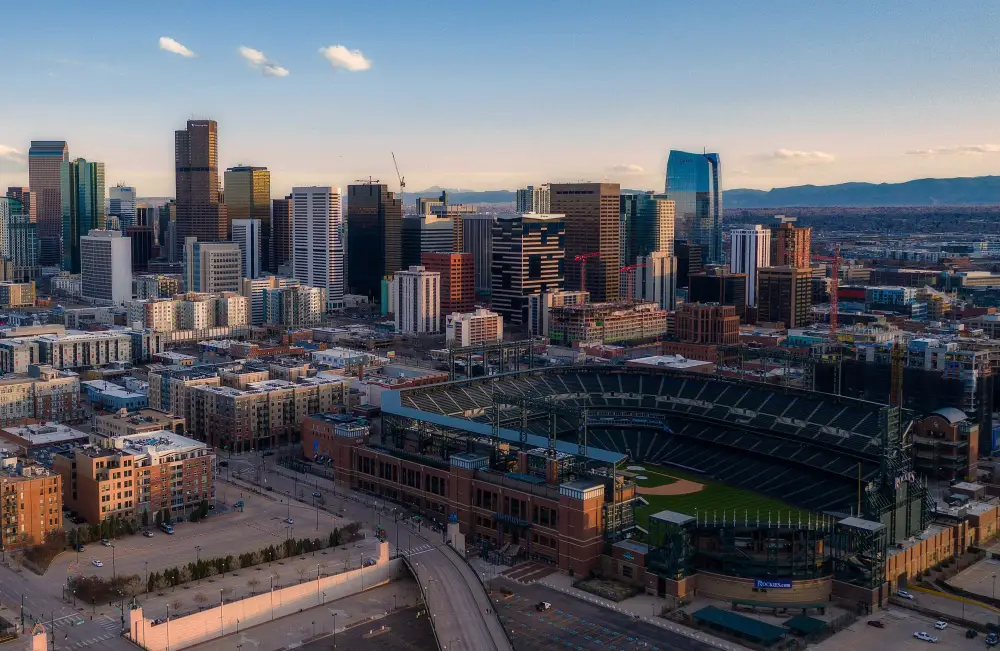
Traffic on US 36 crossing Westminster, Colorado. CGH Injury Lawyers represents rear-end crash victims in Westminster.

IT'S MORE THAN MONEY.

Westminster Rear-End Accident Lawyers Who Handle Two Counties and Two Courts

US 36 cuts diagonally across Westminster, I-25 closes the east, and Wadsworth and Federal Boulevards carry the north-south load. CGH Injury Lawyers serves Westminster from our Denver office and files in Adams or Jefferson County depending on where the crash happened. No fee unless we win.

No fee unless we win
Or speak with our team now (303) 747-4817

Tell us what happened in Westminster

100% confidential. No fee unless we win.

5-star rated on Google ABOTA trial advocate on the team No fee unless we win Free consultation
  • The driver behind is usually at fault. Colorado requires drivers not to follow another vehicle more closely than is reasonable and prudent, having due regard for the speed of the vehicles and the traffic and condition of the highway (C.R.S. 42-4-1008). A diagonal highway crossing a signalised grid is exactly the condition that standard is measured against.
  • Partial blame reduces a claim rather than ending it. Under C.R.S. 13-21-111 a share of fault below 50 percent reduces the award in proportion, and at 50 percent or more recovery is barred.
  • Three years is the general deadline, and 182 days is the trap. Colorado allows three years for tort actions for bodily injury arising out of the use or operation of a motor vehicle (C.R.S. 13-80-101(1)(n)). A claim touching a public entity generally needs written notice within 182 days of discovering the injury (C.R.S. 24-10-109(1)).
  • The city spans two counties and two judicial districts. CGH Injury Lawyers files Westminster cases in Adams County at Brighton or in Jefferson County at Golden, and serves the city from the Denver office.

Westminster sits across the Adams and Jefferson county line. The two halves of the city belong to two different judicial districts.

On a rear-end file that makes the crash location a threshold question rather than a detail. Which county the impact fell in decides which court hears the case. Our Colorado injury attorneys settle that before anything else is filed.

Who is at fault

Why the following driver usually carries a Westminster rear-end crash

Colorado asks drivers to keep a distance suited to the speed of the vehicles, the traffic and the condition of the highway (C.R.S. 42-4-1008). Striking the vehicle ahead is, in most cases, evidence that the distance was not enough.

The road mix here makes that a live question. A distance that works on US 36 is plainly inadequate on Federal Boulevard, and drivers moving between the two frequently carry the wrong following distance with them.

Clear liability rarely ends the dispute. Once fault is hard to contest, insurers reach for three familiar arguments:

  • The collision was too light to have caused a genuine injury.
  • The symptoms come from an earlier condition rather than the crash.
  • The lead driver stopped abruptly and shares the blame.

We build fault and injury together. That means establishing which county the impact fell in, securing the Westminster Police Department, Adams or Jefferson County Sheriff, or Colorado State Patrol report, and matching it to the right court.

The wider collision practice for the city sits on our Westminster car accident lawyer page.

Where Westminster rear-end crashes cluster

The corridors and conditions that produce the impacts

A rear-end crash needs one condition: a vehicle slowing faster than the driver behind expected. Westminster produces that in five ways, and the county line runs through several of them.

  1. US 36 and the turnpike interchanges

    The turnpike crosses the city diagonally, and the queues that form at the interchanges extend back into lanes running at highway speed.

    Closing speed is widest exactly where the stopped vehicles sit, which is why mainline queue crashes produce worse injuries than their vehicle damage suggests.

  2. Wadsworth Boulevard and the Wadsworth Bypass

    State Highway 121 and the bypass carry heavy north-south volume through long signalised runs, with left-turn queues that spill into through lanes.

    A queue extending past its turn bay is a recurring mechanism, because the stopped vehicles end up in a lane that traffic behind is still treating as moving.

  3. Federal Boulevard and the US 287 corridor

    Federal carries continuous business access and closely spaced signals, with vehicles decelerating out of a through lane throughout the day.

    These impacts occur at lower speeds than the highway crashes, and insurers press that point hard. Low speed and low injury are different things, and the medical record has to establish the difference.

  4. 120th Avenue and Church Ranch Boulevard

    The east-west corridors carry retail and commuter traffic between the two halves of the city, crossing the county line as they go.

    A crash on these corridors can fall in either county depending on the block, which is the practical reason the location has to be fixed precisely.

  5. I-25 and the eastern edge

    The interstate carries sustained regional traffic along the eastern boundary, and vehicles entering from the crossings merge into much faster lanes.

    Where a road authority is implicated in a surface condition or traffic control, the 182-day notice under C.R.S. 24-10-109(1) can come into play, running from discovery of the injury.

Local knowledge

Westminster courts. Westminster trauma care. Westminster roads.

A Westminster rear-end case is grounded in three places, and which court applies depends on where the crash happened.

Courthouse

Adams County Justice Center, Seventeenth Judicial District, 1100 Judicial Center Drive, Brighton, CO 80601. Jefferson Combined Court, First Judicial District, 100 Jefferson County Parkway, Golden, CO 80401.

Which court hears a Westminster case generally turns on which county the crash fell in. Venue usually follows the county where the crash happened, though Colorado rules can also allow filing where a defendant resides or may be found, so the parties matter alongside the location.

Trauma care

St. Anthony North Hospital, 2551 W. 84th Avenue, Westminster, CO 80031, is a Level III trauma centre inside the city. The nearest Level I is CommonSpirit St. Anthony Hospital, 11600 W. 2nd Place, Lakewood, CO 80228.

A Level III centre stabilises and transfers the most serious injuries rather than treating them through. Where a transfer happens, both record sets belong in the file, and the transfer decision documents how severe the injury looked at the scene.

High-crash corridors

US 36, I-25, Wadsworth Boulevard as State Highway 121, the Wadsworth Bypass, Federal Boulevard as US 287, Sheridan Boulevard, 120th Avenue and Church Ranch Boulevard carry the volume between them.

CGH Injury Lawyers takes rear-end cases from every one of those corridors, on both sides of the county line, including the turnpike segments where the Colorado State Patrol takes the report.

What to do after

The first hours after a rear-end crash in Westminster

Neck and disc injuries commonly feel manageable at the roadside and considerably worse two or three days later. Fixing which county you were in is the other thing the first hours decide.

  1. Call 911 and get the report started

    Colorado requires the driver of a vehicle involved in a crash resulting in injury, serious bodily injury, death, or any property damage to give immediate notice to the nearest police authority (C.R.S. 42-4-1606). The Westminster Police Department responds on city streets, the Adams and Jefferson County Sheriffs cover unincorporated areas, and the Colorado State Patrol handles the highway corridors.

    A separate provision of that section lets an officer skip a written report on a minor property-damage-only crash. That limits the officer duty and does not remove the driver duty to give notice.

  2. Fix the location precisely

    Note the nearest cross street and the block. In a city that spans two counties the difference between two intersections can be the difference between two courts.

    The police report usually records the county, but it is worth having your own note of the location in case the report is wrong or unclear.

  3. Photograph both vehicles and the street signs

    Photograph the front of the other vehicle and the rear of yours, the resting position of both, and the nearest street sign.

    Where jurisdiction is contested later, a photograph showing the location is worth more than any recollection of it.

  4. Get examined the same day

    St. Anthony North Hospital handles emergency presentations in the city, and urgent care or a primary physician covers everything below that threshold. A gap between the crash and the first medical visit is the first thing an adjuster will raise.

  5. Decline the recorded statement

    Do not give a recorded statement and do not sign a release before an attorney has read it.

    In rear-end files the recorded statement is where an adjuster works toward two admissions: that the injury was mild, and that the stop was sudden.

    What an adjuster is doing on that first call is set out in the insurance adjuster trap.

Compensation

What a Westminster rear-end claim can recover

Colorado divides recoverable losses into two groups, and the caps treat them very differently.

Economic damages, which the non-economic cap does not limit

  • Emergency treatment, imaging, surgery and follow-up care
  • Physical therapy and chiropractic treatment for neck and back injury
  • Lost wages and lost income during recovery
  • Reduced earning capacity going forward
  • Vehicle damage and related out-of-pocket cost

Non-economic damages, which are capped

  • Pain and suffering
  • Emotional distress
  • Loss of enjoyment of life
  • Loss of consortium

Colorado caps non-economic damages under C.R.S. 13-21-102.5, amended by House Bill 24-1472 with effect from 1 January 2025 to set the figure at $1.5 million. The statute begins adjusting that figure for inflation on 1 January 2028 and every two years after.

Two separate routes reach the raised cap. A civil action filed during calendar 2025 qualified regardless of when the crash happened, and independently any claim accruing on or after 1 January 2025 qualifies, which is the route covering a crash today.

Physical impairment and disfigurement sit outside that cap, economic damages are not limited by it either, and wrongful death claims fall under a separate section. Exemplary damages may be available under C.R.S. 13-21-102 where the conduct involved fraud, malice, or willful and wanton disregard.

A claim against a public entity works differently. The Governmental Immunity Act caps the total recoverable amount, economic and non-economic together. For claims accruing on or after 1 January 2026 the Secretary of State certified $505,000 for one person and $1,421,000 for two or more in a single occurrence, with no individual exceeding $505,000.

Which figure governs a particular crash turns on the accrual date, the parties and the theory pleaded, so it is worth confirming rather than assuming. How car accident settlements are calculated in Colorado walks through how the categories add up.

Defences insurers use

The five arguments that show up in Westminster files

Fault on a rear-end crash is usually the easy part. These files get fought over injury severity and, more often than in most cities, over procedure.

The case was filed in the wrong county. A city spanning two counties invites procedural challenges that would not arise elsewhere.

Establishing the crash location precisely at the outset closes this off. Venue can also rest on where a defendant resides or may be found, which sometimes gives more than one proper forum.

The impact was too minor to injure anyone. Bumper systems are engineered to absorb and rebound from low-speed impacts rather than to record them, so visible damage tracks occupant injury poorly.

Same-day documentation, imaging and a treating physician opinion answer that directly. It surfaces most often in the Federal Boulevard crashes, where speeds genuinely are low.

You stopped too suddenly. Under C.R.S. 13-21-111 an insurer needs to move only 50 percent of the fault to defeat the claim completely, which is why this one is pushed hard even when it is weak.

On an arterial with turn queues spilling into through lanes, braking for the vehicle ahead is ordinary careful driving. Witness accounts and the scene evidence are what establish that.

The symptoms come from an earlier condition. Prior records get requested to build an alternative explanation for neck and back findings.

A treating physician who can separate a pre-existing finding from an acute post-crash change is what answers it. The distinction is medical, and it needs to be documented as such.

The other driver had no coverage. Colorado is a fault-based state, so the claim runs against the at-fault driver liability insurer, and where that driver carries minimum limits or nothing, uninsured and underinsured coverage on your own policy or an employer commercial policy may apply.

Those questions come up often on US 36, which carries a large share of through traffic between Denver and Boulder.

Those questions are worked through in is Colorado a no-fault state and in hit by an uninsured driver in Colorado.
The law behind your claim

What a Westminster rear-end claim has to establish

A rear-end claim is a negligence claim. The following driver begins in a difficult position, and the elements still have to be proved:

  • Duty. Every Colorado driver owes other road users reasonable care, including the duty to follow at a reasonable and prudent distance (C.R.S. 42-4-1008).
  • Breach. The following driver fell short, usually by following too closely, driving too fast for conditions, or failing to watch the road ahead.
  • Causation. The breach caused the collision and the collision caused the injury. This is where most Westminster files are genuinely contested.
  • Damages. The injury produced losses the law recognises, economic and non-economic.

Comparative fault runs across all four. Under C.R.S. 13-21-111 a plaintiff below 50 percent recovers a reduced award, and at 50 percent or above recovers nothing.

These elements govern every collision claim in the state. Our statewide Colorado car accident page sets them out in more depth.

How the claim works

From first call to resolution

A Westminster rear-end claim moves through six stages. Most resolve before a courtroom, and each is prepared as though it will not.

  1. Free case review

    We go through what happened, explain how Colorado law applies, and answer questions at no cost and with no obligation.

  2. Investigation and preservation

    We establish which county the crash fell in, collect the Westminster Police Department, county sheriff or Colorado State Patrol report, and confirm the correct filing court.

  3. Treatment and documentation

    A claim cannot be valued until the medical picture is stable. Rushing this stage is the most common way a rear-end injury gets undervalued.

  4. Demand

    We calculate damages across every category Colorado allows and present a documented demand tying the injury to the mechanism of the impact.

  5. Negotiation

    Most Westminster files resolve here, and they resolve better when the insurer knows the firm tries cases.

  6. Filing in Adams or Jefferson County

    If the offer stays unreasonable we file at Brighton in the Seventeenth Judicial District or at Golden in the First, depending on where the crash happened. Managing Partner Kevin Cheney is a member of the American Board of Trial Advocates and has tried more than 25 cases to verdict.

5-star rated on Google

I wish I could leave more than 5 stars!

Grace Macaluso, 5-star Google review

Real Colorado results

Verdicts and settlements CGH has recovered in Colorado car accident cases

  • $3,000,000 Car crash settlement, Montrose County
  • $2,527,546 Car crash verdict, Jefferson County
  • $1,654,629 Car crash verdict, Boulder County
  • $1,500,000 Car crash settlement, Summit County

Past results do not guarantee or predict a similar outcome. Every case turns on its own facts, injuries, and available insurance coverage.

Your team

The attorneys handling your Westminster rear-end case

CGH Injury Lawyers is the trade name of Cheney Galluzzi & Howard, LLC, an eight-attorney Colorado firm founded in 2016. The firm works in English and Spanish.

ABOTA member on the team Trial lawyers, not a settlement mill Se habla espanol

Managing Partner Kevin Cheney is a member of the American Board of Trial Advocates and Treasurer of the Colorado Trial Lawyers Association. Timothy G. Tarr has been recognised by Best Lawyers each year from 2023 through 2026, and Nicole Greene was named a Super Lawyers Rising Star in 2025.

Every Westminster rear-end case is handled by a licensed Colorado attorney. The fee is contingent, so nothing is owed unless the case is won.

More on Kevin Cheney background and the firm Colorado case results.

Serving Westminster from Denver

CGH Injury Lawyers does not have a Westminster office

Our office is at 2701 Lawrence St., Suite 201, Denver, CO 80205. There is no Westminster location, no satellite address and no local storefront.

The courthouses are in Brighton and Golden, and the firm is in Denver. We serve the city and both counties from that office, file in whichever district applies, and travel to clients for meetings, medical appointments and site visits. Call (303) 747-4817 or use our contact page.

Frequently asked questions

Westminster rear-end accidents: common questions

Westminster is in two counties. Which court hears my case?

It generally depends on which county the crash happened in. An Adams County crash goes to the Seventeenth Judicial District at Brighton, and a Jefferson County crash goes to the First Judicial District at Golden.

Venue can also rest on where a defendant resides or may be found, so more than one court is sometimes proper. Fixing the crash location precisely is the starting point either way.

Is the driver who hit me from behind automatically at fault?

Usually responsible, but not automatically. Colorado requires a following distance that is reasonable and prudent for the speed and conditions (C.R.S. 42-4-1008), which puts the following driver in a difficult starting position.

Insurers still work to move a share of blame by arguing the lead driver stopped short, merged late or had a brake light out. Under C.R.S. 13-21-111 a share below 50 percent reduces recovery rather than ending it.

How do I find out which county I was in?

The police report usually records it. Failing that, the nearest cross street and the block are enough to establish it from public mapping.

It is worth checking rather than assuming, because the city boundary and the county line do not follow the same path.

My car barely has a mark on it. Is there still a claim?

Possibly. Vehicle damage is a poor proxy for occupant injury, because modern bumper systems are designed to absorb energy rather than display it.

Neck, disc and concussion injuries all occur in impacts leaving very little visible damage. Prompt medical documentation is what answers the argument.

I was treated at St. Anthony North and then moved. Why does that matter?

Because it produces two record sets and a documented clinical reason for the move. St. Anthony North is a Level III and the nearest Level I is in Lakewood.

An insurer reviewing only the first record sees a smaller injury than the one actually treated. Both sets belong in the file.

How long do I have to bring a Westminster rear-end claim?

Colorado generally allows three years from the date of the crash for tort actions arising out of the use or operation of a motor vehicle (C.R.S. 13-80-101(1)(n)). A claim involving a public entity generally requires written notice within 182 days of discovering the injury (C.R.S. 24-10-109(1)).

The 182-day window deserves particular attention here, because a crash near the county line can involve more than one public road authority.

Does CGH Injury Lawyers have an office in Westminster?

No. There is one office, at 2701 Lawrence St., Suite 201, Denver, CO 80205.

Westminster clients in both counties are served from that office, cases are filed in whichever district applies, and meetings happen wherever is convenient. Call (303) 747-4817 for a free, confidential consultation.

IT'S MORE THAN MONEY.

Talk to a Westminster rear-end accident lawyer

Rear-end injuries get harder to prove the longer a file sits, and a case filed in the wrong county loses time it never gets back. Call CGH Injury Lawyers at (303) 747-4817 or request a free consultation.

Free case review

100% confidential. No fee unless we win.

CGH Injury Lawyers · 2701 Lawrence St., Suite 201, Denver, CO 80205 · Serving Westminster from our Denver office

Attorney Advertising. Past results do not guarantee or predict a similar outcome.