Last Updated: November 17, 2026
- No Colorado state traffic statute names makeup. If doing it pulls your attention off traffic and leads you to drive carelessly, Colorado’s careless driving law can apply.
- Makeup can hit all three types of distraction. The CDC names visual, manual, and cognitive distraction, and a mirror and brush can take your eyes, hands, and mind off the road.
- The hands-free law covers phones and other mobile devices. An officer can cite a driver under it only after seeing that the device use caused careless driving. Makeup falls under the careless driving law itself, so the question is whether it caused you to drive carelessly.
- Distraction matters after a crash. If a driver doing makeup hits you at a light, that distraction is part of the fault picture, and what you were doing while stopped can matter too.
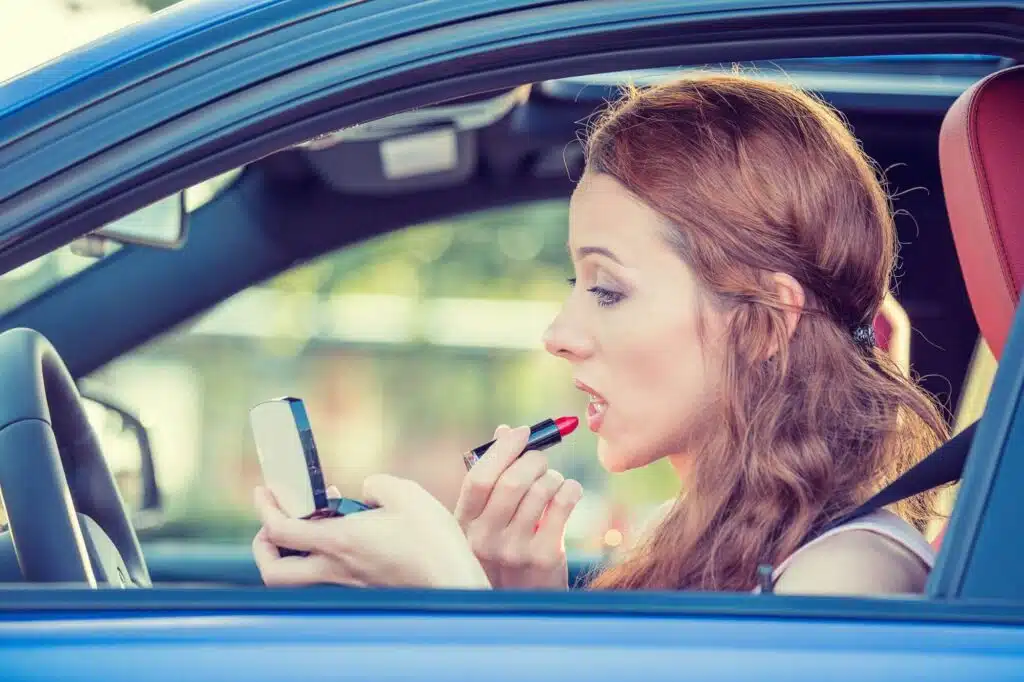
Is it illegal to put on makeup at a stop light in Colorado? Not by name, because no Colorado state traffic statute says “no makeup at a stoplight.” You can still end up with a ticket if putting on makeup leads you to drive carelessly, because Colorado’s careless driving law looks at how you drive.
At CGH Injury Lawyers, based in Denver, we offer a free case review if a distracted driver hit you, and there’s no fee unless we win. That covers the attorney’s fee; your written agreement handles case expenses. Call (303) 209-9395 to tell us what happened.
This page provides general information only and does not constitute legal advice. Reading this page does not create an attorney-client relationship. Laws vary by jurisdiction and change frequently. Always consult a licensed attorney for advice specific to your situation.
Which Colorado Rules Apply While You’re Stopped at a Red Light?
The rule for a steady red light tells you to stop and stay stopped until the signal lets you go, with exceptions for some turns on red. The careless driving law looks at how you drive, for example, when you pull away or roll toward the car ahead.
At a red light, C.R.S. 42-4-604 says traffic facing a steady circular red signal alone “shall stop at a clearly marked stop line” and “shall remain standing until an indication to proceed is shown,” except where a turn on red is allowed after a full stop and yielding. With no stop line, you stop before the crosswalk or, if there is no crosswalk, before the intersection. When you’re driving, C.R.S. 42-4-1103 also bars driving so slowly that you “impede or block the normal and reasonable forward movement of traffic,” unless a slower speed is needed for safety or to obey the law.
Distraction at a light looks different from distraction on the move: a distracted driver misses the green or lifts off the brake and taps the bumper ahead.
If a driver putting on makeup hits you instead of watching the light, our distracted driving accident lawyers in Denver can look at how the crash happened.
What Counts as Distracted Driving?
 Distracted driving is doing something else that takes your attention away from driving. That’s how the CDC defines it. The Colorado Department of Transportation’s distracted driving page describes it as driving while engaged in “anything that takes your focus away from the road,” and it names eating, reading, texting, and talking to a passenger as examples.
CDOT also reports that from 2014 to 2024, 676 Coloradans lost their lives due to distracted driving.
The Colorado Driver Handbook is direct about everyday distractions: “Do not attempt to eat or drink, read, smoke or vape, apply makeup, or adjust the music while you are driving.”
The 3 Types of Distracted Driving
The CDC’s distracted driving page sorts distraction into three main types:
- Visual: looking away from the road. Looking into the visor mirror and checking eyeliner in the rearview is a visual distraction.
- Manual: taking your hands off the wheel. You might be holding a compact or a lipstick.
- Cognitive: taking your mind off driving. Concentrating on a clean line instead of the light or the pedestrian stepping off the curb.
Putting on makeup can involve all three at once, and our page on Colorado distracted driving dangers and statistics walks through other common causes, starting with talking on the phone.
Can You Get a Ticket for Doing Makeup at a Red Light?
Yes, if it leads you to drive carelessly. One charge an officer can write is careless driving, which Colorado defines as driving “in a careless and imprudent manner, without due regard for the width, grade, curves, corners, traffic, and use of the streets and highways and all other attendant circumstances,” under C.R.S. 42-4-1402.
An officer who watches you drift into the crosswalk or weave while you dab concealer is looking at the kind of driving the statute describes.
Penalties for Distracted Driving in Colorado
The consequences depend on which law applies and what happened:
- Careless driving is a class 2 misdemeanor traffic offense, which carries 10 to 90 days in jail, a $150 to $300 fine, or both (C.R.S. 42-4-1402, 42-4-1701). A conviction also carries 4 points against your license, or 12 if it results in death (C.R.S. 42-2-127), except for careless driving of a bicycle, e-bike, or e-scooter. It becomes a class 1 misdemeanor traffic offense if it’s the proximate cause of bodily injury, serious bodily injury, or death to another person.
- The hands-free law, covered in our guide to Colorado cell phone driving laws, is a separate charge, and it doesn’t cover makeup. Holding a phone or other mobile electronic device to talk, or texting or watching video on it, while driving is a class A traffic infraction: a $75 fine for a first offense, $150 for a second, and $250 for a third or later offense within 24 months, each with a $10 surcharge, plus 2, 3, or 4 license points. It becomes a class 1 misdemeanor traffic offense if it’s the proximate cause of bodily injury to another person.
- Limits on hands-free tickets: an officer can cite you under that law only after seeing the phone use cause careless and imprudent driving. You won’t be convicted on that charge if you show a hands-free accessory or proof you bought one and affirm under penalty of perjury that you haven’t had a charge dismissed that way before.
- City codes: Aurora’s city code adopts most of the 2024 Model Traffic Code for Colorado from CDOT, including its careless driving section.
- Insurance: the Colorado Division of Insurance lists moving violations and at-fault accidents among the things that can raise your auto premium.
Here’s how the two state laws compare:
| Law | What it covers | Basic penalty | If someone is hurt |
|---|---|---|---|
| Careless driving (C.R.S. 42-4-1402) | Driving in a careless and imprudent manner, without due regard for the road, the traffic and other circumstances | Class 2 misdemeanor traffic offense. On conviction, 4 license points (12 if it results in death), except for careless driving of a bicycle, e-bike or e-scooter | Class 1 misdemeanor traffic offense if it’s the proximate cause of bodily injury, serious bodily injury, or death to another |
| Hands-free law (C.R.S. 42-4-239) | Using a mobile electronic device while operating a motor vehicle | Class A traffic infraction; $75 fine and 2 points for a first offense; a citation requires an officer to see phone use that caused careless driving | Class 1 misdemeanor traffic offense if it’s the proximate cause of bodily injury to another |
If you were hit at a light and aren’t sure whether you can show the other driver was distracted, a free case review is a good place to start. There’s no fee unless we win, and your written agreement handles case expenses.
Which Colorado Laws Cover Distracted Driving?
Colorado has no traffic statute for makeup. Two broad driving laws can apply when a distraction the code doesn’t name leads to careless or reckless driving: they ask how you drove, not what distracted you. A newer law bars using phones and other mobile devices while driving unless hands-free, and CDOT says it applies even when stopped at a light.
The two broad laws:
- Careless driving, C.R.S. 42-4-1402: driving in a careless and imprudent manner, without due regard for traffic and the conditions around you.
- Reckless driving, C.R.S. 42-4-1401: a separate charge with a higher bar: it requires driving with “a wanton or a willful disregard for the safety of persons or property.” Our post on reckless driving examples in Colorado explains the difference.
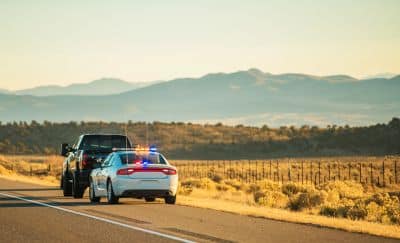 There’s also a newer phone rule: Senate Bill 24-065 made Colorado hands-free for drivers starting January 1, 2025. Before that, Colorado barred all drivers from texting and barred drivers under 18 from using a phone while driving, with exceptions for contacting a public safety entity or an emergency. A texting ticket, then, like a hands-free ticket now, required an officer to see that the phone use caused careless driving.
Now C.R.S. 42-4-239 says an individual “shall not use a mobile electronic device while operating a motor vehicle.” The law lists a few exceptions, such as contacting a public safety entity, using a phone during an emergency, and first responders on duty. CDOT notes the law allows hands-free accessories, and the law’s definition of operating a vehicle omits a car that is lawfully parked.
CDOT’s hands-free law page says drivers can’t touch or handle a phone “including while stopped at traffic signals.”
The Colorado Department of Transportation and the Colorado State Patrol announced a statewide distracted driving enforcement period for April 8 to 10, 2016, and CDOT marks April as Distracted Driving Awareness Month.
When a Driver Doing Makeup Rear-Ends You at a Light
C.R.S. 42-4-1008 says a driver “shall not follow another vehicle more closely than is reasonable and prudent.” A driver who rolls into you at a light while looking in a mirror faces that argument, and proof of the makeup supports the claim that they weren’t watching the road.
If you were stopped and someone hit you from behind, our Denver rear-end accident lawyers can look at what the other driver was doing in the seconds before the crash.
Evidence that can show what the other driver was doing:
- The other driver’s words at the scene can also help. If they say, “I was just fixing my lipstick,” be sure to write it down along with the time.
- Dashcam footage from your car or the one behind, which may show the mirror-and-brush motion.
- The police report, if the officer noted makeup in the driver’s lap or on the console, is also important.
- Witnesses in the next lane, who may have seen what the driver was doing through the window.
Your side matters too. Colorado uses modified comparative negligence under C.R.S. 13-21-111: you can recover if your negligence “was not as great as” the other driver’s, but your damages are reduced by your share.
If your share is equal to or greater than theirs, you recover nothing from that driver. So if you were rear-ended while doing makeup yourself, the other driver’s insurer may argue you were slow off the line or stopped short.
Here’s an example, for illustration only. Say a jury values your claim at $60,000 and puts 10% of the fault on you for a late start off the light: your recovery drops to $54,000, and at 50% you recover nothing.
The liability coverage Colorado requires pays for injuries to other people and damage to their property from an accident in which the insured driver is found at fault. An injury claim against the at-fault driver is usually made against that coverage, as our post on whether Colorado is a no-fault state for car accidents explains.
What to Do After a Crash at a Light
If a driver doing makeup hits you, get medical care first, then write down what you saw while it’s fresh. Note what the other driver was holding or looking at, and ask the officer to record it. Save any dashcam footage right away, before the camera records over it.
Dashcams from makers such as Garmin and Nextbase use loop recording. Once the memory card is full, the camera records over the oldest unsaved footage, so a clip you don’t save can be gone after a few hours of driving, depending on the card.
If you had the brush in your hand when someone hit you, don’t assume you lost the claim. Each side argues fault from the evidence, and if your share of the blame is less than the other driver’s, it reduces your recovery by that share, as our guide to who is at fault in a Denver rear-end collision explains.
Talk to a Colorado Injury Lawyer for Free
We offer a free case review in English and Spanish. There’s no fee unless we win; that covers the attorney’s fee, and your written agreement handles case expenses. Our attorneys are “Colorado trial lawyers who prepare every case to be tried, not just settled.”
Call (303) 209-9395 or tell us what happened online.
Frequently Asked Questions
Is it illegal to apply makeup while driving?
Not by name. No Colorado state traffic statute names makeup, but if it leads you to drive carelessly, such as drifting or weaving while you look in the visor mirror, an officer who sees it can stop you for careless driving.
Is distracted driving illegal?
Some of it is. Colorado’s hands-free law bars holding a phone or other mobile device to talk, texting, or watching video on it while driving, with exceptions, and the careless driving law covers careless and imprudent driving without due regard for traffic and the conditions around you, whatever the cause. The Colorado Driver Handbook also tells drivers not to eat or drink, read, smoke or vape, apply makeup, or adjust the music while driving.
How many points is careless driving in Colorado?
A careless driving conviction carries 4 points against your license, or 12 if it results in death (C.R.S. 42-2-127); careless driving of a bicycle, e-bike, or e-scooter isn’t subject to that points law. Under C.R.S. 42-4-1402, it’s a class 2 misdemeanor traffic offense and a class 1 misdemeanor traffic offense if it’s the proximate cause of bodily injury, serious bodily injury, or death to another person.
Written by CGH Injury Lawyers.
Attorney Advertising. CGH Injury Lawyers.
This article is general information for Colorado injury readers. It is not legal advice, does not create an attorney-client relationship, and does not promise that any deadline, rule, or outcome applies to your case. Statute-of-limitations, comparative negligence, insurance, and compensation questions require case-specific legal review.
Related articles
-
Is a Loud Exhaust Illegal in Colorado?
Colorado requires an adequate muffler and bans cut-offs and bypasses. A modified exhaust can turn into a fault argument after a crash.
-
How Loud Can You Play Music in Your Car in Colorado?
Last Updated: November 10, 2026 Table of Contents Denver’s Plainly Audible Rule and Colorado’s Noise Table What a Loud Music Stop Looks Like in Denver Is a 1000W…
-
Is It Illegal to Have Sex in a Self-Driving Car in Colorado?
Last Updated: November 6, 2026 Table of Contents Which Kind of Self-Driving Car Do You Mean? Is It Illegal to Have Sex in Your Car? In a Tesla…