
ClickCease
Free consultations · Se habla espanol
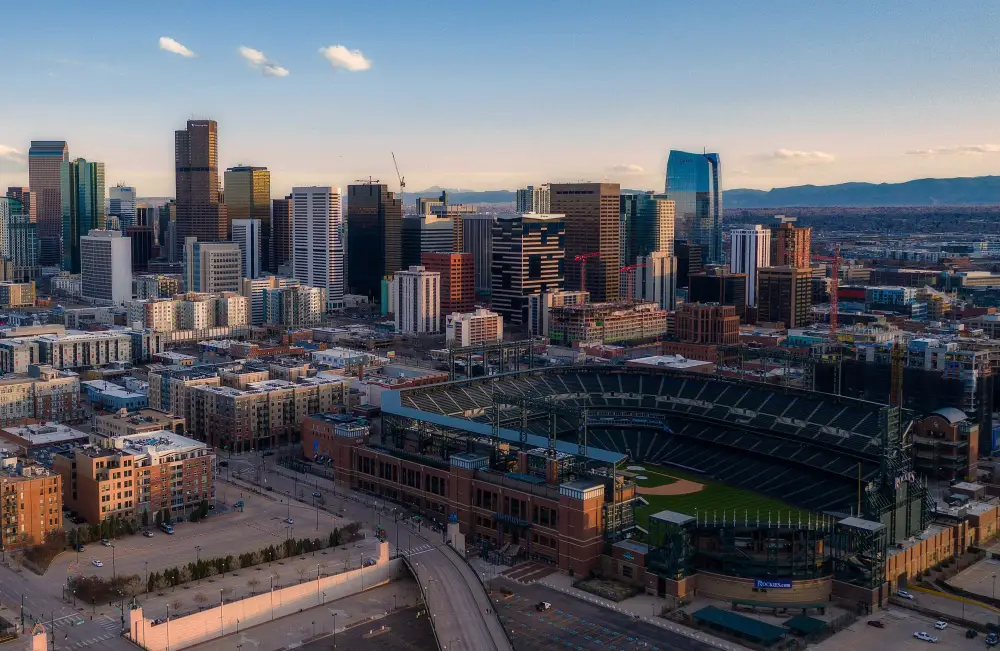
Denver skyline. CGH Injury Lawyers represents ski accident victims statewide from our Denver, Colorado office.
Denver, Colorado

Denver Ski Accident Lawyers Who Know the Mountain and the Courthouse

When a resort hazard or an out-of-control skier put you in Denver Health's trauma bay, you deserve attorneys who understand the Colorado Ski Safety Act, the uphill skier doctrine, and the specific insurance networks behind the major Colorado resorts. We work from our Denver office at 2701 Lawrence St. and we never charge a fee unless we win.

No fee unless we win

It's More Than Money.

Get my free ski accident case review

100% confidential. No fee unless we win.

Our Denver Office CGH Injury Lawyers 2701 Lawrence St., Suite 201 Denver, CO 80205 (303) 209-9395 Se habla espanol
5-star rated on Google ABOTA trial advocate on the team Trial lawyers, not a settlement mill 8 attorneys, bilingual EN / ES
  • Colorado ski accident cases are governed by the Colorado Ski Safety Act (C.R.S. 33-44-101 et seq.), which draws a hard line between the inherent risks of skiing, for which no one is liable, and resort or skier negligence, for which injured people may recover. Getting that line right is the whole case.
  • The filing deadline for a ski accident lawsuit is two years from the date of injury under C.R.S. 33-44-111, one year shorter than the deadline for most car accident claims in Colorado. Ski patrol reports, resort maintenance records, and lift camera footage disappear fast, so early action is critical.
  • A lift-ticket waiver does not end your case. Colorado waivers cannot release a resort from gross negligence or willful and wanton misconduct. If an insurer tells you the waiver bars your claim, that may be incomplete depending on the specific facts of your injury.

If you were seriously hurt on a Colorado slope and ended up at Denver Health Medical Center or Saint Joseph Hospital, the case that follows is not a standard personal injury claim. It sits at the intersection of a specialized statute, a comparative fault analysis, and the specific insurance structures major Colorado resorts carry. CGH Injury Lawyers keeps a physical office in Denver's RiNo and Five Points neighborhood at 2701 Lawrence St., minutes from I-70, which is the corridor most Denver-area skiers take to reach the mountains. We investigate ski patrol reports, resort maintenance records, and lift documentation, and we file in Denver District Court when a resort or insurer refuses to be fair. You pay nothing unless we recover for you.

The law on the mountain

The Colorado Ski Safety Act and your Denver ski accident case

The Colorado Ski Safety Act, found at C.R.S. Title 33, Article 44, applies to all alpine and Nordic ski areas in the state. It covers downhill skiing, snowboarding, cross-country skiing, and related snow sports. When a Denver-area resident is hurt on a Colorado slope and transported back to Denver Health or another metro trauma center, this statute is the framework that governs what they can and cannot recover.

Before the Act, ski accident cases were decided under general negligence rules, which produced inconsistent outcomes and confusion over who bore responsibility. The Act resolved that by doing three things.

  • It defines the inherent dangers of skiing, which are the natural risks a participant accepts by choosing to ski or snowboard.
  • It sets specific duties for both skiers and resort operators, creating a code of conduct that courts can enforce.
  • It provides a legal path for recovering damages when negligence caused the injury, separate from the inherent risks of the sport.

The most critical threshold question in any Colorado ski case is whether the injury resulted from an inherent danger or from someone's negligence. That determination drives every other decision in the case, from the damages available to the parties who can be held liable.

The critical distinction

Inherent danger versus resort negligence

The most important concept in a Colorado ski case is the line between an inherent danger of the sport, which bars recovery, and actionable negligence, which allows it. Misclassifying this distinction is the single most common reason injured skiers are told they have no case when they actually do.

Inherent dangers (no recovery)

  • Changing weather and visibility conditions on the mountain
  • Variations in terrain and natural snow conditions
  • Collisions with natural objects such as trees, rocks, and cliffs
  • The ordinary risks that come with the sport itself

Resort negligence (recovery possible)

  • Failing to mark man-made hazards like lift towers, hydrants, and grooming equipment
  • Chairlift, gondola, or tow-rope failure from deferred maintenance
  • Missing or inadequate trail signage and closure markers
  • Poorly trained or supervised ski patrol, lift, and grooming staff

The line is not always obvious, which is why many ski cases turn on detailed factual analysis. Hitting a tree is generally an inherent risk. But if a resort removed trees and left sharp, unmarked stumps in a trail, that may be negligence. If your injury came solely from an inherent danger, Colorado law bars recovery. If it came from resort negligence, you may have a claim, and the waiver on your lift ticket may not protect the resort from liability for that negligence.

Skier duties and the uphill doctrine

When another skier caused your injury: duties under C.R.S. 33-44-109

Not every ski accident is the resort's fault. When an out-of-control skier collides with you, the legal framework shifts to the duties Colorado law places on every person who uses a slope. Those duties are found in C.R.S. 33-44-109, and breaking any of them creates civil liability if the conduct injures someone else.

  1. Maintain control at all times

    Every skier and snowboarder must ski in a way that allows stopping or avoiding other people and objects. Skiing beyond your skill level or too fast for conditions is not a defense to injuring someone else on the slope.

  2. Heed posted warnings and signs

    Ignoring a closed-trail marker, a hazard sign, a rope line, or a slow zone can establish negligence on the part of the skier who ignored it.

  3. Avoid collisions with skiers below

    Every skier is responsible for avoiding the people downhill. This is the foundation of the uphill skier doctrine, and it is the legal rule that most commonly applies when one skier runs into another from behind.

  4. Yield when merging onto a trail

    Before entering a run or resuming after a stop, a skier must look uphill and yield to oncoming traffic. Failing to yield is one of the most common causes of collision liability in Colorado ski cases.

  5. Use proper safety equipment

    Colorado does not require helmets for adults, but failing to use appropriate equipment such as ski brakes or leashes can be used as evidence of negligence in some cases.

The uphill skier doctrine on Colorado slopes

The most important liability principle in Colorado ski law for skier-on-skier collisions is straightforward: the skier who is uphill or behind another skier has the duty to avoid a collision. The uphill skier can see the full slope ahead, while the downhill skier cannot see what is coming from behind, so courts place the burden on the person above.

The doctrine is not absolute. If a downhill skier stops in a blind spot, skis recklessly, or enters a trail without looking uphill, fault can shift. Colorado courts apply comparative negligence to these cases, so fault can be divided between the parties. The ski patrol report, witness statements, and any resort camera footage all become critical evidence of who had the duty to avoid the crash.

The truth about waivers

Does the waiver on my lift ticket end my case in Colorado?

Nearly every Colorado resort requires a liability waiver when you buy a lift ticket or season pass. Those waivers are real, and Colorado courts enforce them, but they are not bulletproof.

Colorado courts enforce these waivers for ordinary negligence. A waiver cannot shield a resort from gross negligence or willful and wanton misconduct. Gross negligence means conduct that shows a reckless disregard for the safety of others, such as ignoring an obvious dangerous hazard, running a known-defective lift, or failing to follow the resort's own safety protocols.

Colorado public policy does not allow a business to contract away liability for that level of conduct. When a resort or its insurer tells you that you signed a waiver so you have no case, that statement may be incomplete. Whether the waiver can be challenged depends on the specific facts of your injury and what the resort knew, or should have known, before you got hurt. We review that question at no charge in the initial consultation.

Local Knowledge

Denver trauma care. Denver District Court. The I-70 mountain corridor.

Ski accidents happen on the mountain, but the medical treatment, the insurance claim, and the lawsuit that follows tend to come home to Denver. Here is the specific ground we work on for injured Denver-area skiers.

Trauma Care

Denver Health Medical Center

Seriously injured skiers transported from I-70 mountain corridor resorts frequently arrive at Denver Health Medical Center, the region's Level I trauma center located in Denver. The comprehensive trauma records created there, covering surgical intervention, orthopedic injury, neurological findings, and rehabilitation, become the foundation of the damages case. Saint Joseph Hospital and Presbyterian/St. Luke's Medical Center also treat ski injury patients in the Denver metro area. Preserving and ordering all records from the initial transport through discharge is one of the first things we do after signing a case.

Courthouse

Denver District Court, 2nd Judicial District

Personal injury claims filed by Denver residents, including ski accident cases where suit is appropriate in Denver County, are heard at Denver District Court, the 2nd Judicial District, with civil matters at 1437 Bannock St. at the City and County Building. Claims against ski area operators based in other counties may be filed in those counties as well, and we handle cases across every Colorado ski county. When we file in Denver District Court, we are working in the courthouse where our team regularly appears.

The Corridor

I-70 Mountain Corridor

Most Denver-area residents drive I-70 west through Clear Creek Canyon and the Eisenhower Tunnel to reach Colorado ski resorts in Summit County, Eagle County, and Pitkin County. Our office at 2701 Lawrence St. in RiNo sits minutes from the I-70 on-ramp at 20th Street. We understand the geography of Denver-area ski trips and the resorts on that corridor, which is relevant context when reconstructing how and where an injury occurred and which resort's operations are at issue.

Compensation

What compensation can you recover after a Colorado ski accident?

When negligence is established, Colorado law allows injured skiers to recover both the economic losses that can be documented and the non-economic losses that represent the human cost of a serious injury.

Economic damages

  • Emergency transport from the resort and air-ambulance costs to Denver
  • Surgery, hospitalization, and specialist care at Denver Health or Saint Joseph
  • Lost wages and lost earning capacity during recovery
  • Physical and occupational rehabilitation costs
  • Future medical care and life care plan expenses
  • Out-of-pocket costs directly tied to the injury

Non-economic damages

  • Pain and suffering from orthopedic, spinal, or head injuries
  • Permanent disability or loss of physical function
  • Loss of enjoyment of life, including skiing and outdoor activities
  • In a fatal accident, funeral costs and loss of companionship

The Ski Safety Act damages cap: what it means for your case

The Ski Safety Act places a statutory limit on what a skier can recover from a ski area operator. Under C.R.S. 33-44-113, the total recovery against an operator is limited to one million dollars in present value, with derivative claims by other claimants capped at two hundred fifty thousand dollars and non-economic damages capped at two hundred fifty thousand dollars.

  • The cap applies to claims against the ski area operator. Injuries that occur while riding a passenger tramway such as a chairlift are excluded from these limits.
  • The cap does not apply to a claim against another skier whose negligence caused your injury. Claims against individual skiers proceed outside the Ski Safety Act cap structure.
  • Because these figures are set by statute and how they apply depends on the specific facts, confirm their impact on your case with an attorney.
Deadlines and fault

The two-year filing deadline and partial fault rules

Colorado gives you only two years from the date of a ski accident to file a lawsuit under C.R.S. 33-44-111. This is one year shorter than the three-year deadline for most car accident claims. If you miss the ski accident deadline, your case is permanently barred except in rare situations involving minors or fraudulent concealment.

  • The two-year clock starts on the date of injury, not the date you learn the full extent of your damages, even if your treatment at Denver Health or a subsequent rehabilitation facility is still ongoing when the deadline arrives.
  • Colorado follows a modified comparative negligence rule. You can still recover as long as you are less than 50 percent at fault for your own injury, and your award is reduced by your share of the fault. Under C.R.S. 13-21-111, a plaintiff who is 50 percent or more at fault is barred from recovering; a plaintiff who is less than 50 percent at fault recovers, with the damages reduced in proportion.
  • Ski accident evidence disappears fast. Ski patrol incident reports, resort maintenance logs, lift inspection records, and footage from resort camera systems all degrade, are overwritten, or become unavailable. Early consultation with an attorney is how you preserve that evidence before it is gone.
Why CGH

Why Denver ski accident victims choose CGH Injury Lawyers

A real Denver office, attorneys who know the Ski Safety Act, trial-ready representation, bilingual service, and no fee unless we win. We do not publish ski accident settlement figures, because every case is different and a number on a page tells you nothing about your specific injury or the specific resort that caused it.

The Statute

C.R.S. 33-44-101 et seq.

The Colorado Ski Safety Act is a specialized law that most personal injury attorneys rarely work with. We handle it directly and understand where the lines between inherent risk and negligence are drawn.

Real Denver Office

Not a referral service.

Our office at 2701 Lawrence St., Suite 201 in Denver's RiNo neighborhood is where your attorney works. It is minutes from I-70, the corridor most Denver-area skiers travel on the way to and from the mountains. You can walk in, meet your attorney, and review your case file.

Fast Evidence Action

We move before footage disappears.

Ski patrol reports and lift camera footage can be lost quickly. We send preservation requests to resorts immediately after signing a case.

Two-Year Clock

Shorter than you think.

The ski accident filing deadline is two years under C.R.S. 33-44-111, one year shorter than most Colorado injury claims. We make sure your deadline is tracked from day one.

Trial-Ready

8 attorneys, built for trial.

Managing Partner Kevin Cheney is a member of the American Board of Trial Advocates and has tried over 25 cases to verdict. When resort insurers know your attorney will actually take a case to trial in Denver District Court, they respond differently to a demand.

Bilingual

Hablamos espanol.

Spanish-speaking staff and attorneys serve Denver's Spanish-speaking community, including many ski resort workers injured on the job.

No Win, No Fee

Contingency only.

You pay nothing out of pocket for legal fees. We advance costs and collect only from a settlement or verdict in your favor.

How it works

How we handle a Denver ski accident case

A ski injury case moves through six stages, from a free case evaluation to trial when a resort or insurer refuses to be fair. Most cases resolve before a courtroom, but we prepare every case as if it will be tried in Denver District Court.

  1. Free case evaluation

    We review the facts of your injury, explain where the Colorado Ski Safety Act applies to your situation, and answer your questions at no cost and no obligation. You can visit our office at 2701 Lawrence St. in Denver or call (303) 209-9395.

  2. Evidence preservation

    We move quickly to send preservation letters to the resort and request ski patrol incident reports, maintenance records, lift inspection documentation, and any on-mountain camera footage before the resort overwrites or destroys it.

  3. Liability analysis

    We separate inherent risk from negligence and identify every responsible party, whether that is the ski area operator, another skier, a ski instructor, or an equipment manufacturer. We also evaluate whether the lift-ticket waiver can be challenged on the specific facts of your injury.

  4. Medical record and damages documentation

    We gather all records from the resort ski patrol, the transport to Denver Health or another metro trauma center, the hospitalization, and any subsequent rehabilitation. We document every category of harm so nothing is left off the damages claim.

  5. Demand and negotiation

    We present your documented damages to the resort's insurer or the at-fault skier's carrier and negotiate from a position of trial readiness, not a willingness to accept the first offer.

  6. Filing in Denver District Court

    When a resort insurer or at-fault skier refuses a fair resolution, we file in Denver District Court, the 2nd Judicial District, at 1437 Bannock St., or in the ski-county court where the injury occurred. Our trial attorneys are prepared to try your case to a Colorado jury if full recovery requires it.

5-star rated on Google

I wish I could leave more than 5 stars!

Grace Macaluso, 5-star Google review
Questions

Denver ski accident, frequently asked questions

How long do I have to file a ski accident lawsuit in Colorado?

Colorado gives you two years from the date of your ski accident to file a lawsuit (C.R.S. 33-44-111). This is one year shorter than the three-year deadline for most car accident claims. If you miss the deadline your case is permanently barred except in rare situations involving minors or fraudulent concealment. Ski accident evidence disappears fast, including ski patrol reports and resort camera footage, so contacting an attorney early is important even if you are still in treatment at Denver Health or a rehabilitation facility.

Does the waiver I signed on my lift ticket prevent me from suing the resort?

Not necessarily. Colorado courts enforce lift-ticket waivers for ordinary negligence, but a waiver cannot protect a resort from gross negligence or willful and wanton misconduct. If the resort ignored a known dangerous hazard, ran a defective lift, or violated its own safety protocols, the waiver may not block your claim. Whether the specific facts of your injury allow a challenge to the waiver is something we review in the free initial consultation, at no charge.

Can I sue another skier who ran into me on a Colorado slope?

Yes. If another skier violated their duties under C.R.S. 33-44-109, such as failing to maintain control, striking you from behind, or merging onto a trail without yielding, you may have a personal injury claim against them. These claims are commonly pursued through the at-fault skier's homeowner or renter insurance policy. The Ski Safety Act damages cap that applies to ski area operators does not apply to claims against individual skiers, so the cap structure for a skier-on-skier case is different from a claim against the resort.

What if I was partly at fault for my ski accident?

Colorado follows a modified comparative negligence rule under C.R.S. 13-21-111. You can still recover as long as you are less than 50 percent at fault for your own injury. If you are 50 percent or more at fault, you are barred from recovering. If you are less than 50 percent at fault, your award is reduced by your share of the fault. For example, a $200,000 award where you are found 25 percent at fault results in a recovery of $150,000. The ski patrol report, witness statements, and resort camera footage are the key evidence in any comparative fault dispute.

Is there a cap on how much I can recover from a Colorado ski resort?

Yes, but with an important exception. The Ski Safety Act limits total recovery against a ski area operator to one million dollars in present value, with non-economic damages and derivative claims each capped at two hundred fifty thousand dollars (C.R.S. 33-44-113). However, injuries that occur while riding a passenger tramway such as a chairlift are excluded from this cap. The cap also does not apply to a claim against another individual skier. How the cap applies depends entirely on the specific facts of your injury, so confirm with an attorney before assuming it limits your case.

What should I do right after a ski accident in Colorado?

Get medical attention first and make sure ski patrol files an official incident report; get a copy of that report for your records before you leave the mountain. Document the scene and your injuries with photos and video without moving or adjusting equipment. Collect the names and contact information of any witnesses, and get the name and contact information of any other skier involved. Do not give a recorded statement to any insurer before speaking with an attorney. You can call our Denver office at (303) 209-9395 or reach us through the form on this page.

Can I file a claim if faulty rental equipment caused my ski injury?

Possibly. Common defects include ski bindings that fail to release at the proper force setting, structural failures in skis or boots, and helmet manufacturing flaws. If faulty rental equipment or a defective product caused or contributed to your injury, you may have a product liability claim against the manufacturer, distributor, or rental shop in addition to or instead of a claim against the resort. We investigate these cases and pursue every responsible party.

Where is a Denver ski accident lawsuit filed?

It depends on where the injury occurred and who you are suing. Personal injury cases filed by Denver residents against parties located in Denver County are filed in Denver District Court, the 2nd Judicial District, at 1437 Bannock St. Claims against a ski resort in Summit County, Eagle County, or Pitkin County may be filed in the county where that resort is located. We handle Denver District Court cases directly and have experience with the ski-county district courts that hear resort liability claims. Most claims settle before any lawsuit is filed, but knowing where your case would go helps us negotiate from a position of credibility.

It's More Than Money.

You were hurt on the mountain. We handle everything else.

Free consultation. No fee unless we win. Available in English and Spanish.

Tell us what happened

100% confidential. No fee unless we win.

Prefer to read first? See how Colorado's Ski Safety Act works.

CGH Injury Lawyers · 2701 Lawrence St., Suite 201, Denver, CO 80205